
Deciphering the Digital Mood: The Role of Emoticons in Arabic Sentiment Analysis
Role of Emotion icons in Sentiment classification of Arabic Tweets
2014-09-15
Summary
Problem
Method
Results
Takeaways
Abstract
This paper investigates the impact of emotion icons (emoticons) on sentiment classification for informal Arabic tweets. By proposing a dedicated preprocessing pipeline and comparing Naïve Bayes and K-Nearest Neighbor (KNN) classifiers, the study determines that preserving emoticons improves accuracy despite their frequent ambiguous usage in social media.
## TL;DR
While modern NLP focuses on Large Language Models, the foundational challenge of understanding **informal Arabic** remains critical. This research explores how "Emotion Icons" serve as both a vital signal and a source of ambiguity in Arabic tweets. By developing a specialized preprocessing pipeline, the authors demonstrate that keeping emoticons boosts accuracy by over 5%, even though users often use "smiling" icons for "unsmiling" sentiments.
## The Dialectal Barrier: Why Arabic is "Hard Mode" for NLP
Arabic is a highly inflectional and derivational language. In the world of Twitter, this complexity is magnified by the shift from Modern Standard Arabic (MSA) to **Informal Arabic**.
* **Lack of Structure**: No standardized grammar for dialects.
* **Noisy Data**: Repeated letters for emphasis (e.g., "Maaaaaabrook") and erratic punctuation.
* **Limited Resources**: Most sentiment lexicons are designed for English or formal Arabic, leaving informal social media content in a "beginning stage" of research.
## Methodology: Converting "Pixels" to "Sense"
The authors proposed a systematic approach to handle the messiness of Twitter data. The core innovation lies in the **Preprocessing Pipeline**, specifically the handling of emoticons.
### The Preprocessing Workflow
1. **Normalization**: Standardizing various forms of characters (like Alef and Hamza) to a single form to reduce vocabulary sparsity.
2. **Emoticon Conversion**: Instead of filtering out non-textual icons (which usually happens during noise removal), icons are converted into specific text tokens (e.g., `^_^` becomes a meaningful label).
3. **TF-IDF Representation**: Transforming the cleaned text into a mathematical vector space for classification.
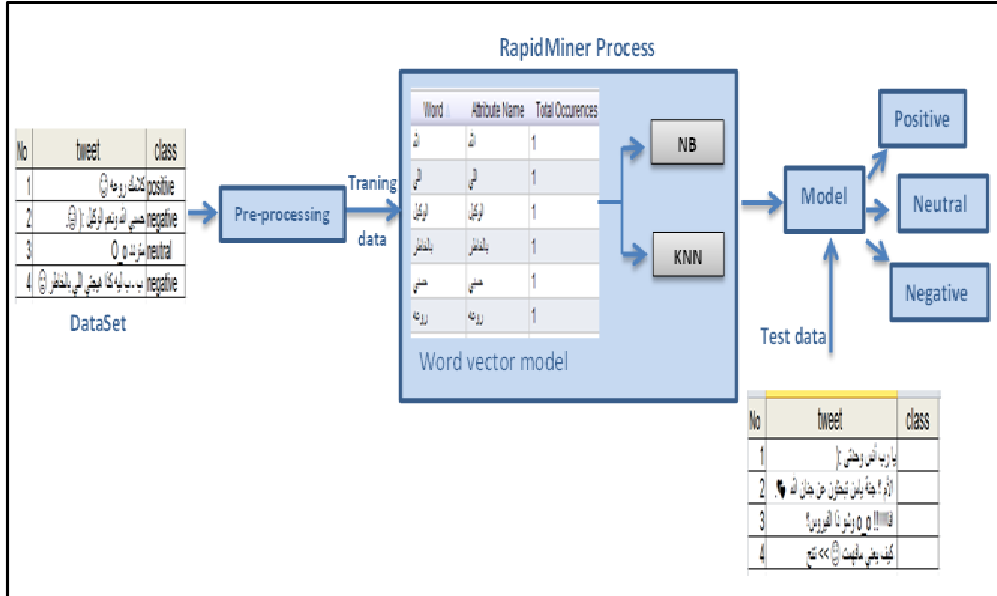
*Figure 1: The proposed workflow from raw tweet collection to sentiment classification.*
## Experiments & The "Ambiguity" Paradox
The study utilized a manually curated dataset of 3,000 tweets. The goal was to see if classical Machine Learning—specifically **Naïve Bayes (NB)** and **K-Nearest Neighbor (KNN)**—could pinpoint sentiments as Positive, Negative, or Neutral.
### Key Results:
* **NB > KNN**: Naïve Bayes proved more robust for this text classification task, reaching **63.79% accuracy**.
* **The Emoticon Boost**: Comparing a model *without* icons (58.28%) to one *with* icons (63.79%) showed a significant performance leap.
### The Ambiguity Problem
Despite the boost, the authors discovered a fascinating human behavior: **Ambiguous Emotion Icons**. Users often pair a negative sentence with a positive icon (sarcasm or irony) or vice versa.
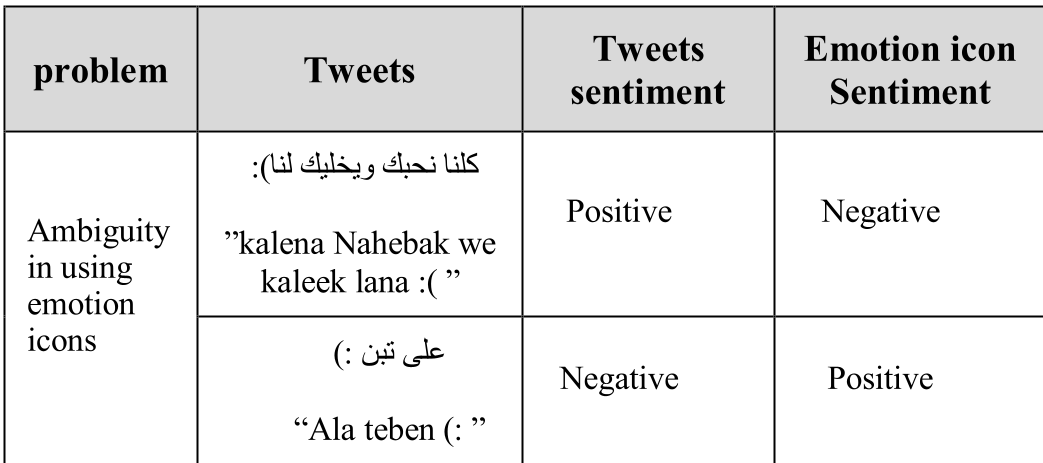
*Table 1: Examples of mismatched sentiments between text and emoticons found in the dataset.*
## Critical Insight: Arabic-Specific "Islamic Icons"
One of the most unique findings in this study is the identification of culture-specific emoticons. The researchers noted the frequent use of **Islamic Icons** (e.g., Crescent/Helal, Masjids) which carry specific sentiment weights in the Arabic-speaking world that generic global sentiment lexicons often miss.
## Conclusion & Future Outlook
This paper serves as a reminder that in sentiment analysis, the "noise" (emoticons) is often the "signal." While 63% accuracy leaves room for improvement, the study highlights two vital paths for future research:
1. **Sarcasm Detection**: Resolving the mismatch between icons and text.
2. **Informal Lexicons**: Building broader dictionaries for "Ammiya" (informal dialects) to better support the unique linguistic landscape of the Middle East.
As the world moves toward LLMs, these foundational insights into how users actually express emotion—through symbols and cultural shorthands—remain the bedrock of effective communication analysis.