
Beyond the Portal: How Social Media is Redefining the Digital Social Contract in E-Government
Exploring the Role of Social Media in e-Government: an Analysis of Emerging Literature
This study presents a systematic literature review of 115 research articles investigating the integration of social media within e-government frameworks. Using keyword and thematic analysis, the paper identifies "Electronic Participation" and "Engagement" as the primary research pillars, establishing a state-of-the-art taxonomy for citizen-centric digital governance.
Executive Summary
TL;DR: This paper provides a comprehensive audit of how social media has disrupted traditional e-government models. By reviewing 115 core studies, the authors identify that while social media has massive potential for "Electronic Participation" and "Crowdsourcing," the academic field is currently dominated by descriptive theories and lacks rigorous empirical validation.
Background: Published at ICEGOV '17, this work serves as a foundational map for researchers and policymakers. It moves the conversation from "What is e-government?" to "How do we use Web 2.0 to foster genuine democratic engagement?"
The Evolution of the Problem: From Static to Social
Traditional e-government was often criticized for being a "digital brochure"—a one-way street where governments posted forms and citizens passively consumed them. The rise of social media (Facebook, Twitter, YouTube) promised a revolution in bidirectional communication.
However, the authors point out a critical "Research Gap":
- Prior Work was fragmented, focusing either on transparency or e-participation, but rarely looking at the symbiotic relationship between the two.
- Theoretical Scarcity: Most researchers were "observing" the phenomenon without applying established Information Systems (IS) theories to explain why citizens trust certain digital channels over others.
Methodology: Mapping the Intellectual Landscape
The researchers conducted a systematic search using the Scopus database, linking keywords like "Smart Government," "Web 2.0," and "Citizen Engagement."
Key Metrics:
- Sample Size: 115 articles (48 Journal articles, 61 Conference papers, 6 Book chapters).
- Dominant Methodology: Analytical/Conceptual (69 papers) vs. Experimental (only 2 papers).
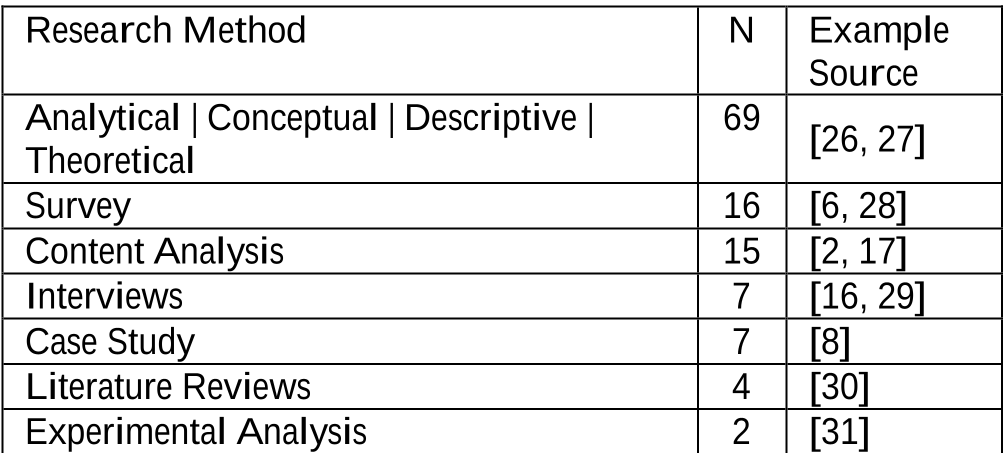 Analysis shows a heavy reliance on descriptive methods, suggesting the field is still in its "early emergence" phase.
Core Insights: The "Participation-Trust" Feedback Loop
The study identifies several "Research Themes" that form the backbone of modern e-governance.
1. Electronic Participation (e-Participation)
This is the most explored theme (N=29). The insight here is that social media lowers the barrier to entry for marginalized groups. However, the authors warn of the "Digital Literacy Gap"—specifically among the elderly—which can lead to unequal representation in digital decision-making.
2. The Transparency-Trust Link
The paper emphasizes that transparency is not an end in itself. Instead, high-quality, reliable information shared via social media acts as a "corruption deterrent." When citizens see "Open Data" in action, their trust in the institution increases, which in turn boosts their likelihood of using e-government services.
3. Crowdsourcing and Collaboration
A major shift identified is moving from "e-government" to "We-government." This involves:
- Active Crowdsourcing: Stimulating user content to solve specific social problems.
- PC2 Framework: A Public-Private-Citizen Collaboration model that utilizes social media as a "warning system" for natural disasters or security threats.
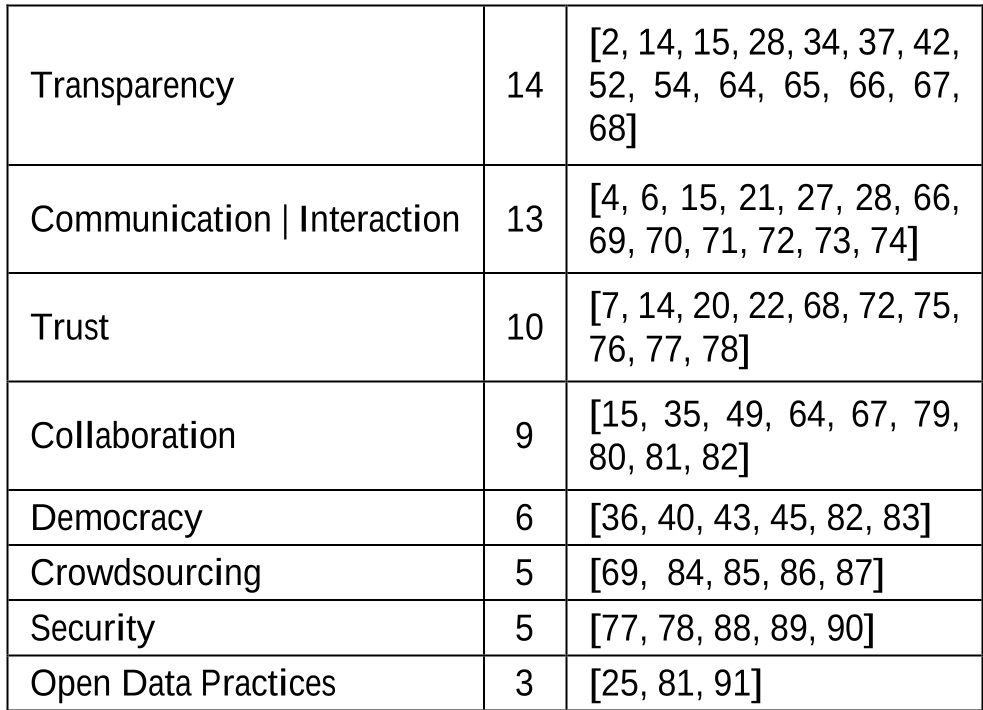 The data confirms that Participation and Engagement are the primary drivers of literature, while Security and Open Data remain under-researched niches.
Critical Analysis & Future Outlook
Takeaways for Policymakers:
- Don't just broadcast; interact. Effectiveness is measured by citizen response (comments, shares), not just reach.
- Adopt Open Data. Transparency reduces the "informational advantage" of privileged groups and builds cross-border trust.
Limitations of the Field:
The authors candidly admit that current literature is methodologically thin. There are far too many "viewpoints" and not enough "experimental analyses." Furthermore, the "Digital Divide" remains a massive barrier in developing nations where digital literacy is low.
The Future of E-Governance:
The next frontier is the integration of Real-time Crowdsourcing and Secure Identity Management. As governments move toward "Smart Government" (M-government), the ability to verify "legitimate account holders" while maintaining privacy will be the ultimate technical challenge.
Conclusion: Social media has successfully moved e-government into the "2.0" era. However, for this to become a resilient "Electronic Democracy," research must move beyond descriptive case studies and focus on the hard metrics of security, trust, and inclusivity.