
Stress as a Catalyst: Why "Role Stress" Actually Drives Us to Share More on Social Media
The Influence of Role Stress on Self-Disclosure on Social Networking Sites: A Conservation of Resources Perspective
This study investigates the positive behavioral outcomes of role stress on Social Networking Sites (SNS), specifically focusing on WeChat Moments. Utilizing the Conservation of Resources (COR) theory, the authors demonstrate that role stress promotes self-disclosure through the mediation of self-presentation and relationship maintenance motivations.
TL;DR
Contrary to the popular belief that social media stress leads to "burnout" and withdrawal, a new study reveals a fascinating paradox: when we feel overwhelmed by our digital roles, we often respond by increasing our self-disclosure. By applying the Conservation of Resources (COR) theory, researchers found that users invest in self-presentation and relationship maintenance as "psychological buffers" to recover from stress.
The "Dark Side" Perspective is Incomplete
For years, Information Systems (IS) research has focused on the negative spiral of SNS usage: social overload leads to fatigue, which leads to account deactivation. However, this "escape-only" model fails to explain why millions of stressed users remain highly active.
The authors of this study argue that stress—specifically Role Stress (composed of Role Overload and Role Conflict)—can trigger a "proactive" survival mechanism. Instead of running away, users try to "save" their social status by doubling down on their interactions.
Methodology: The COR Framework
The researchers surveyed 335 users of WeChat Moments, focusing on two types of stress:
- Role Overload: Feeling that the demands of maintaining an online presence (responding to comments, liking posts) exceed one's capacity.
- Role Conflict: Facing incompatible expectations from different social circles (e.g., family vs. colleagues) on the same platform.
According to the Conservation of Resources (COR) theory, when people face potential resource loss (stress), they don't just sit back—they invest their remaining resources to gain new ones. In this context, the "investments" are:
- Self-Presentation: Managing how others see us to gain social capital.
- Relationship Maintenance: Strengthening bonds to ensure we have a support network to lean on.
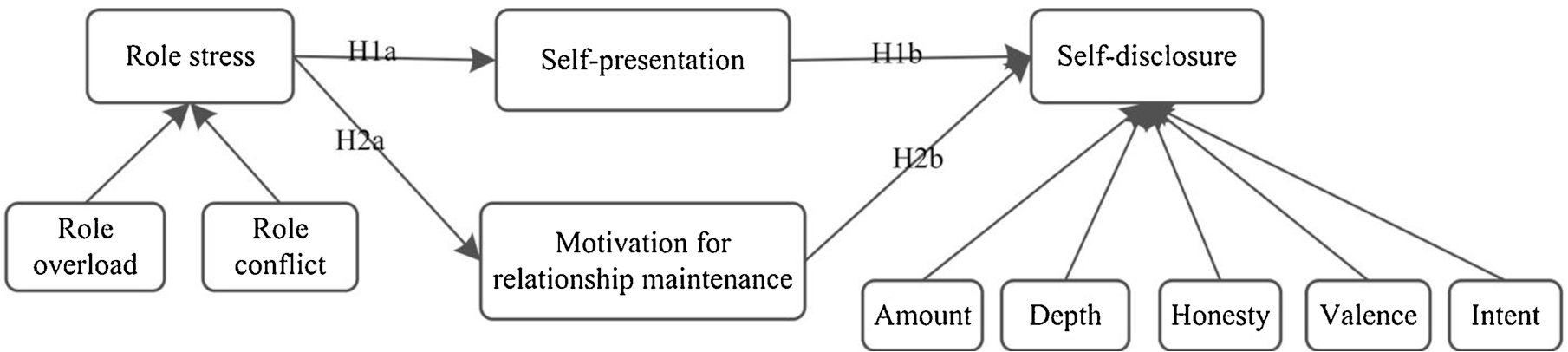 Figure 1: The theoretical framework showing how Role Stress travels through motivations to reach Self-Disclosure.
Key Findings: The Defensive Disclosure
The statistical analysis provided some striking results:
- Stress as a Trigger: Role stress has a strong positive path to both self-presentation (β=0.496) and relationship maintenance (β=0.438).
- The Mediation Effect: Role stress itself does not directly increase disclosure. Instead, it "pushes" users toward these motivations. Once users are motivated to maintain their "image" or "friendships," their self-disclosure—spanning honesty, depth, and amount—increases significantly.
- Meaningful Metrics: The model explains nearly half (48%) of the variance in why people choose to disclose personal information under pressure.
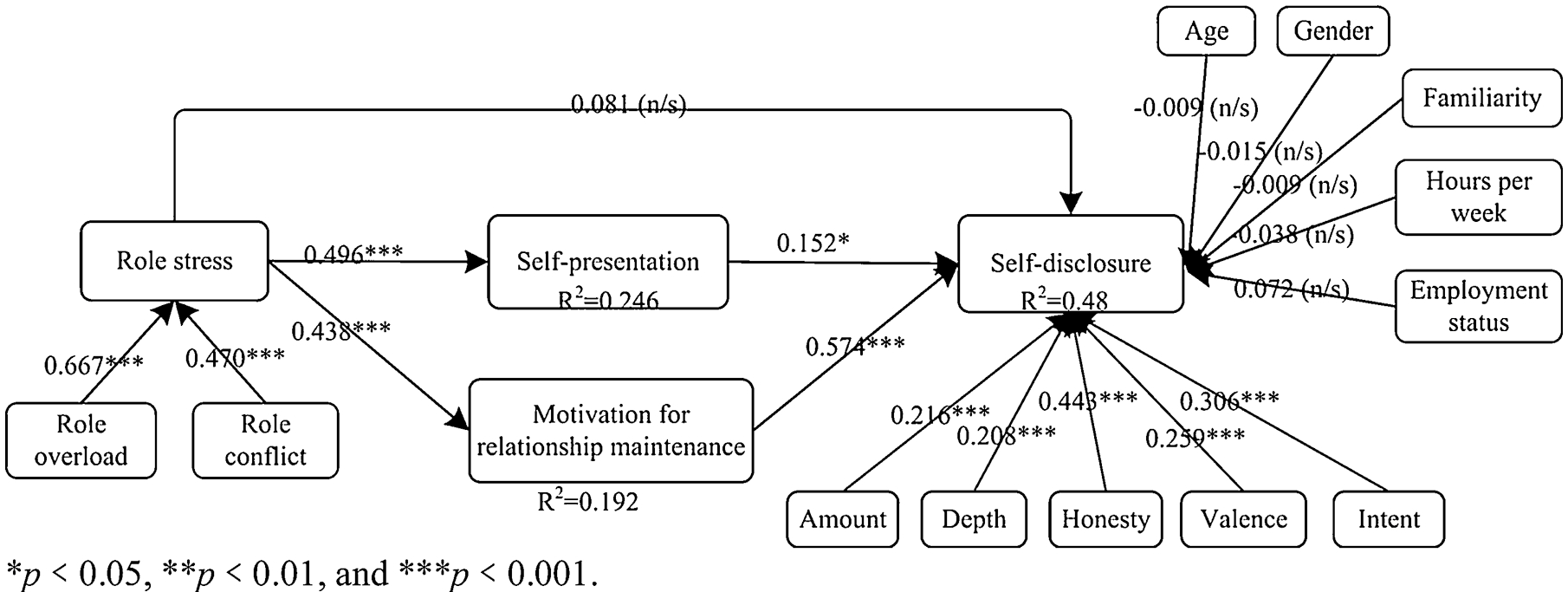 Figure 2: Empirical results showing significant path coefficients and the strong mediating role of motivations.
Deep Insight: "Investing" to Stop the Bleeding
Why would a stressed person talk more about their feelings or life? This study suggests that self-disclosure is a tool for recovery.
When you feel role conflict, your "social resource" is under threat. By sharing more (Self-Disclosure), you are effectively performing "impression management" to ensure you remain valuable to your network. You are seeking Social Validation to compensate for the Psychological Strain.
Conclusion & Practical Implications
This research flips the script on technostress.
- For Users: Understanding that your urge to post during stressful times might be a defensive "resource investment" can help in managing digital well-being.
- For Platform Developers: Instead of just adding "Do Not Disturb" modes, platforms could provide features that make relationship maintenance low-effort (e.g., better grouping or automated cues), helping users recover social resources without contributing to further role overload.
As the study suggests, the goal shouldn't always be to eliminate stress, but to provide the right "investment" channels so that users can transform that stress into meaningful social bonding.