
RoleNet: Decoding Cinema Through the Lens of Social Networks
7685_RoleNet Movie Analysis from the Perspective of Social Networks.
This paper introduces RoleNet, a novel framework that applies Social Network Analysis (SNA) to movie videos by modeling the co-occurrence of characters as a weighted graph. It achieves automated leading role determination, community identification (macro and micro), and social-relation-based story segmentation.
TL;DR
RoleNet reimagines movie analysis by treating a film as a "small society." Instead of measuring shot lengths or color histograms, it builds a weighted social graph based on character co-occurrences. This top-down approach allows a computer to "understand" who the protagonists are, who belongs to which faction, and where story chapters actually turn, outperforming traditional audiovisual methods by nearly 50% in story segmentation accuracy.
Problem & Motivation: The Semantic Gap
For decades, multimedia researchers have struggled with the semantic gap—the chasm between raw pixels and human-level understanding. While a computer sees a "shot change," a human sees a "breakup" or a "betrayal."
The authors argue that "mise-en-scène" (the arrangement of actors in space) is the true carrier of narrative. Prior work focusing on video tempo or shot frequency misses the point: stories are driven by interactions. If Character A and Character B appear in the same scene, a social bond is formed. RoleNet seeks to quantify this "social context" to bridge the gap.
Methodology: The Core of RoleNet
1. Constructing the Social Graph
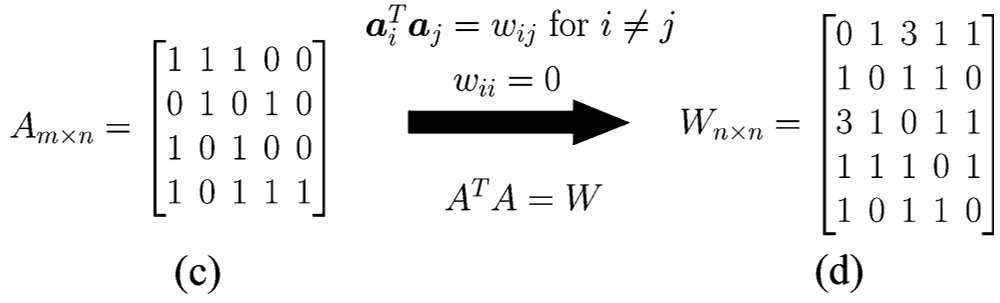
The process begins by treating the movie as a bipartite graph of Scenes and Roles. By calculating the co-occurrence matrix , the authors transform this into a RoleNet: a weighted graph where edge thickness represents the strength of the relationship.
2. Identifying Leaders and Communities
- Leading Role Determination: Uses Degree Centrality. Characters who interact with the widest variety of people across the most scenes naturally emerge as the "hubs" of the network.
- Bilateral & Macro-Communities: For movies with clear "good vs. evil" or "hero vs. heroine" structures, the authors use the Maximum-Flow-Minimum-Cut algorithm to partition the graph into communities led by specific protagonists.
- Micro-Communities: Using hierarchical clustering, the system identifies smaller cliques (e.g., the hero's family vs. his colleagues).
3. The Storyshed Algorithm
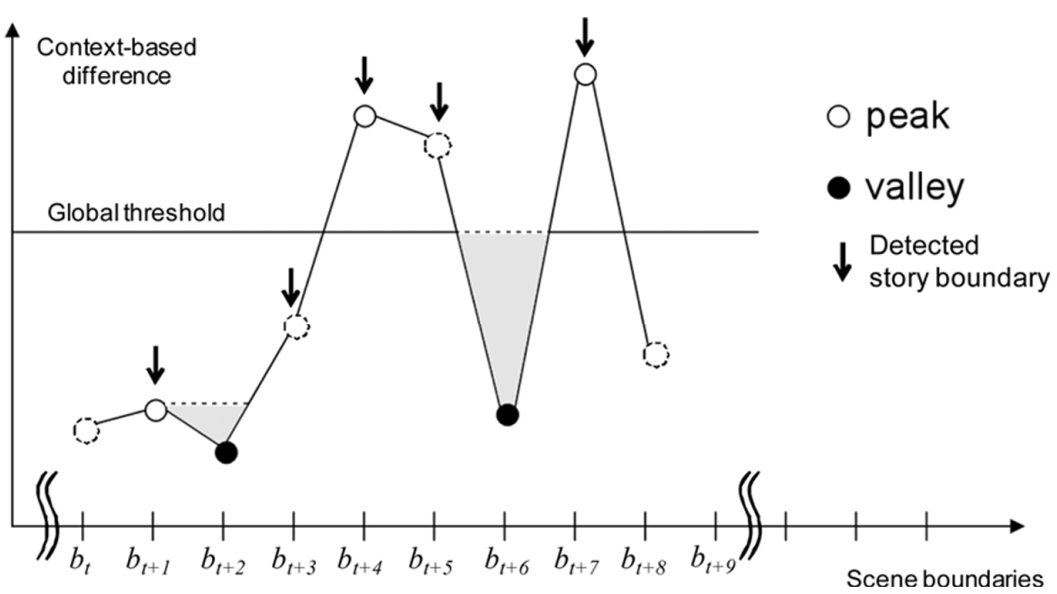
Perhaps the most innovative part of the paper is Social-Relation-Based Story Segmentation. The authors calculate a "Profile Vector" for each character. By comparing the average social context of roles in Scene versus Scene , they generate a context-based difference curve. The Storyshed algorithm then treats this curve like a topographic map, filling "valleys" with water until they overflow at "peaks" to identify the most significant narrative boundaries.
Experiments & Results: A New SOTA for Narrative
The authors tested RoleNet on 10 Hollywood movies (including The Devil Wears Prada and Gladiator) and 3 TV shows.
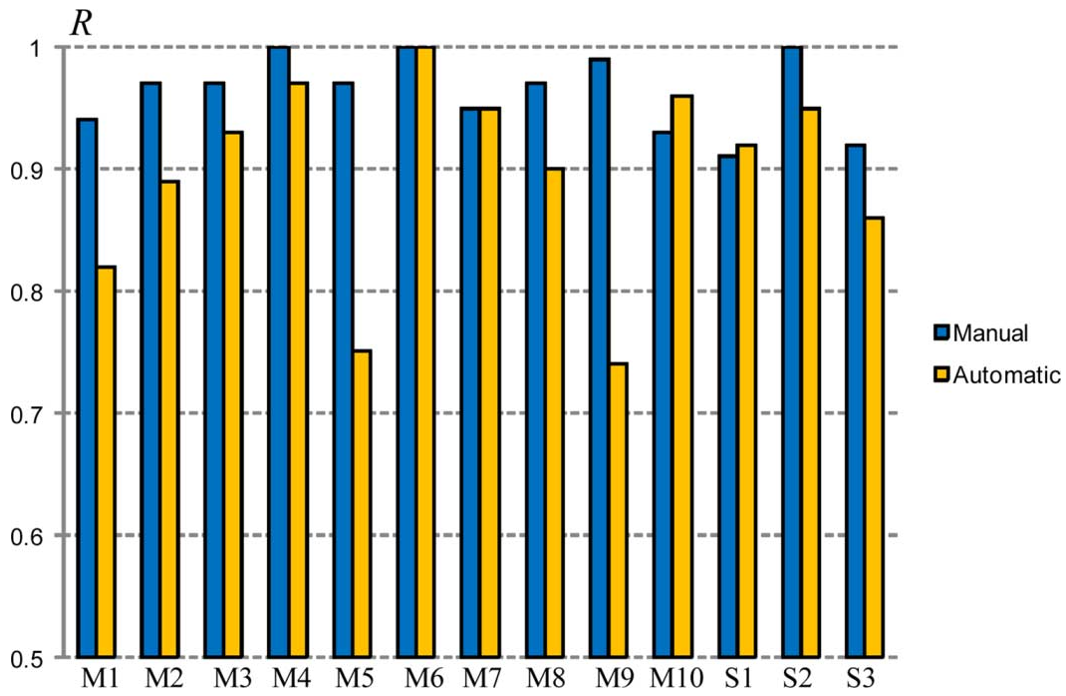
- Leading Roles: Nearly 100% accuracy in movies. TV shows performed slightly worse due to their shorter duration and "flatter" character hierarchies.
- Story Segmentation: Compared against a Tempo-based baseline (which uses motion and audio energy), RoleNet reached a Purity of 0.69, whereas the tempo method lingered at 0.21. This proves that social context is a far more reliable indicator of narrative progression than audiovisual "noise."
Critical Analysis & Conclusion
Takeaway
RoleNet demonstrates that the "Social Network" of a movie is a powerful high-level descriptor that can automate media management, such as character-based browsing (e.g., "show me all scenes involving the hero's family").
Limitations
The system is highly dependent on the quality of Face Detection and Recognition. In artistic or "alternative" movies where characters might be shot from behind or in extreme shadows, RoleNet's "co-occurrence" logic fails. Additionally, the algorithm requires a certain "video length" to establish statistically significant relationships, making it less effective for short clips or trailers.
Future Outlook
The marriage of SNA with modern DL-based recognition (like ArcFace) and Audio analysis (Speaker Diarization) could make RoleNet robust enough for real-time streaming platforms, enabling a new era of "Semantic Netflix" where users browse by plot dynamics rather than just genres.