
RoleNet: Decoding the "Small Society" Inside Every Movie
RoleNet: Treat a Movie as a Small Society
This paper introduces RoleNet, a novel framework that applies Social Network Analysis (SNA) to movie content by modeling a film as a "small society." By mapping character co-occurrence in scenes into a weighted graph, the method automatically identifies leading roles and uncovers hierarchical community structures (macro and micro-communities).
TL;DR
RoleNet moves beyond low-level video features like color and motion, treating movies as social networks. By analyzing character co-occurrences, it automatically identifies protagonists and their social circles, enabling a "socially hierarchical" way to browse and understand film content.
Perspective Shift: From Pixels to People
For decades, the "semantic gap" has haunted multimedia research. Computers see frames, histograms, and motion vectors; humans see betrayal, romance, and friendship. RoleNet bridges this gap by adopting Social Network Analysis (SNA). The core insight is simple yet profound: A movie is a small society. The plot is driven by how characters (roles) interact, and by modeling these interactions as a weighted graph, we can extract the narrative's "skeleton" without needing to understand the dialogue or the cinematography.
Methodology: Building the RoleNet
The construction of a RoleNet involves three distinct phases:
1. The Interaction Matrix
The authors define relationship strength as the frequency of co-occurrence between characters in scenes. If the Hero and the Heroine appear in 50 scenes together, their edge weight is high.
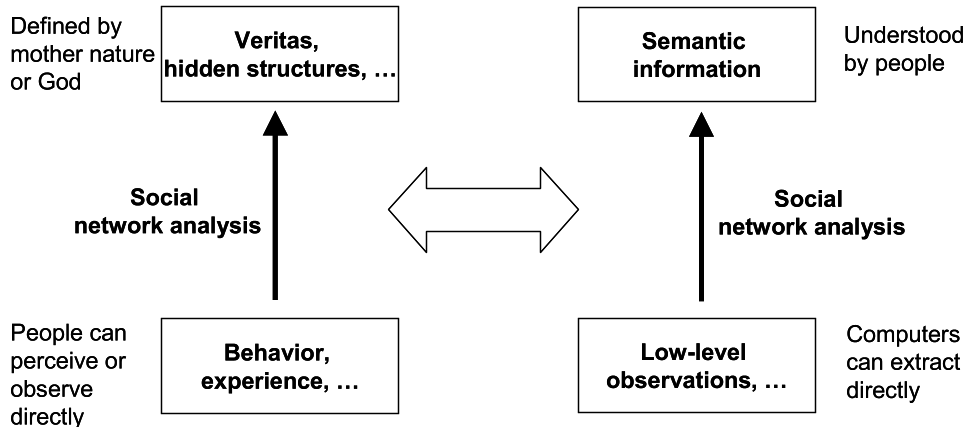 Figure 1: Comparison of SNA in different fields versus movie analysis.
2. Identifying the "Stars"
Using Centrality Metrics, RoleNet calculates the impact of each node. By plotting centrality values and finding the steepest "gap" (the difference between the least important lead and the most important supporting role), the system automatically determines whether a movie has one, two, or three protagonists.
3. Community Discovery (Macro & Micro)
- Macro-communities: Large groups aligned with a specific lead (e.g., the "Bad Guys" vs. the "Good Guys"). This is solved using a Min-Cut/Max-Flow algorithm.
- Micro-communities: Finer groupings, such as a family or a group of office colleagues. The authors use an iterative clustering algorithm reflected in a Dendrogram.
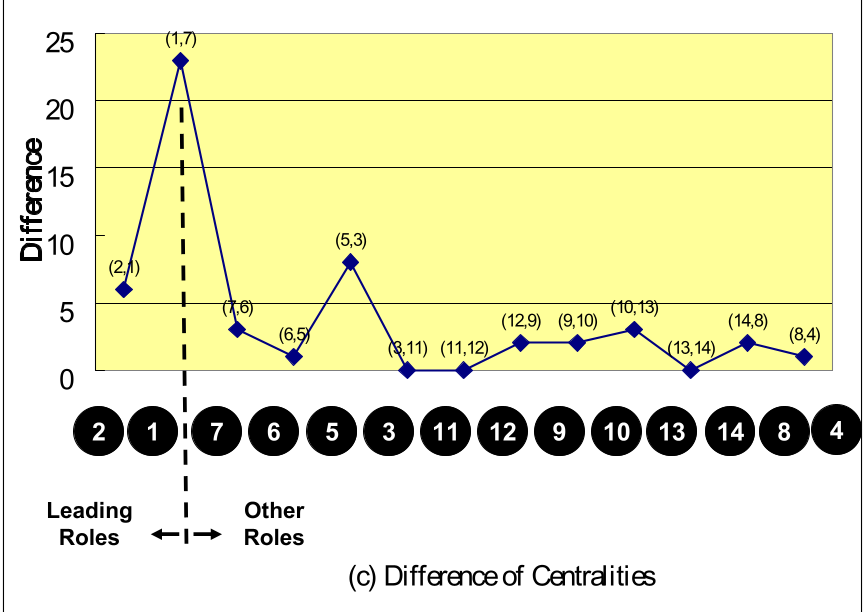 Figure 2: Dendrogram showing the micro-community clustering for the movie "You’ve Got Mail".
Experimental Validation
The authors tested RoleNet using both "Clean Data" (manual labels) and "Realistic Data" (OpenCV face detection and HMM-based recognition).
Robustness Against Noise
A standout result of this paper is its robustness. Despite face recognition accuracy being as low as 40.0% in 21 Grams (due to lighting and pose variations), the system still correctly identified leading roles with 100% precision. This suggests that the "social structure" of a movie is so redundant and strong that even high levels of data noise cannot easily obscure the primary narrative relationships.
 Figure 3: Results of Micro-Community identification across different datasets.
Future Outlook: Socially-Aware Browsing
RoleNet enables a "Community-based hierarchical browsing system." Instead of fast-forwarding through a timeline, a user could select the "Hero's Family" micro-community and instantly retrieve every scene involving those specific social dynamics.
Critical Analysis & Conclusion
While RoleNet is a breakthrough in semantic modeling, it does have limitations. It relies on visual presence to define relationships, which might miss characters who are mentioned often but rarely seen together. However, as the authors suggest, integrating speaker identification and NLP-based sentiment analysis could turn RoleNet into an even more powerful tool for automated cinematography and media study.
Takeaway: In the world of AI media analysis, people—and their connections—are the ultimate metadata.