
Implicit Social Networking: Uncovering the Hidden Social Fabric of Consumers
Roles and Communities among Consumers
This paper introduces Implicit Social Networking (ISN), a methodology that automatically discovers hidden relationships, roles, and communities among consumers or employees by matchmaking high-dimensional user profiles. Unlike traditional explicit networks, ISN leverages "third-party" calculation to enable personalized services and has been validated through pilots in the SmartSocial platform, IPTV recommendation, and corporate analytics.
TL;DR
While we usually think of social networks as platforms where we manually "add friends," this paper introduces Implicit Social Networking (ISN)—a way for companies to automatically calculate social ties based on shared interests and behaviors within rich user profiles. By moving from "explicit clicks" to "implicit matchmaking," businesses can uncover hidden communities and roles, enabling a new generation of hyper-personalized recommender systems and corporate insights.
Background: Beyond the Explicit "Friend Request"
In the era of Customer-Managed Relationship (CMR), users generate a treasure trove of data across telco, social, and mobile services. However, most social analysis remains trapped in the explicit domain—relying on intentional connections like Facebook "likes" or LinkedIn connections.
The authors argue that this is limiting. Why? Because explicit networks are public and offer little competitive differentiation. The real value lies in the Implicit Social Network, where a third party (the company) reasons over profile similarities to find "hidden" relationships that even the users themselves might not recognize yet.
Problem & Motivation: The Gap in CMR
Existing CRM systems struggle to turn "Big Data" into "Actionable Social Insights." The pain points are twofold:
- High Friction: Users rarely take the time to build comprehensive social graphs within every service they use (e.g., an IPTV portal).
- Latent Potential: Traditional systems miss the "long tail" of interests. Two people who have never met but watch the same obscure documentaries are socially "connected" in an implicit sense—a connection that could be the key to a perfect recommendation.
Methodology: The "Calculate, Don't Ask" Approach
The methodology relies on a multi-agent system where User Agents act as digital twins of consumers, interacting with a centralized Company Agent.
1. The Matchmaking Mechanism
The core of the system is the compare(P_ui, P_uj) function. It takes two complex user profiles and outputs a similarity score between 0 and 1. This isn't just a simple keyword match; it involves domain knowledge (Knowledge Layer) to map physical behaviors into social links.
2. Graph Transformation
The system takes a massive matrix of these scores and transforms them into a graph structure: Where:
- represents consumers.
- represents calculated edges with weights based on similarity.
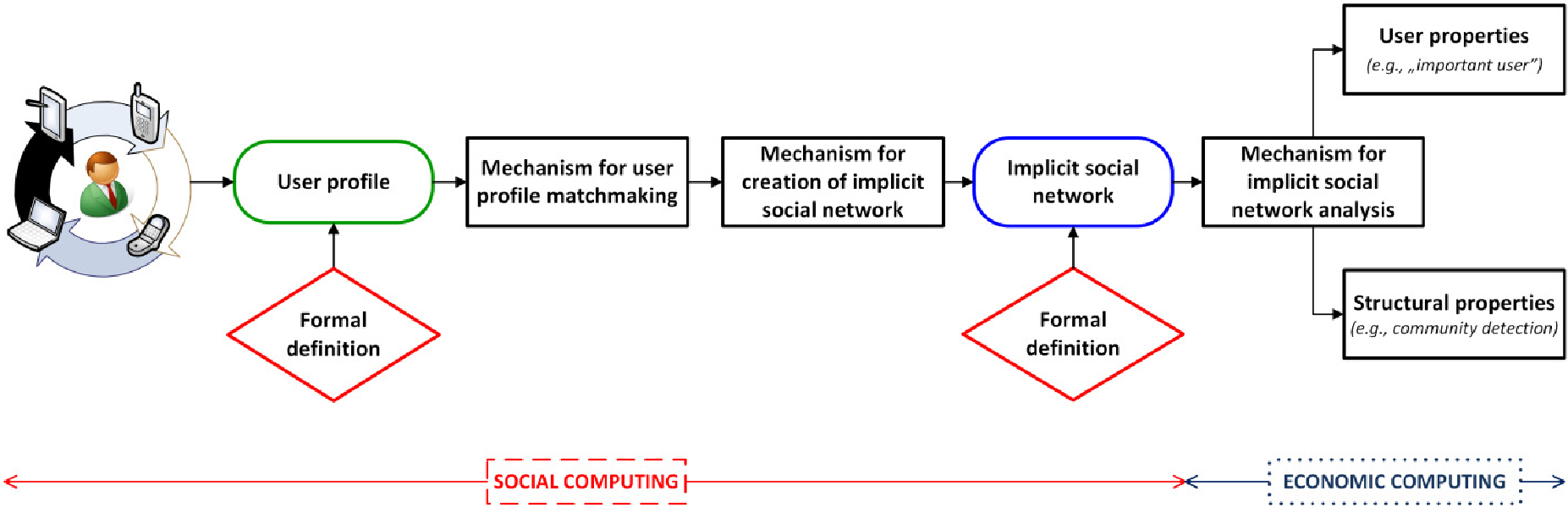 Figure 1: The Lifecycle of Implicit Social Networking, bridging Social and Economic Computing.
Real-World Pilot Cases
The authors validated this through three distinct lenses:
SmartSocial Platform
By aggregating Telco, Social, and Contextual (accelerometer/location) data into a Consolidated Profile, they identified user "Influence" and "Trust" scores that were not visible in raw data.
IPTV Recommender Systems
In a massive pilot of 250,000 users, ISN was used to solve the "popularity bias." Instead of just recommending what's trending, the system identified items watched by implicitly similar users, successfully surfacing "hidden gems" in the video-on-demand library.
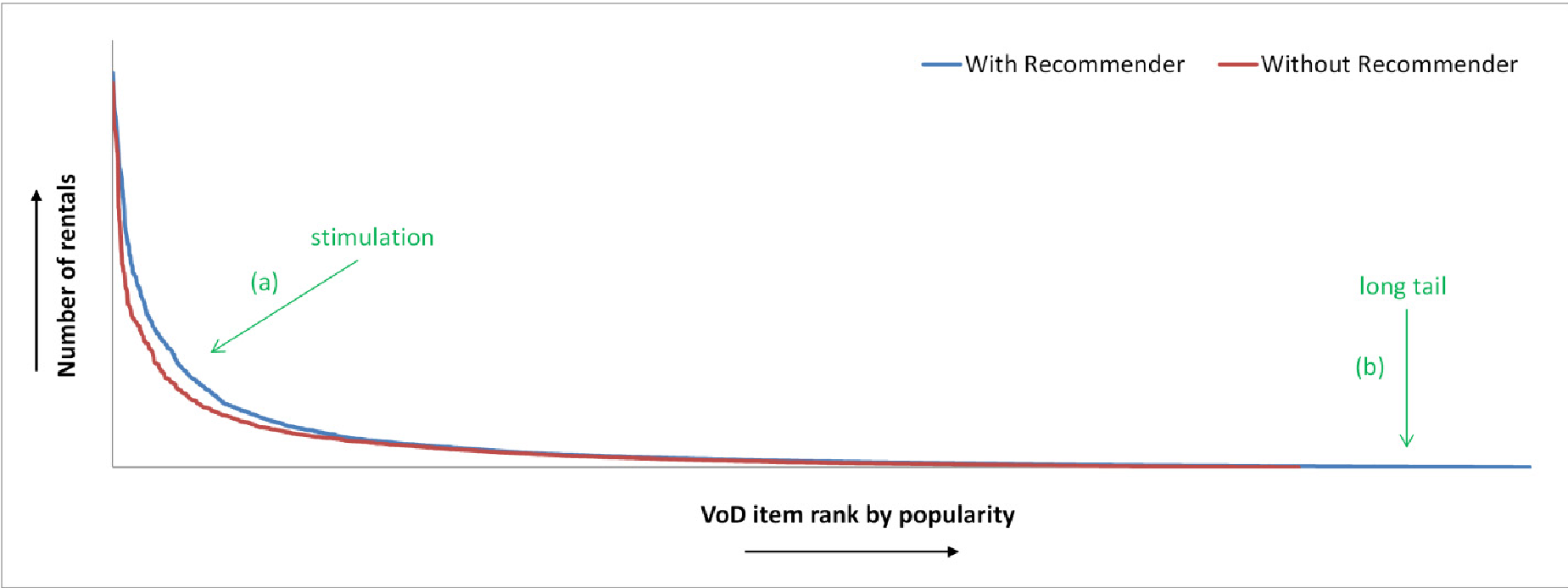 Figure 2: ISN-based recommendation vs. simple popularity-based recommendation.
Corporate Social Analytics
Perhaps the most revealing case was the Implicit Corporate Network. By analyzing communication patterns (email, calls, IMs) of 125 employees, they found that the "social heart" of a company rarely matches its organizational chart. The most central, influential employees were often not the senior managers.
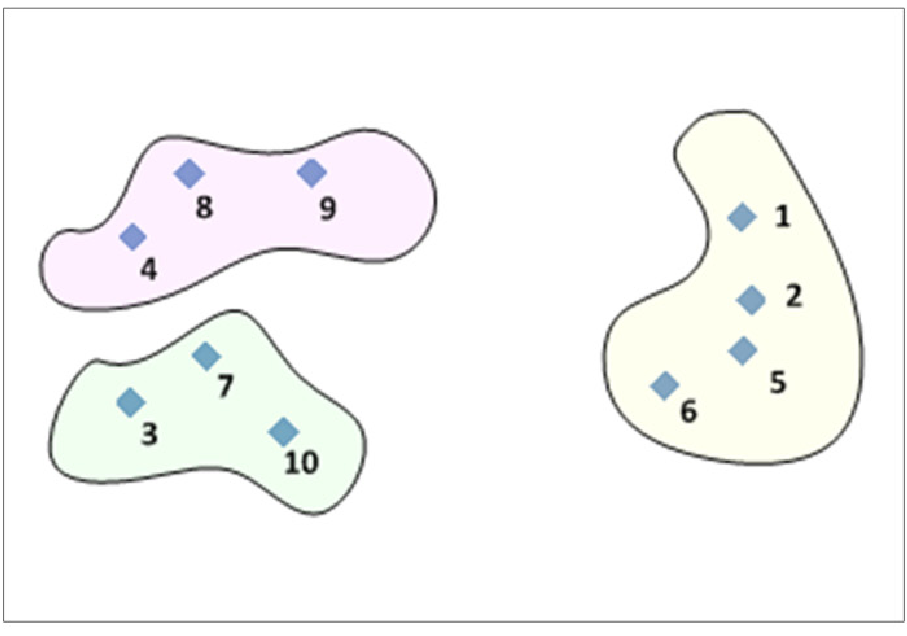 Figure 3: Mapping the hidden social roles within a multinational company division.
Critical Insight & Conclusion
The true value of this paper lies in its philosophical shift: viewing social networks as a calculated property of data rather than a user-generated artifact.
Comparison with SOTA (at the time):
While contemporary work focused on extracting networks from single sources (like call logs), this framework allows for multi-source consolidation, creating a much more robust "Hidden Identity" for the user.
Limitations:
- Privacy: While the authors emphasize consent, calculations at this depth require significant trust from the user.
- Computational Complexity: Performing N-to-N matchmaking in real-time for millions of users (like in the IPTV case) remains a significant engineering challenge.
Final Takeaway: Implicit Social Networking provides a framework for companies to gain a proprietary "social edge" that competitors cannot replicate, simply by reasoning more intelligently over the data they already possess.