
Strategizing Truth: The Hybrid Approach to Rumor Restriction in Social Networks
Rumor restriction in Online Social Networks
This paper introduces the Rumor Restriction problem, which aims to maximize the number of decontaminated nodes in Online Social Networks (OSNs). The authors propose a hybrid seed selection strategy using protectors, where a ratio of seeds is chosen from already contaminated nodes and from decontaminated ones, optimized under both Linear Threshold (LT) and Independent Cascade (IC) models.
TL;DR
In the digital age, malicious rumors spread faster than truth. This paper proposes the Rumor Restriction problem, a novel framework that doesn't just protect "healthy" users but actively "converts" contaminated ones. By selecting seed nodes from both contaminated and decontaminated pools, the authors achieve a optimal greedy solution that significantly outperforms traditional containment strategies in real-world networks like Wikipedia and Slashdot.
Problem & Motivation: Why Shielding Isn't Enough
Most existing literature on rumor containment treats nodes as either "safe" or "infected." The typical strategy is a defensive one: find the most influential healthy nodes and reinforce them with the truth.
However, the authors identify a critical oversight: Contaminated nodes are not permanently lost. In many cases, users spread rumors simply because no counter-information exists (e.g., a student sharing a "canceled exam" rumor before an official TA announcement). By ignoring the contaminated set, traditional models miss out on the potential of "converted" nodes to act as powerful shields for their neighbors.
Methodology: The Framework
The core innovation lies in the ratio. The problem aims to find a seed set such that:
- protectors are chosen from the Contaminated Set ().
- protectors are chosen from the Decontaminated Set ().
1. The Physics of Influence: Status Weight
To handle the competition between "Good" and "Bad" information, the authors introduce , a status weight that aggregates the influence of neighbors.
- If , the node is protected.
- If , the rumor prevails.
- For contaminated nodes, a "Trust Threshold" must be overcome to flip their status.
2. Theoretical Guarantee
The authors prove that the decontamination function is monotone and submodular. In plain English: adding more protectors always helps (monotony), but the marginal benefit of adding one more protector decreases as the set grows (submodularity). This mathematical property is crucial because it justifies the use of Greedy Algorithms, ensuring they stay within 63.2% () of the absolute best possible solution.
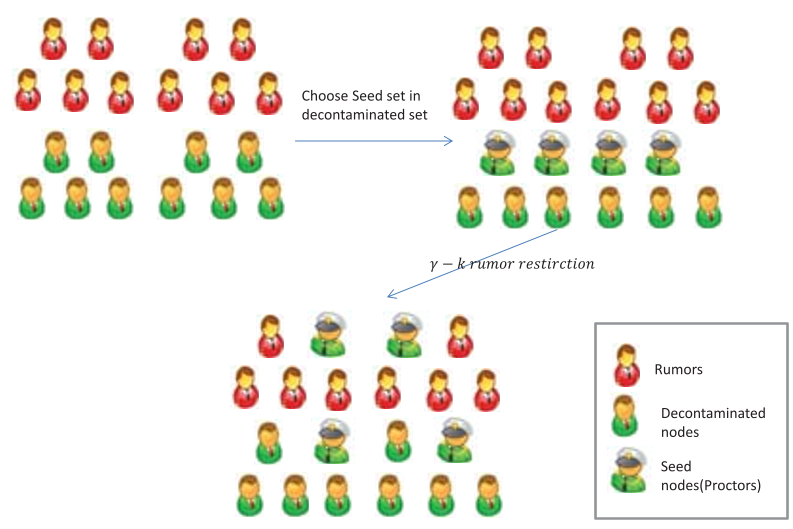 Figure 1: Comparison between traditional methods (left/middle) and the proposed approach (right) which targets both sets.
Experiments & Results
The researchers tested their greedy algorithms (Algorithm 1 for LT model, Algorithm 2 for IC model) across three diverse datasets:
- NetHEPT: Academic collaboration.
- WikiVote: Social voting.
- Slashdot: High-degree news discussion network.
Key Findings:
- The Power of Conversion: The performance improved drastically as increased. Selecting protectors from the contaminated set allowed the "truth" to intercept the rumor closer to its source.
- Scalability: Even on the Slashdot dataset (77K nodes, 905K edges), the greedy algorithm effectively identified influential nodes that maximized network decontamination.
- Threshold Sensitivity: In the Linear Threshold model, as the trust threshold increased (making nodes more skeptical), the importance of picking high-influence protectors became even more pronounced.
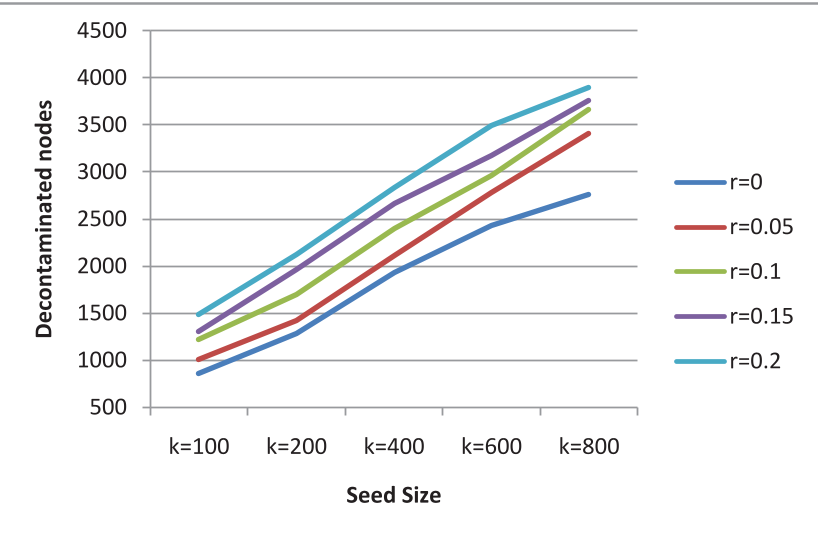 Figure 2: Performance comparison showing that the restriction (Algorithm 1) consistently saves more nodes than traditional baselines.
Critical Insight: The "Truth Factor"
One of the most interesting parameters in this study is (Truth Factor) in the IC model. It represents the probability that a contaminated node becomes decontaminated after being activated by a "truth-bearing" neighbor. The results suggest that in environments where people are highly receptive to authorized info (high ), targeting a few influential "spreaders" is exponentially more effective than widespread defensive seeding.
Conclusion & Future Outlook
This paper shifts the paradigm of rumor control from a purely defensive "firewall" approach to a more active "conversion" strategy.
Limitations: The model assumes all rumors are of the same type and that a "protected" node never reverts to being contaminated. In reality, the "war of information" is often more volatile.
Future Work: The authors suggest using Game Theory to model scenarios with multiple competing rumors and incorporating historical data to identify nodes that are "rumor-prone" before an outbreak even occurs.