
Virtualizing the Social Web: Efficient Application Execution via OSN-Cloud Integration
Running applications efficiently in online social networks
This paper introduces a novel integrated framework that combines Online Social Networks (OSNs), Virtual Appliances (VAs), and utility computing to run legacy applications efficiently. By leveraging the Facebook API and Xen-based virtualization, the authors demonstrate a system capable of dynamic resource scaling based on real-time social platform demand.
TL;DR
This research presents a pioneering approach to hosting applications within Online Social Networks (OSNs) by merging them with Virtual Appliances (VAs) and utility computing. By treating applications as dynamic, virtualized entities, the system can scale from a single user to millions automatically, solving the "all-or-nothing" resource allocation problem typical of viral social apps.
Background: The Infrastructure Paradox
In the era of Facebook and MySpace, developers faced a "success trap." Viral marketing could instantly drive thousands of users to an application, but most apps (over 87%) remained niche with fewer than 1,000 daily users. This created a massive efficiency gap:
- Under-provisioning leads to crashes during viral peaks.
- Over-provisioning leads to wasted capital on idle hardware.
The authors position their work as a bridge between the user-centric OSN front-end and a backend utility compute environment that treats infrastructure as a fluid resource rather than a static rack of servers.
The Solution: A Triple Synergy
The core innovation lies in the integration of three distinct layers:
- Online Social Networks (OSN): Acts as the delivery portal and identity provider (using Facebook API).
- Virtual Appliances (VAs): Encapsulated, ready-to-run software stacks that eliminate OS management overhead.
- Utility Computing: A resource pool managed by Xen, Moab, and Condor that provides the "muscle" for scaling.
System Architecture
The architecture is divided into the Utility Provider (managing physical nodes via Xen and Torque) and the Service Provider (managing application logic).
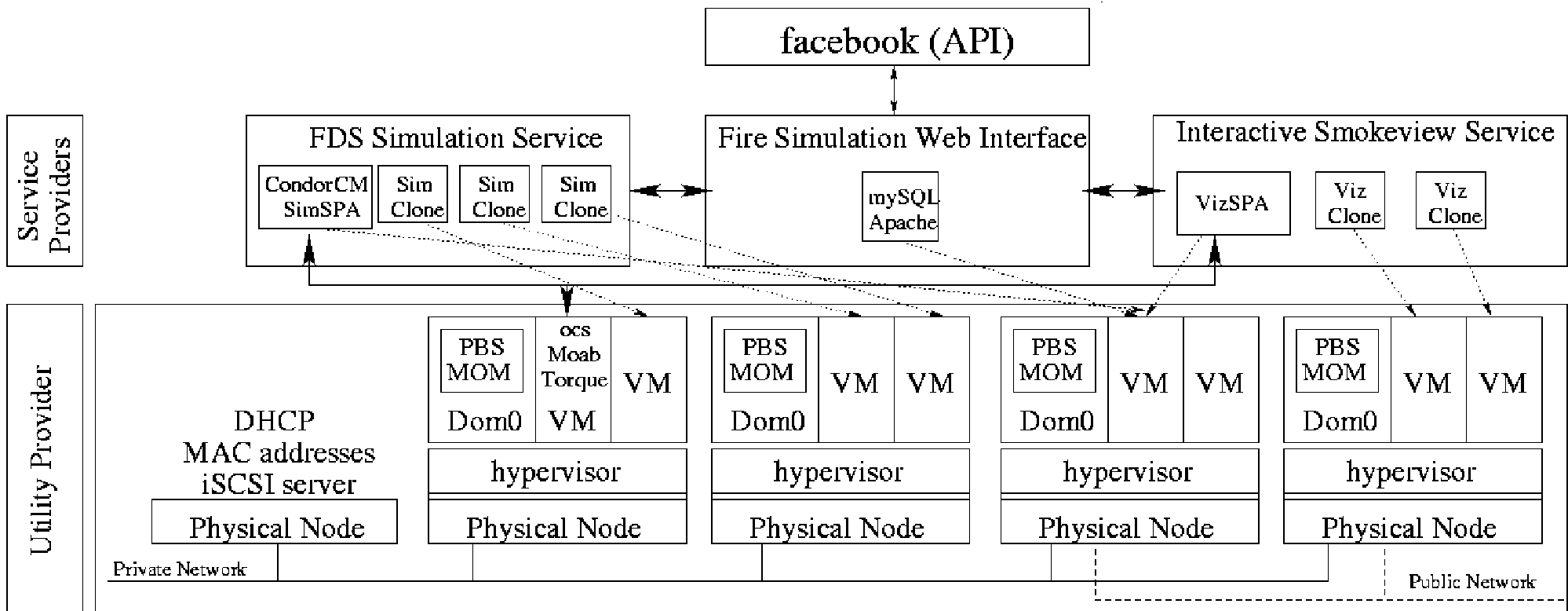 Figure 1: The layered infrastructure showing how Service Provider Agents (SPAs) communicate with the Utility Provider Orchestrator (UPO).
Methodology: Dynamic Scalability
When a user accesses an application—specifically demonstrated using the Fire Dynamics Simulator (FDS)—the system checks current load.
- Horizontal Scaling: If demand peaks, the Service Provider Agent (SPA) requests a new VA instance from the Utility Provider Orchestrator (UPO). This instance is cloned from a "pristine" iSCSI image.
- Dynamic Contraction: When user count drops, unnecessary VAs are decommissioned, returning resources to the shared pool.
This "pay-as-you-grow" model is essential for the long-tail distribution of social apps, as shown in the paper's analysis of Facebook application statistics.
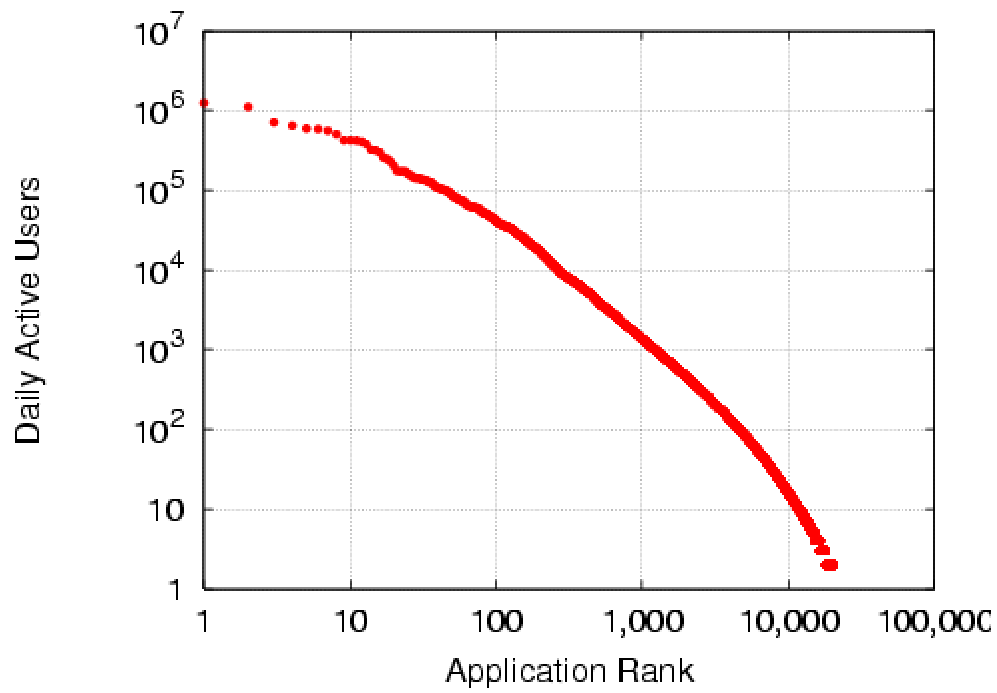 Figure 2: Data highlighting the "Long Tail" of OSN applications, where a tiny fraction accounts for the majority of traffic, necessitating extreme elasticity.
Results & Impact
The prototype demonstrated that VAs could boot in roughly 30 seconds, a respectable speed for that era of virtualization. This responsiveness ensures that the "social" experience remains seamless; users don't wait for server provisioning.
Key findings include:
- Efficiency: Significant reduction in idle resource usage for "unpopular" applications.
- User Experience: Integration of legacy tools (like FDS) into a social GUI (with discussion boards and shared results) increased engagement compared to standalone use.
Critical Analysis & Future Outlook
While this work was ahead of its time, its primary limitation lies in the 30-second boot latency, which the authors aim to reduce to 10 seconds. In modern contexts, this would be solved by Containerization (Docker/K8s), but the fundamental logic of SPA-based orchestration remains the cornerstone of modern cloud-native scaling.
Why It Matters
This paper wasn't just about making Facebook apps run better; it was about the democratization of high-performance computing (HPC). By wrapping a complex Fire Simulator in a social portal and backing it with automated cloud scaling, the authors proved that "Everything as a Service" (XaaS) could bridge the gap between complex legacy software and the everyday social user.
Takeaway: The future of enterprise IT isn't just about hardware efficiency—it's about social accessibility backed by virtualized elasticity.