
SafeChat: Shielding Children with Privacy-Preserving Cyberbullying Filters
SafeChat: A tool to shield children's communication from explicit messages
SafeChat is a secure communication framework designed for child protection, integrating the 4-CBAF authentication model with the SecureString 2.0 cryptosystem. It achieves a state-of-the-art balance between content censoring and privacy by filtering explicit language directly within encrypted traffic at the Communication Service Provider (CSP) level.
TL;DR
SafeChat is a novel communication framework that protects children from cyberbullying without compromising their digital privacy. By integrating SecureString 2.0 and the 4-CBAF model, it detects and replaces offensive language within encrypted messages at the server level, ensuring that neither hackers nor the service providers themselves can read the private conversations.
Background & Motivation: The Privacy-Protection Paradox
As Internet usage among youth nears 100%, cyberbullying has become a silent epidemic, affecting 20-40% of teenagers. Previous technical solutions forced a difficult choice:
- Local Filtering: Installed on the child's phone, but easily bypassed by using a friend's device or a web browser.
- Centralized Filtering: Efficient and hard to bypass, but requires the Service Provider to read every message in plaintext, creating a massive privacy risk and a target for Man-in-the-Middle (MITM) attacks.
The authors of SafeChat argue that we should not have to sacrifice privacy for safety. Their insight? Filter the ciphertext itself.
Methodology: The "Blind" Filter Architecture
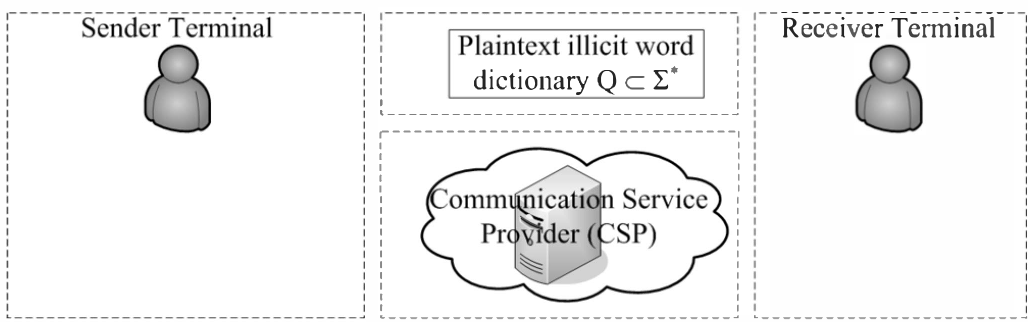
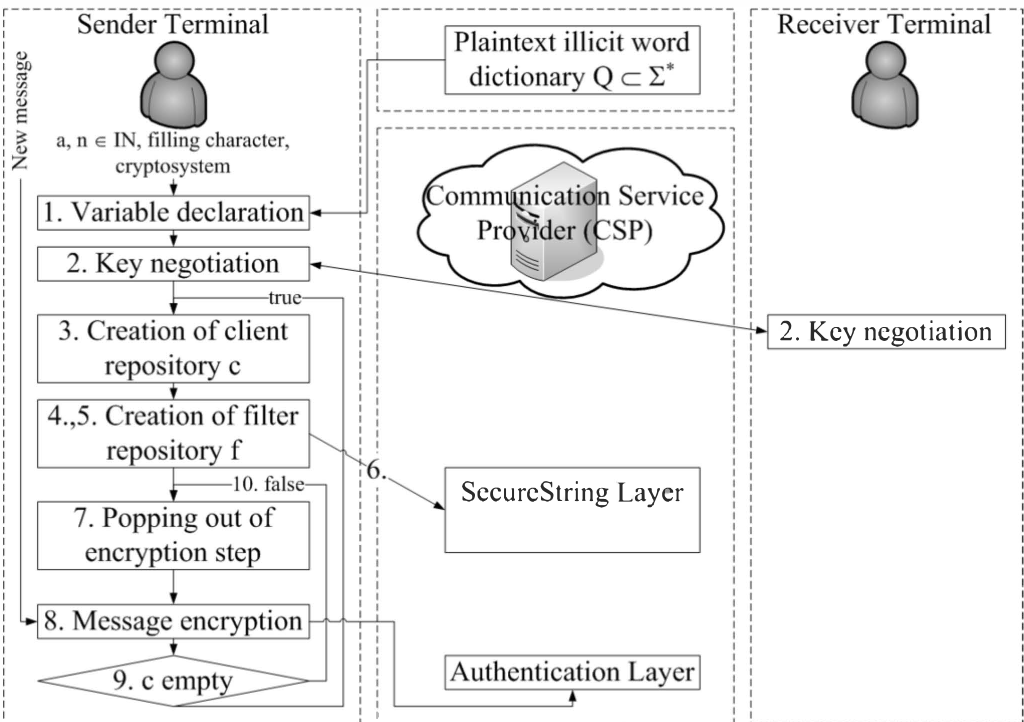
SafeChat's architecture is a sophisticated pipeline involving the Sender Terminal, the Communication Service Provider (CSP), and the Receiver Terminal.
1. The SecureString 2.0 Layer
Instead of encrypting a whole sentence as one block, SafeChat encrypts character strings word-by-word (or n-gram by n-gram). This allows the system to maintain a "Filter Repository" containing the encrypted versions of offensive words.
- Step: The sender terminal saltes and encrypts words.
- Insight: Because the CSP has the encrypted "dictionary," it can perform a search-and-replace on the encrypted message without ever knowing what the actual words are.
2. The 4-CBAF Governance Model
The framework organizes its logic into four distinct layers:
- Authentication & Authorization: Verifies who the sender is and if they are allowed to talk to the child.
- Context Layer: Checks the legality of the service being used.
- Human Layer: When a message is flagged, it can trigger a "parental intervention ticket," allowing parents to review the situation on the child's device.
Experiments & Results
The researchers tested SafeChat using a simulated 3-tier architecture (Sender-CSP-Receiver) using AES-128 encryption.
Performance Efficiency
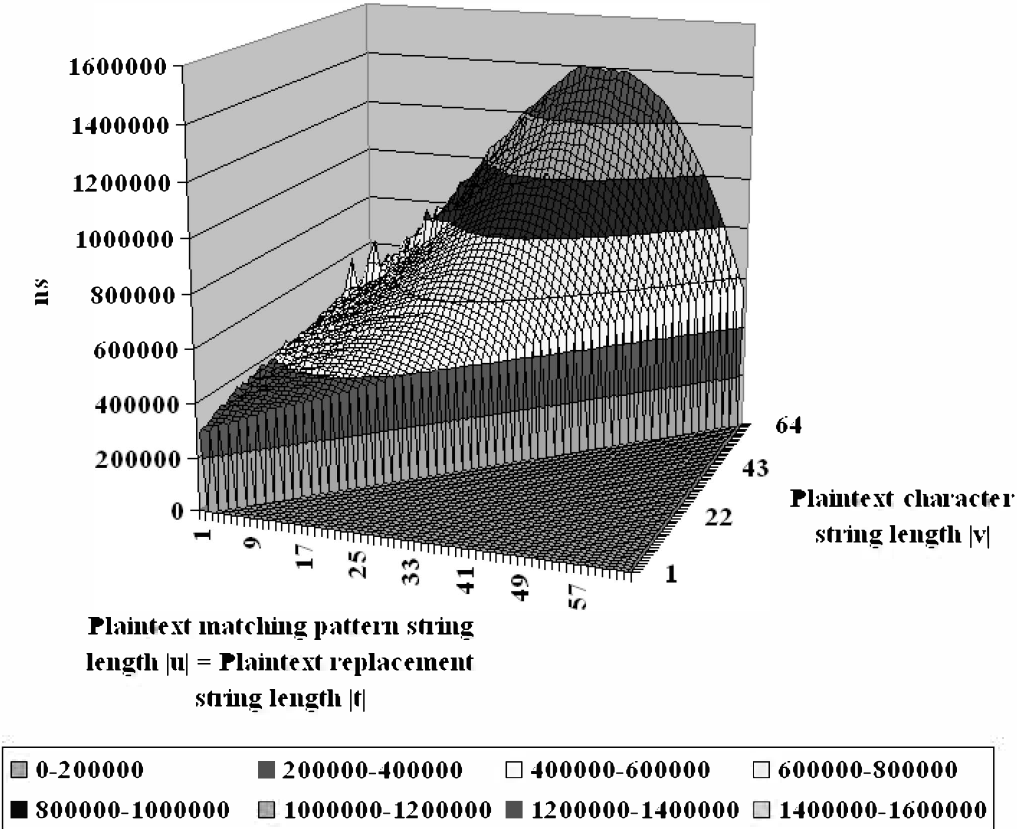
The time complexity of the filtering operation remains logarithmic relative to the dictionary size: . In practical tests on an HP DL380 G5 server, filtering operations for common message lengths were completed in the nanosecond range, proving that the security overhead is negligible for real-time chatting.
Comparative Edge
Compared to legacy systems like SecureNet, SafeChat is the only framework that provides Privacy Preservation through Integrated Encryption. Other systems either lack encryption or cannot filter messages once they are encrypted.
Critical Analysis & Conclusion
Takeaway
SafeChat successfully bridges the gap between encryption and moderation. By moving the "intelligence" of the filter into the encrypted domain, it creates a "Secure Sieve" that respects user boundaries while enforcing safety rules.
Limitations & Future Work
The current version relies on keyword matching. While efficient, "inventive teenagers" may try to bypass the filter using leetspeak or intentional typos (e.g., "h4te" instead of "hate"). The authors suggest that future iterations will incorporate Searchable Encryption with Similarity Queries to catch phonetic variations and fuzzy matches.
Ultimately, SafeChat represents a major step toward a safer, more private internet for the next generation.