
Optimized Facility Selection: Breaking the Efficiency Bottleneck in Geo-Social Influence Maximization
Sample Location Selection for Efficient Distance-Aware Influence Maximization in Geo-Social Networks
This paper introduces a novel sample location selection framework for Distance-Aware Influence Maximization (DAIM) in geo-social networks. The authors propose a heuristic approach based on facility location allocation (l-center problem) to optimize precomputation and online seeding performance.
TL;DR
Distance-Aware Influence Maximization (DAIM) is essential for promoting physical locations (e.g., restaurants) in social networks, but its efficiency is traditionally crippled by naive spatial sampling. This paper proposes a Facility-Location-based Sampling (FLS) approach. By treating sample selection as an optimized l-center problem focused on a "Query Zone" where users actually exist, it achieves SOTA performance while reducing precomputation costs by orders of magnitude.
Problem & Motivation: The "Empty Space" Trap
In traditional Influence Maximization, we care about who is influential. In Geo-Social networks (DAIM), we also care where they are. Users near a query location (the promoted business) carry more weight.
Current SOTA methods like RIS-DA or MIA-DA precompute influence spreads for a set of "sample locations." However, they typically use Random Sampling or Equal Cell Sampling.
- The Flaw: These methods blanket the entire 2D map. In reality, users are clustered in urban centers. Sampling a desert or a forest where no users exist is a waste of offline precomputation time and online memory.
- The Insight: A query location only matters if it adheres to the distribution of users. If a location is too far from everyone, the "Distance-Aware" weight becomes negligible, making influence maximization meaningless.
Methodology: From Geometry to Smart Sampling
The authors shift the focus from the entire space to a defined Query Zone (the union of circles around all users).
1. Anchor Point Selection
To make the continuous space computationally tractable, they select discrete Anchor Points:
- Baseline (FLS): Uses user locations as anchors.
- Improved (FLS-3): Adds points along the circumference of user activity circles to provide a tighter mathematical bound on the objective distance.
2. Solving the l-center Problem
The task is to find sample locations that minimize the maximum distance to any anchor point. Since this is NP-hard, they propose a two-tier heuristic:
- Inner Loop: Solves the 1-center problem (Minimum Enclosing Circle) for a subset of points.
- Outer Loop: Uses a Voronoi-based iterative refinement to re-partition anchor points into better clusters.
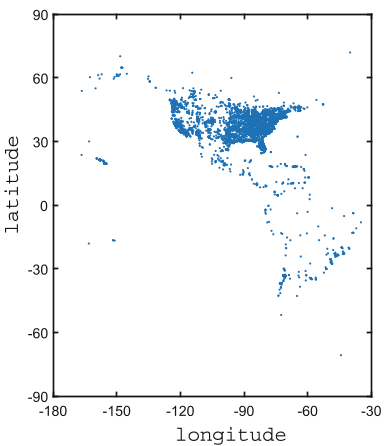 Figure 1: Comparison between (b) Equal Cell Sampling and (d) the proposed Query Zone sampling.
Experiments & Results: Orders of Magnitude Faster
The authors tested their approach on Brightkite and Gowalla datasets.
- Objective Distance: FLS/FLS-3 achieved significantly lower maximum distances than K-means and Random Sampling.
- Online Efficiency: Because the sampling is more "intelligent," the online seeding (finding the best users) is much faster. In Brightkite, seeding time dropped from hours to mere minutes.
- Offline Balance: To reach the same accuracy, FLS required only 80-100 samples, whereas K-means required 1000 and Random Sampling exceeded 2000.
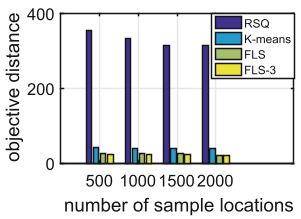 Figure 2: Performance metrics across different sampling sizes and datasets.
Critical Analysis & Conclusion
Takeaway
The core contribution is the realization that geography in social networks is not a uniform plane, but a sparse manifold. By utilizing facility location heuristics, the authors provide a bridge between classic geometry and modern social influence.
Limitations
- Computational Cost: While it improves DAIM efficiency, calculating the sample locations themselves (FLS-3) is more expensive than K-means.
- Static Distribution: The model assumes user locations are relatively static. In a highly mobile world, the "Query Zone" might need dynamic updating.
Future Outlook
This work opens the door for adaptive sampling—where the sampling density could change based on time-of-day or trending events in specific locations, further bridging the gap between digital influence and physical foot traffic.