
Scalable AI in Healthcare: Predicting Diabetic Adverse Events via Multi-GPU Deep Learning
7987_Scalable Healthcare Assessment for Diabetic Patients Using Deep Learning on Multiple GPUs.
This paper presents a scalable deep learning framework for longitudinal healthcare assessment of Type 2 Diabetes Mellitus (T2DM). Utilizing a Recurrent Neural Network (RNN) and multi-GPU distributed computing, it achieves State-of-the-Art (SOTA) prediction results for adverse events, including a 97% accuracy for acute myocardial infarction and 94.6% for general comorbidity incidence.
TL;DR
Predicting the progression of Type 2 Diabetes Mellitus (T2DM) at a population level has long been a computational bottleneck. This paper introduces a scalable healthcare assessment system using Recurrent Neural Networks (RNNs) and multi-GPU architecture to analyze longitudinal data from 150,000 patients. By leveraging distributed computing and specialized balancing techniques, the authors achieved an impressive 97% accuracy in predicting Myocardial Infarction.
Problem & Motivation
T2DM is the fourth leading cause of mortality worldwide. While electronic health records (EHRs) provide a wealth of data, two major obstacles persist:
- Temporal Dependency: Medical data is not just a static snapshot; it is a sequence of lab results and assessments over years. Classical Machine Learning (ML) often ignores this "time-series" nature.
- Computational Scarcity: Deep Learning (DL) models are hungry for resources. Scaling these models to handle hundreds of thousands of patients with hundreds of clinical variables requires more than just a standard CPU setup.
The authors' insight was to treat patient history as a sequence of events—making RNNs the logical choice—and to utilize GPU parallelism to make the training feasible for large-scale clinical deployment.
Methodology: The Core
The research utilized the Basque Health Service (Osakidetza) database, processing 150,156 patients and 321 variables across four years.
The RNN Architecture
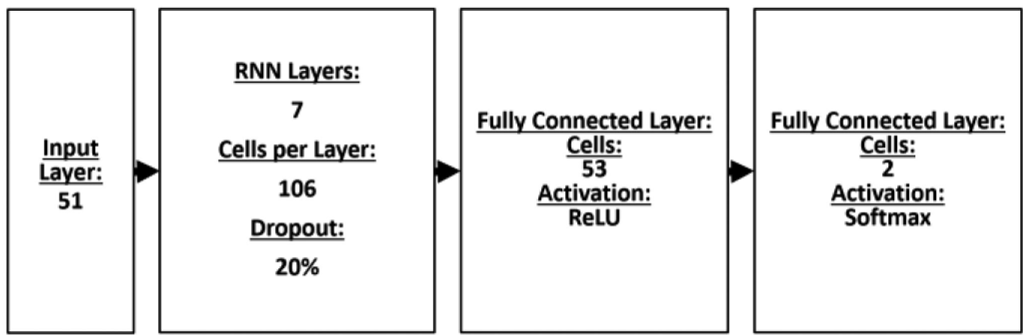
Unlike traditional regression, the RNN (specifically Gated Units) can "remember" past clinical states to predict future risks. The implemented architecture features:
- 7 Multi-cell layers with 106 cells each.
- Adam Optimizer with a 10⁻⁴ learning rate.
- Dropout (20%) to prevent overfitting on complex clinical features.
Leveraging Multi-GPU Scalability
To handle the sheer volume of data, the authors implemented a Data Parallelism schema. By distributing batches across two NVIDIA Titan X GPUs, they maintained model consistency while drastically reducing training time—a setup that is "Cloud Ready" for AWS migration.
Experiments & Results
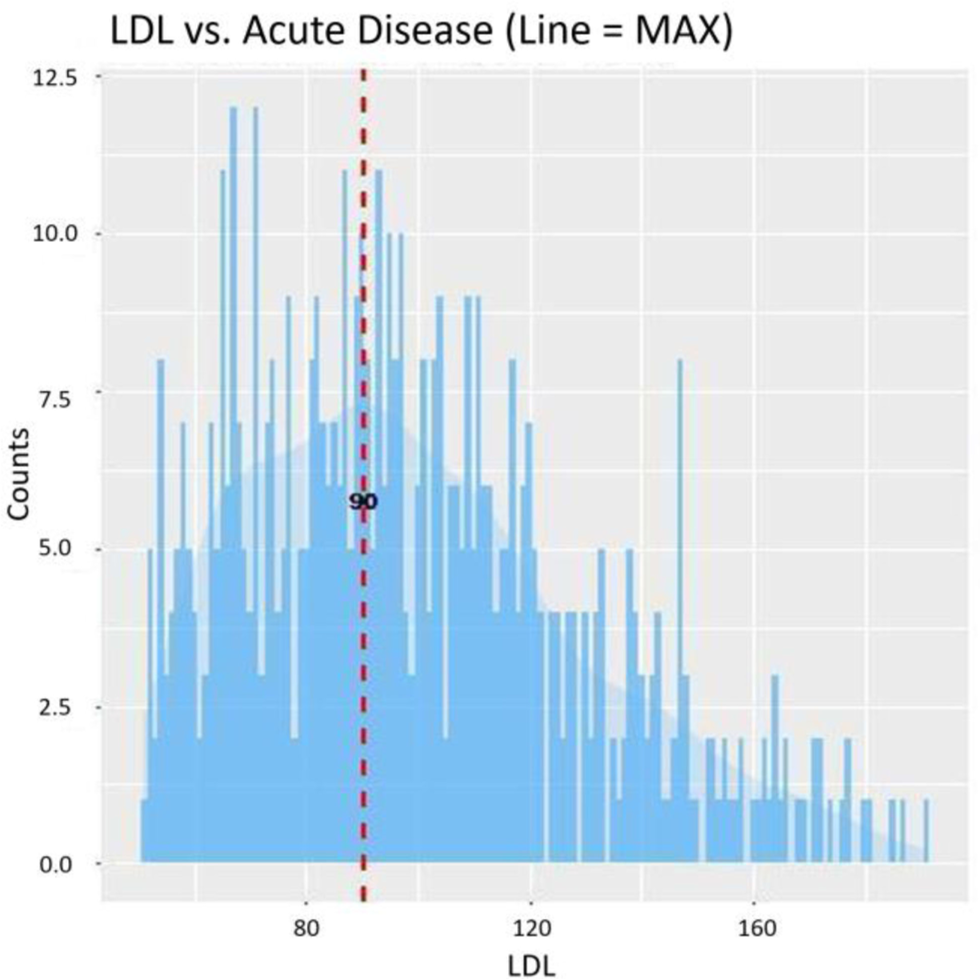
The study compared classical ML (Logistic Regression, LDA, SVM) against the Deep Learning RNN approach.
Key Performance Wins:
- Acute Myocardial Infarction (MI): LDA and SVM reached a near-perfect 97% Accuracy.
- General Comorbidity Prediction: The RNN dominated with 94.6% Accuracy, outperforming classical methods by roughly 7.4%.
- Bootstrap Efficiency: The inclusion of bootstrapping helped the RNN generalize better compared to simple downsampling.
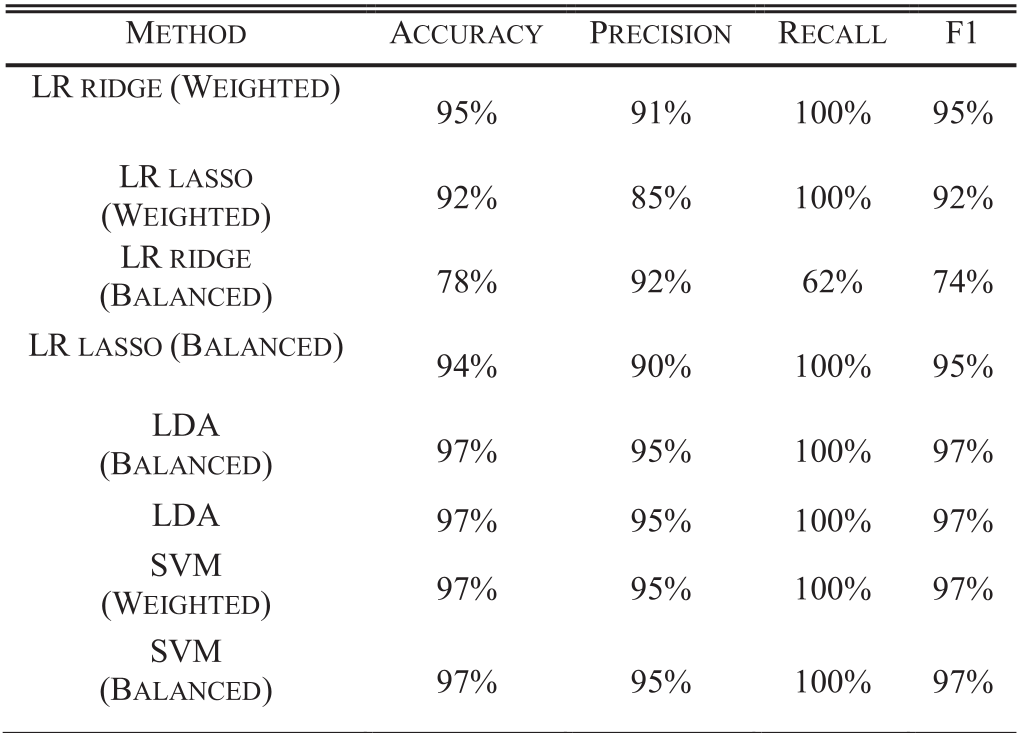
One notable discovery during data observation was the "Threshold Paradox": The highest probability of developing acute disease often occurs below the traditional healthy threshold for diabetic patients, suggesting that AI can identify sub-clinical risks that humans might overlook.
Critical Analysis & Conclusion
Takeaway
This work demonstrates that deep learning isn't just for image recognition or NLP; it is a critical tool for large-scale epidemiology. The transition from classical ML to RNNs allows healthcare providers to move from reactive treatment to proactive prevention.
Limitations & Future Work
- Data Granularity: Major Amputations (AMP) had too few cases for standalone deep learning training, requiring further data augmentation.
- Interpretability: While LDA provides some feature importance, the RNN remains a "black box," which can be a hurdle for clinical acceptance.
- Future Path: The authors intend to scale this model onto AWS to handle even larger, multi-national datasets, potentially integrating more diverse demographic variables.
By bridging the gap between high-performance computing and clinical practice, this research sets a benchmark for the next generation of automated healthcare assessment systems.