
MIA: Scaling Influence Maximization to Million-Sized Social Networks
Scalable influence maximization for independent cascade model in large-scale social networks
The paper introduces the Maximum Influence Arborescence (MIA) model and its sequence-based extension (PMIA) for Influence Maximization (IM) in social networks. It demonstrates that MIA/PMIA achieves near-greedy influence spread while being several orders of magnitude faster, effectively scaling the Independent Cascade (IC) model to networks with millions of nodes and edges.
TL;DR
Influence Maximization (IM)—the quest to find the most influential "seeds" to trigger a viral cascade—has long been a battleground between accuracy and scalability. Academic benchmarks often rely on "Greedy" algorithms using Monte-Carlo simulations, which are notoriously slow. This paper introduces MIA (Maximum Influence Arborescence), a heuristic that achieves the accuracy of Greedy algorithms but runs thousands of times faster by approximating the network as a collection of local tree structures.
The Scalability Wall: Why Greedy Fails
In the Independent Cascade (IC) model, influence spreads like a virus: if node is active, it has a probability of activating its neighbor . To find the best seeds, we need to know the "Expected Spread" (). The problem? Calculating is #P-hard.
Previous SOTA (State-of-the-Art) methods, like the "Lazy-Forward" Greedy algorithm, try to estimate by running 20,000+ Monte-Carlo simulations for every potential seed. On a medium-sized graph (30K edges), this takes hours. On a million-edge graph, it simply never finishes.
The Structural Insight: Maximum Influence Arborescence (MIA)
The authors propose a radical simplification: In a social network, most influence travels through the "strongest" paths.
Instead of considering every possible path a virus could take (which is exponential), MIA focuses on the Maximum Influence Paths (MIP)—the paths with the highest cumulative probability (found using Dijkstra). By grouping these MIPs, we get an Arborescence (a directed tree).
Why Trees Matter
On a general graph, influence is messy because paths can overlap and depend on each other. On a Tree, influence is linear. The authors prove that the activation probability of a node in a tree can be computed via a simple recursive formula without any simulations.
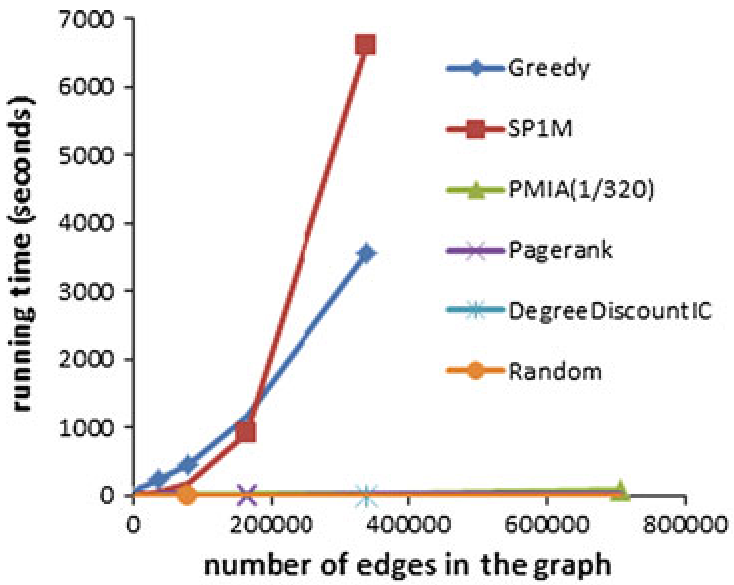 Fig 1: The model restricts influence to local regions, defined by the influence threshold .
Efficiency through Linearity
The paper doesn't just use trees; it exploits the Linear Relationship of influence within them. They show that: This means if we know how a node changes, we can instantly calculate its effect on its ancestor . This allows for a Batch Update scheme where selecting a seed only requires local updates to the incremental influence of its neighbors.
Experimental Battleground
The researchers tested MIA against traditional Greedy, PageRank, and Degree-based heuristics across datasets like DBLP and Amazon.
1. Massive Speedup
On synthetic power-law graphs, MIA maintained a flat runtime curve while Greedy and SP1M (Shortest Path heuristics) hit a vertical wall.
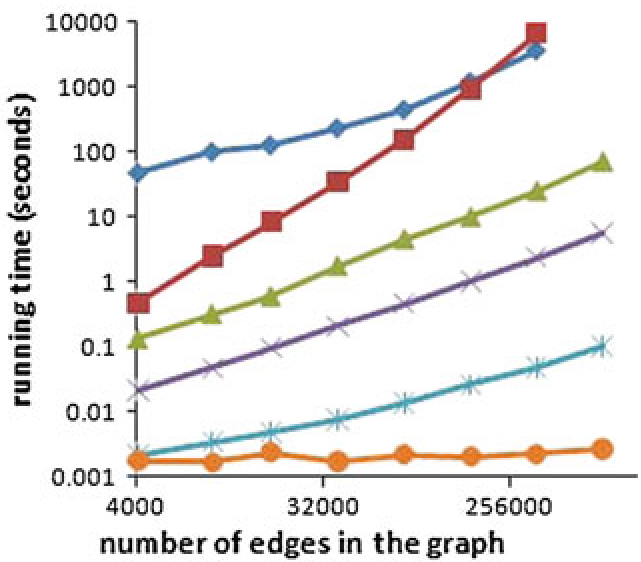 Fig 2: Runtime (Log-Log scale). MIA stays efficient even as graphs approach 1M nodes.
2. Matching SOTA Spread
Speed is useless if the algorithm picks bad seeds. However, MIA's spread is almost identical to the Monte-Carlo Greedy algorithm, frequently staying within a 1-5% margin of the theoretical maximum, while crushing other scalable heuristics like PageRank.
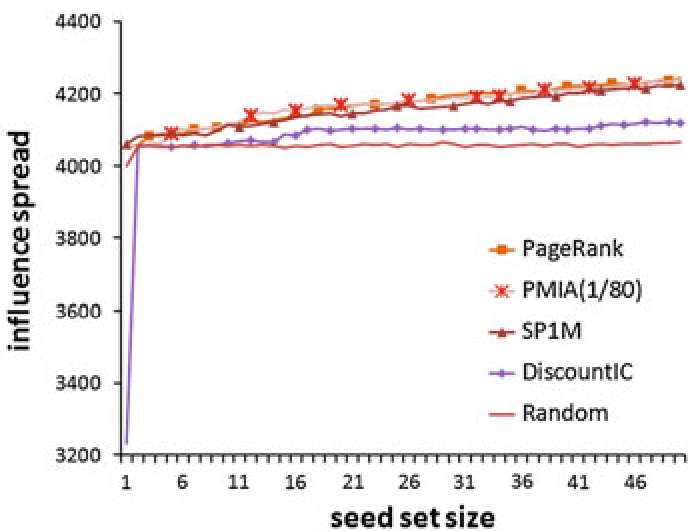 Fig 3: In the NetHEPT dataset, PMIA (red) matches the Greedy benchmark (blue) while being 3,000x faster.
Critical Analysis & Conclusion
The brilliance of MIA lies in its Tunability. By adjusting the parameter , practitioners can decide if they want a ultra-fast "rough" estimate (high ) or a slower, high-precision influence map (low ).
Takeaway: MIA proves that we don't need global knowledge to solve local influence problems. By partitioning a massive social network into local arborescences, we can solve viral marketing problems on a laptop that previously required a server farm.
Limitations: The model assumes we know the propagation probabilities () on each edge. In reality, these are rarely gifted to us and must be learned from history—a separate challenge for the field of Social Influence Mining.