
IETSM: Measuring the Unmeasurable Strengths of Social Ties via Inductive Embedding
Scalable Social Tie Strength Measuring
The paper proposes IETSM (Inductive Embedding based Tie Strength Measuring), a scalable framework to quantify interpersonal tie intensity using only network topology. It achieves SOTA performance in identifying weak ties across massive social networks by iteratively co-optimizing node embeddings and tie strength scores.
TL;DR
Determining whether a social connection is a "strong tie" (close friend) or a "weak tie" (acquaintance) is crucial for targeted marketing and community analysis. This paper introduces IETSM, a scalable framework that measures tie strength purely from network topology. By analyzing how removing an edge impacts a node's "influence footprint," IETSM effectively identifies bridge edges (weak ties) in networks with millions of users.
Background: The Power of Weak Ties
In sociology, the "Strength of Weak Ties" theory suggests that acquaintances are more valuable than close friends for receiving new information, as they act as bridges between disparate communities. However, in Online Social Networks (OSNs), measuring these ties is difficult because interaction data is often private or sparse. While network embedding (like DeepWalk or LINE) has succeeded in node-level tasks, using it to measure edge-specific "intensity" remains a significant challenge due to scalability and the lack of task-specific optimization.
The Core Insight: Edge Impact as Strength
The authors redefine tie strength through the lens of Information Diffusion.
- Strong Ties: If you delete a strong tie, the two people likely still share many mutual friends; their "influence" on the network doesn't change much.
- Weak Ties: If you delete a weak tie (a bridge), the connection between two communities is severed. This causes a massive drop in the similarity of the nodes' influences.
IETSM captures this intuition by measuring the Inverse Impact: The more an edge's removal changes the similarity between its endpoints' neighborhood influences, the weaker that tie is.
Methodology: Inductive Embedding & Iterative Learning
To make this computationally feasible for OSNs, the framework employs four key components:
- Influence Representation: A node's influence is modeled as the weighted sum of its neighbors' embeddings, captured inductively.
- Edge Impact Analysis: It calculates the difference between influence vectors in the original network versus a reduced network .
- Random Walk Acceleration: Instead of calculating global influence, it uses -step random walks to approximate neighborhood distributions, reducing complexity to .
- Co-Optimization: The tie strength scores (A) and node embeddings (U) are trained iteratively. High-strength ties pull node embeddings closer, while weak ties allow for heterogeneity.
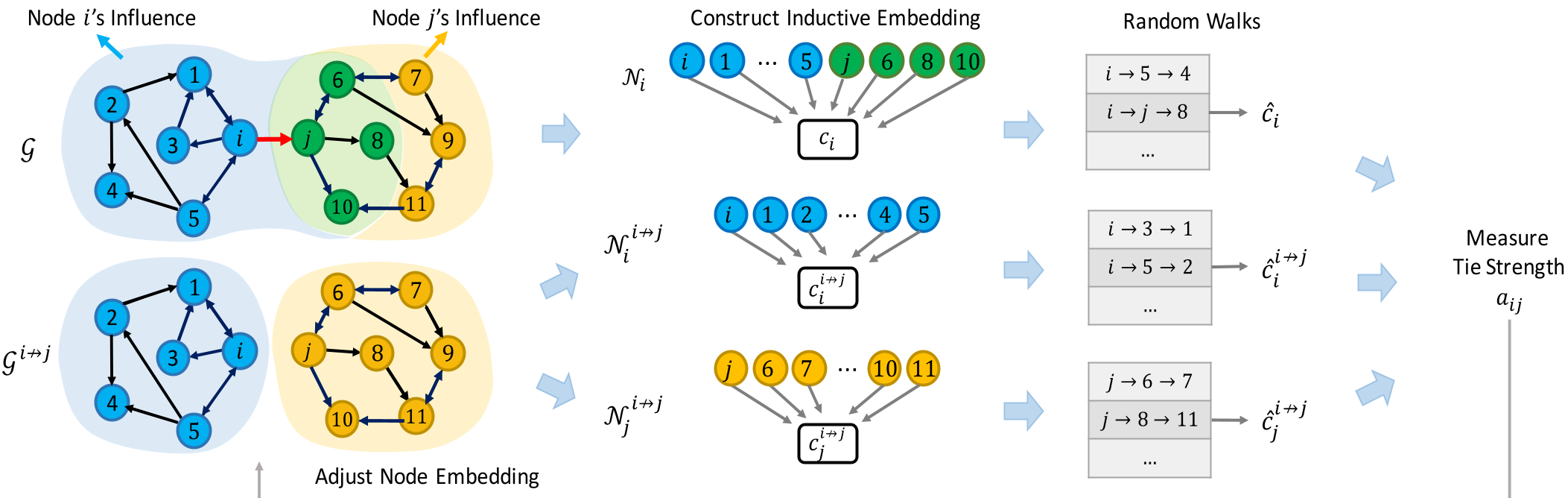 Figure 1: The IETSM workflow—comparing and the reduced network to estimate impact.
Experimental Validation
The authors tested IETSM against classical methods (Adamic-Adar, Katz) and modern embedding techniques.
1. Identifying Weak Ties
In datasets like Bitcoin-Alpha and Youtube, IETSM consistently achieved the lowest "Mean Frequency" in the weak group. This means it accurately isolated edges with the lowest actual interaction counts—valuable for finding "bridge" nodes in marketing.
2. Community Visualization
In the Flickr dataset, IETSM was the only method that clearly separated within-community edges (blue) from between-community bridges (grey dashed).
 Figure 2: Sub-network visualization showing IETSM's superior ability to distinguish community bridges compared to standard similarity measures.
3. Linear Scalability
While Edge Betweenness Centrality (EBC) is , making it impossible to run on large graphs, IETSM's time complexity scales linearly with the number of edges, as shown in Fig 3.
 Figure 3: Computation time remains linear even as the network scale increases to millions of edges.
Critical Insight & Conclusion
IETSM succeeds because it doesn't treat tie strength as a static attribute but as a functional role in information flow. By using inductive embeddings, the model "learns" what a bridge looks like without needing manual feature engineering.
Limitations: The current model focuses on static snapshots. In real-world OSNs, ties evolve. Future versions incorporating Temporal Graph Networks (TGNs) could potentially track how a "weak" bridge matures into a "strong" community bond over time.