
Socially-Aware Scaling: Optimizing Geo-Distributed Clouds via Epidemic Logic
11516_Scaling Social Media Applications Into Geo-Distributed Clouds.
The paper presents a proactive online algorithm for scaling social media applications across geo-distributed cloud sites. It combines an epidemic-based demand prediction model with a one-shot optimization framework and a -step look-ahead mechanism to minimize operational costs while guaranteeing quality-of-service (QoS) in terms of response latency.
TL;DR
Managing large-scale social media applications across global data centers is a balancing act between user latency and "pay-per-use" cloud costs. This paper introduces an online algorithm that predicts which videos will go viral using an epidemic model of social influence. By combining this prediction with a -step look-ahead optimization, the system proactively migrates content and distributes requests, achieving costs nearly as low as an "all-knowing" offline oracle.
The Problem: The Chaos of Social Demand
Standard Content Delivery Networks (CDNs) are built for stability, but social media is anything but stable. A single "retweet" or "share" can cause a localized demand spike that migrates across the globe in hours.
Current cloud scaling solutions face a trilemma:
- Migration vs. Latency: Moving data costs money, but keeping it far from users kills the experience.
- Storage vs. Compute: Cloud providers charge differently for S3 storage, VM rentals, and data egress.
- Myopia: Optimizing for now might lead to expensive re-migrations tomorrow.
Methodology: Predictive Epidemics and Look-Ahead Optimization
The authors move beyond simple time-series forecasting (like ARIMA) by treating video "views" like a spreading virus.
1. The Epidemic Demand Model
Instead of looking at past hits, the model tracks:
- Social Propagation: Friends of users who commented on a video are likely to watch it next.
- Recommendation Propagation: Users watching similar categories are injected into the "susceptible" pool.
This SIR-like model allows the system to see a "wave" of demand before it actually hits a specific geographic region.
2. Dual Decomposition for One-Shot Optimization
To solve where to put a video right now, the authors formulate a Mixed Integer Program (MIP). Because solving MIPs is NP-hard, they use Dual Decomposition.
- They split the problem into Content Replication (Where do we store it?) and Request Distribution (Which site serves which user?).
- By relaxing the constraints and using subgradient descent, they find an efficient solution that respects bandwidth limits and latency targets.
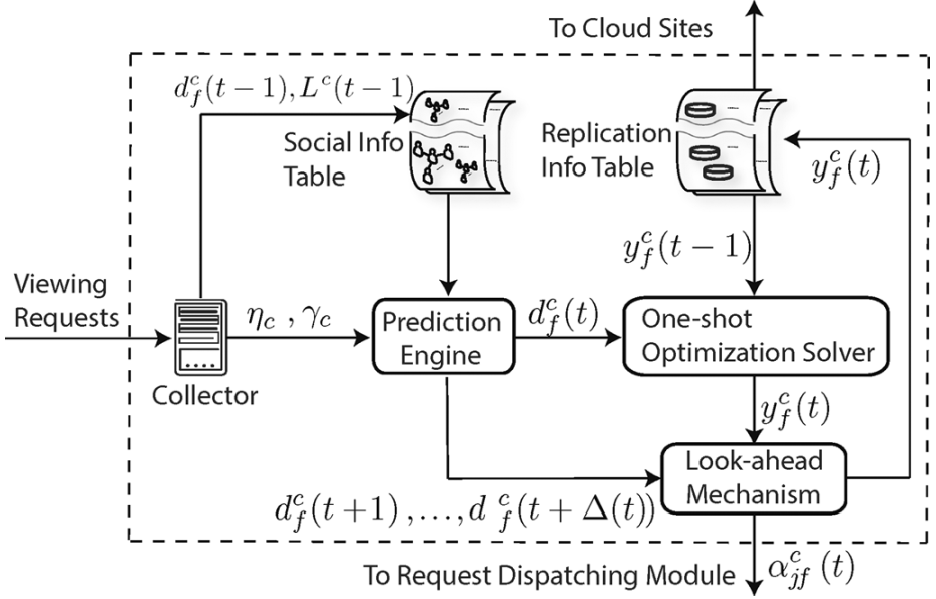 Fig 1: The practical implementation cycle—from social data collection to look-ahead optimization.
3. The -Step Look-Ahead
The "secret sauce" is the look-ahead mechanism. If the one-shot solver says "delete this video to save storage," the look-ahead checks: "Wait, if I delete it now, will I have to pay to migrate it back in 3 hours because of a predicted social surge?" If the future migration cost exceeds the current storage savings, the algorithm overrides the short-term decision.
Experimental Results: Beating the Heuristics
The team emulated a global cloud using 8 Amazon EC2 regions (from Virginia to Tokyo).
- Cost Efficiency: Their algorithm stayed within 8% of the Offline Optimum (a theoretical limit that knows the future).
- VS. Smart CDN: It outperformed "Smart CDN" (which only looks at locality) because it understands the trade-off between cheaper bandwidth at distant sites vs. the latency penalty.
- Prediction Accuracy: The epidemic model significantly outperformed ARIMA, especially in capturing the "bursty" nature of social sharing.
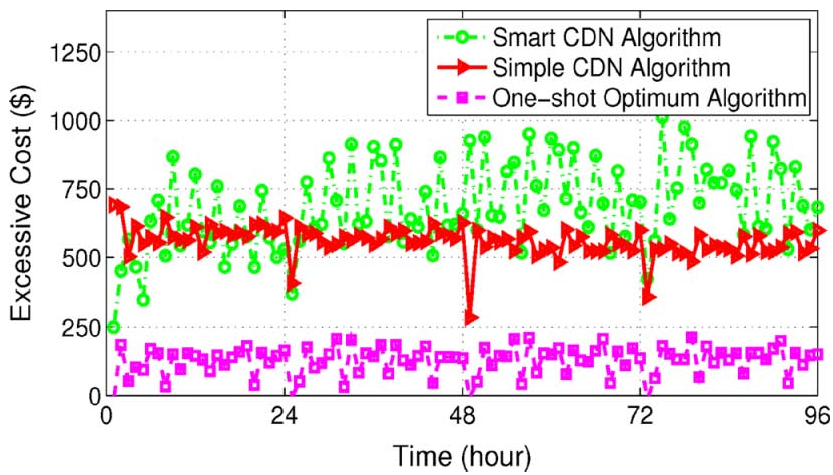 Fig 2: Excessive operational costs of various methods compared to the proposed Look-ahead algorithm.
Critical Insight: Why This Matters
The core value of this work is the mathematical proof of the Look-Ahead adjustment. Many papers use "heuristics" to guess the future; this paper proves that for specific isolation conditions, adjusting the decision based on future steps guarantees a lower overall cost.
However, there are limitations:
- Prediction Error: The model assumes we can accurately estimate social influence parameters (), which might shift during global events.
- Computational Overhead: As the number of videos grows into the millions, solving the dual decomposition for every individual content piece requires massive parallelization.
Future Outlook
This work lays the groundwork for "Socially-Defined Networking," where the application layer's social graph directly dictates the infrastructure layer's data placement. As we move toward 6G and Edge computing, these proactive epidemic models will be vital for managing stateful applications with zero-latency requirements.