
ALIGN: Scaling Vision-Language Learning with 1.8 Billion Noisy Tokens
Scaling Up Visual and Vision-Language Representation Learning With Noisy Text Supervision
ALIGN (A Large-scale ImaGe and Noisy-text embedding) is a vision-language pre-training method that scales to 1.8 billion image-text pairs using noisy alt-text data. It utilizes a simple dual-encoder architecture with a contrastive loss to achieve state-of-the-art results in cross-modal retrieval and competitive performance in zero-shot image classification (76.4% on ImageNet).
TL;DR
ALIGN (A Large-scale ImaGe and Noisy-text embedding) proves that massive scale can overcome data noise. By training a simple dual-encoder on 1.8 billion raw image alt-text pairs from the web, researchers achieved SOTA performance in cross-modal retrieval and zero-shot classification, outperforming models that relied on much cleaner, hand-curated datasets.
Background: Scaling the Data Wall
In the world of NLP, pre-training has long moved to raw, unannotated text. However, Computer Vision (CV) still largely depends on "curated" datasets—ImageNet for labels or Conceptual Captions for vision-language pairs. These datasets require heavy human filtering, limiting them to the scale of millions. ALIGN challenges this by asking: Can we simply use the noisy text people write for images on the internet?
The "Laissez-Faire" Methodology
Unlike its predecessor, the Conceptual Captions dataset, which used complex NLP filtering and semantic parsing, ALIGN uses a "minimalist" approach to data cleaning:
- Image Filters: Basic aspect ratio and size checks.
- Text Filters: Removing extremely frequent "junk" text (like "alt-img") and maintaining a minimum unigram count.
The architecture is a classic Dual-Encoder:
- Vision: EfficientNet-L2.
- Language: BERT-Large.
- Objective: A contrastive loss (normalized softmax) that pulls matched image-text pairs together in a shared latent space while pushing all other pairs in the batch apart.
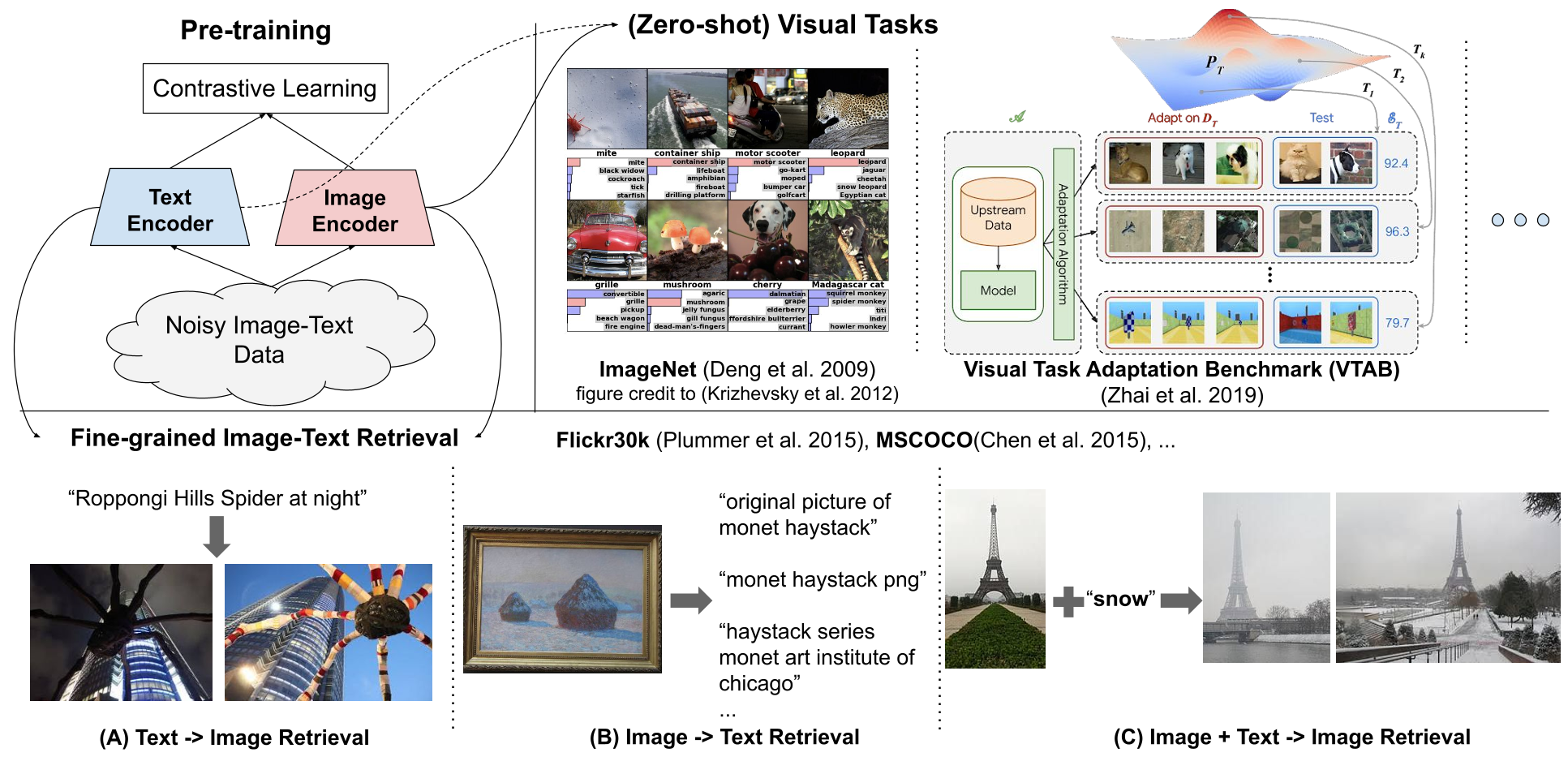 Figure 1: The dual-encoder architecture allows for lightning-fast retrieval by pre-computing embeddings, unlike cross-attention models.
Why it Works: Scale vs. Quality
The core insight of the paper is the Data Quality vs. Scale Trade-off. The authors found that while ALIGN data is much noisier than Conceptual Captions (CC-3M), the model's quality catches up once the ALIGN data size reaches just 4x the size of CC. At 1.8 billion pairs, the "noise" effectively becomes statistical outliers that the model learns to ignore in favor of dominant semantic patterns.
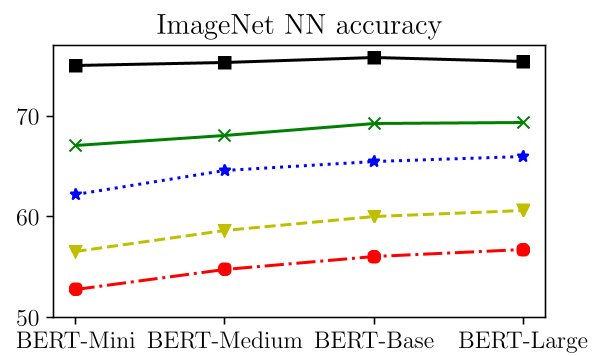 Figure 2: Performance scales predictably with both image and text encoder capacity.
Key Results & Benchmarks
ALIGN doesn't just work; it dominates.
- Retrieval: It broke SOTA records on Flickr30K and MSCOCO, often by massive margins (e.g., +22% R@1 on CxC image-to-text retrieval).
- Zero-shot Classification: Without ever seeing an ImageNet label, it matched the performance of supervised models (76.4% Top-1).
- Multi-modal Arithmetic: One of the most fascinating capabilities is searching with "Image + Text" queries. You can take a photo of a panda, add the word "Australia" to the vector, and the model retrieves a Koala.
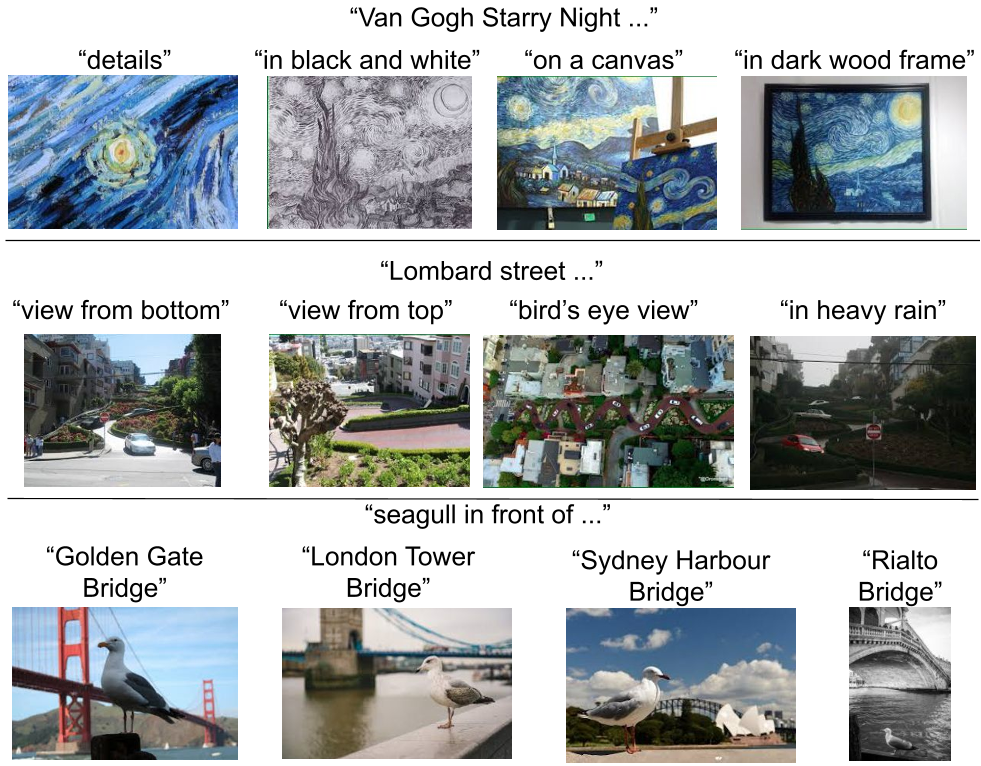 Figure 3: Emergent semantic arithmetic allows for complex image+text search queries.
Critical Insight: The End of "Expert" Curation?
ALIGN (alongside OpenAI’s CLIP) signifies a paradigm shift. It suggests that for general-purpose embeddings, the bottleneck is no longer human labeling, but the sheer volume of data and the compute to process it. However, the authors admit to a trade-off: ALIGN is world-class at inter-modal (image-to-text) tasks but slightly less dominant in intra-modal (image-to-image) similarity compared to models specifically tuned for those tasks.
Conclusion
ALIGN demonstrates that the simplicity of the dual-encoder, when paired with exascale noisy data, creates a robust foundation for nearly all downstream vision tasks. While it raises concerns regarding web-data biases and stereotypes, it sets a new bar for how we think about "supervision" in the age of the billion-scale model.