
VNUML: Bridging the Gap Between Virtualization and Complex Network Testbeds
Scenario-based virtual network infrastructure management in research and educational testbeds with VNUML Application cases and current challenges
This paper introduces VNUML (Virtual Network User Mode Linux), an open-source tool designed for the automated management of scenario-based virtual network testbeds. It focuses on enabling researchers and educators to define complex network topologies using a declarative XML language, successfully achieving SOTA flexibility in emulating IPv6 IX and 3G/IMS infrastructures.
TL;DR
VNUML (Virtual Network User Mode Linux) provides an automated, scenario-based framework for managing virtual network testbeds. Unlike data-center tools focused on isolation and performance, VNUML prioritizes topological flexibility, allowing researchers to define complex, multi-node networks via a simple XML specification. It has proven its value in large-scale research (Euro6IX, 3G emulation) and educational settings.
Probing the Pain Point: The Data Center vs. The Testbed
Current virtualization maturity is largely driven by industrial data centers. In those environments, the goal is often consolidation: running a single OS on a dedicated slice of hardware. However, networking research requires connectivity.
Traditional tools fail because they assume a "flat" network where each VM connects to a physical host interface. Setting up an Internet Exchange (IX) or an IP Multimedia Subsystem (IMS) involves recursive routing, specialized bridges, and dozens of interconnected nodes. Without an automated tool, researchers spend more time on "plumbing" (manual bridge configuration, IP routing) than on their actual protocols.
Methodology: The Scenario-Based Approach
VNUML’s core innovation is the Scenario-Based Management model. Instead of managing VMs individually, the user defines a "Scenario"—a complete blueprint of the network.
1. The Specification Language (The "Why")
By using XML, VNUML allows for a declarative description. You don't tell the system how to set up a bridge; you tell it what the network is.
<net>: Defines virtual switches/LANs.<vm>: Defines nodes, their kernels, filesystems, and interfaces.<hostif>: Bridges the virtual world to the physical host.
2. The VNUML Parser (The "How")
The parser acts as the orchestrator. It automates the heavy lifting:
- Bootstrapping: Starting UML processes with specific filesystems.
- Topology Realization: Creating TUN/TAP devices and virtual bridges on the fly.
- Execution: Using the
<exec>tag to run batch scripts across multiple nodes simultaneously.
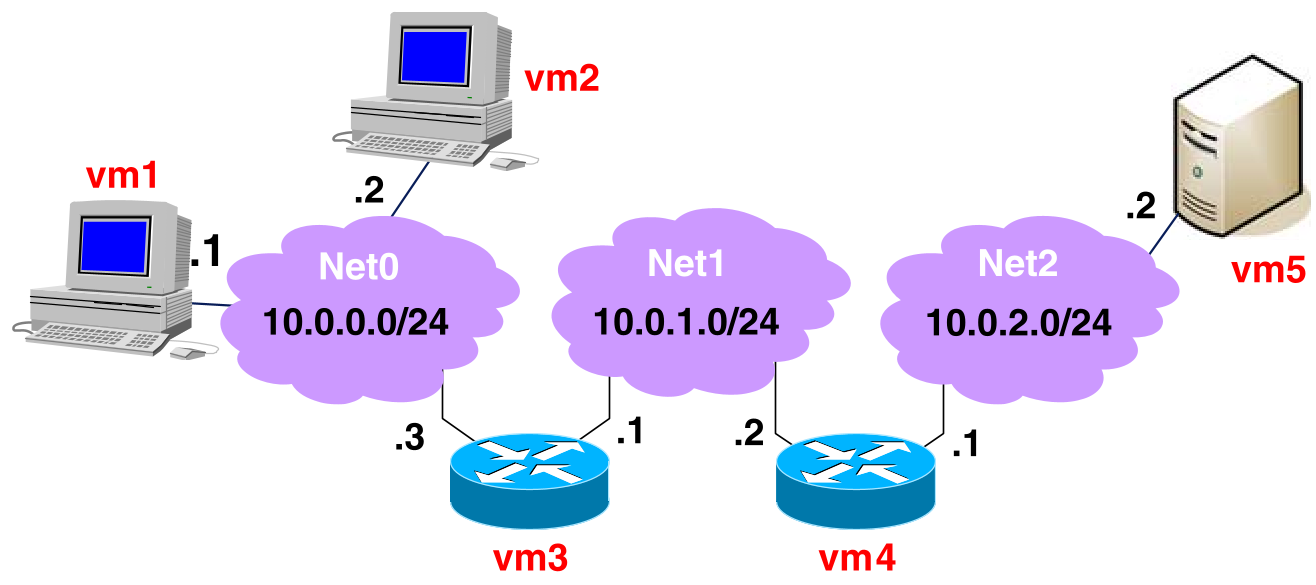 Figure 1: Example of an XML Specification and the resulting virtual topology.
Case Studies: From IPv6 to the Classroom
The paper highlights three key application domains where VNUML outperformed manual setups:
- Euro6IX: Used to design native pan-European IPv6 networks. VNUML enabled the emulation of tens of peering routers on a single standard PC.
- 3G/IMS Emulation: Modeled the complex IP Multimedia Subsystem (IMS) architecture, including P-CSCF/S-CSCF control elements, facilitating mobile protocol testing without expensive 3G hardware.
- Educational Labs: Managed a firewall exercise for 28 students simultaneously using 66 virtual machines load-balanced across just two physical servers.
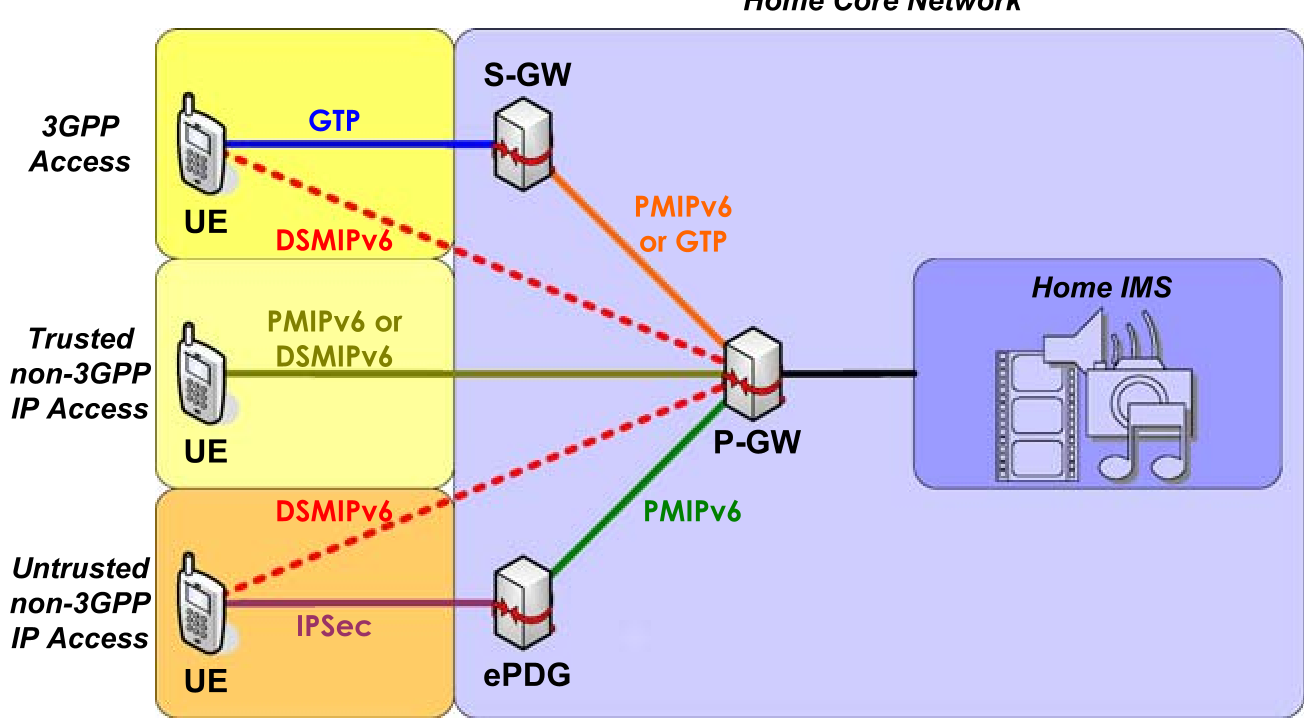 Figure 2: Complex 3G/IMS architecture emulated via VNUML.
Evolution and Current Challenges: Toward VNx
The authors acknowledge that the field is moving beyond single-host UML. They outline three strategic growth areas:
- Distributed Management (EDIV): Wrapping VNUML to allow scenarios to span across multiple physical hosts transparently.
- Technology Decoupling: Transitioning to VNx, which will use
libvirtto support KVM, Xen, and even Cisco hardware (via Dynamips/Dynagen). - Standard Alignment: Integrating with the Open Virtualization Format (OVF) to allow "Virtual Appliances" to be dropped directly into VNUML scenarios.
Critical Insight & Conclusion
VNUML’s lasting contribution is its emphasis on the declarative scenario. While technology backends (UML vs. Docker vs. KVM) change, the need for a high-level language to describe "Network Intent" remains.
However, a notable limitation is VNUML's original dependence on UML, which is Linux-centric. The proposed shift toward a more modular architecture (VNx) and distributed Grid/Web Service interfaces is a necessary step for the tool to remain relevant in the age of cloud-native networking and SDN.
Takeaway: If you are building a testbed, focus on the abstraction of the topology, not the virtualization primitive. VNUML provides the blueprint for that transition.