
The Weaponization of Science: How Scientific Evidence is Deployed in the MMR Vaccine Twitter Debate
Usage of Scientific References in MMR Vaccination Debates on Twitter
This research analyzes the sharing behaviors of scientific vs. non-scientific information in the Twitter MMR vaccine-autism debate. Using domain network analysis and unigram frequency, it identifies distinct patterns in how pro-vaccine and anti-vaccine groups utilize external evidence to bolster their claims.
TL;DR
This study investigates how pro- and anti-vaccine groups use (and misuse) scientific references on Twitter. While anti-vaccine accounts are more active and link-heavy, they suffer from "source poverty," repeatedly citing a handful of retracted or biased works. Pro-vaccine accounts share fewer links but draw from higher-quality, diverse medical literature.
Context: The Digital Echo Chamber
The debate surrounding the Measles, Mumps, and Rubella (MMR) vaccine and its debunked link to autism remains a centerpiece of digital health controversy. In an era of selective exposure, social media algorithms often create echo chambers where users only see information that confirms their existing biases. This paper by Aseel Addawood moves beyond simple sentiment analysis to ask: How do these groups use actual scientific links to justify their stances?
Methodology: Mapping the Narrative
The researcher constructed a unique corpus by cross-referencing Twitter data with PubMed and Altmetric data.
- Scientific Dataset: Tweets that directly link to a scholarly article (PMID).
- Non-scientific Dataset: Tweets discussing the controversy via blogs, news, or YouTube.
By analyzing hashtags (e.g., #vaxxed vs. #vaccineswork), the author assigned "stances" to users and mapped their behavior using two primary tools: Unigram Analysis (word clouds) and Domain Network Graphs.
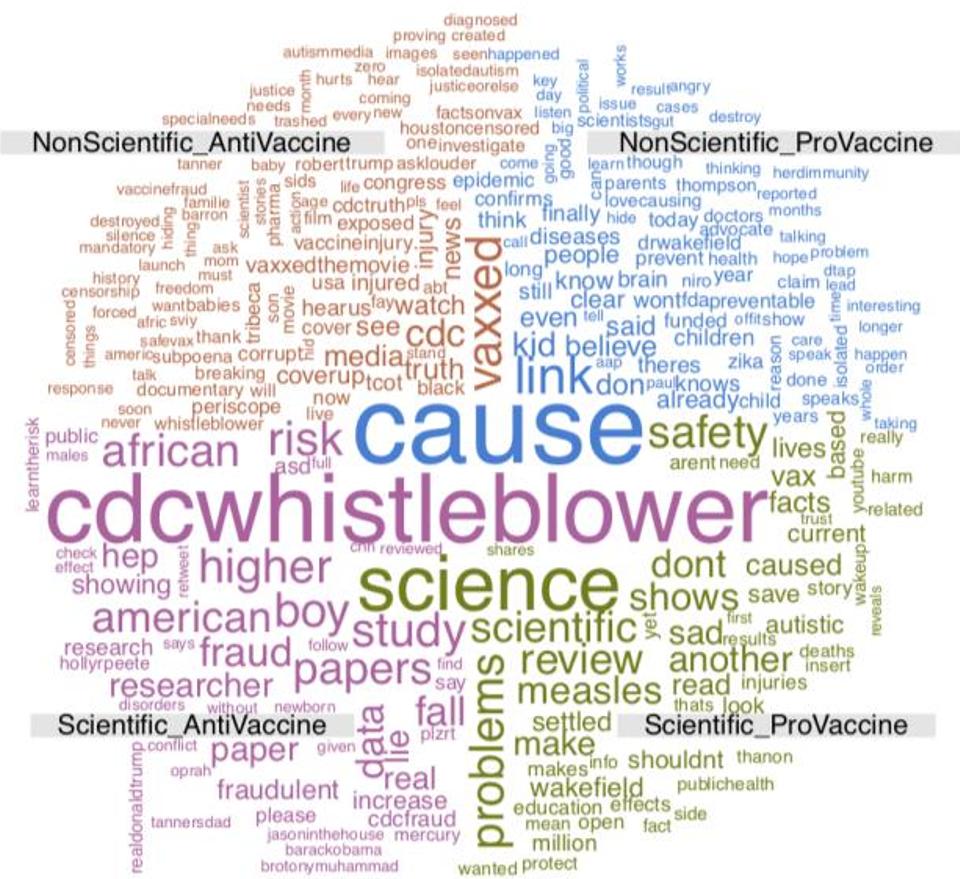 Figure 1: Word clouds revealing the narrative focus of each group. Pro-vaccine groups focus on "science" and "cause," while anti-vaccine groups center on "Vaxxed" and the "CDC."
Core Findings: Quality vs. Quantity
1. The Anti-Vaccine "Echo"
The study found that anti-vaccine users are significantly more "vocal" in terms of link-sharing. However, their strategy relies on redundancy. They frequently link to the same few sources—specifically the movie Vaxxed and the work of journalist Ben Swann. Even when they cite scientific papers, they often point to retracted ones (e.g., Brian Hooker’s reanalysis) or misinterpret complex findings.
2. The Pro-Vaccine Diversity
Pro-vaccine users shared fewer total links but utilized a diverse array of high-tier evidence, such as meta-analyses and systematic reviews. Interestingly, pro-vaccine users also shared scientific articles by journalist Brian Deer, who was instrumental in exposing the fraud behind the original Wakefield study.
3. The Power of "Vocal Journalists"
A striking insight is the outsized role of journalists. While scientists provide the data, journalists like Swann (Anti-vax) and Deer (Pro-vax) provide the narrative frame that social media users find more digestible and shareable.
Mapping the Domain Network
The author created a network graph connecting domains shared by the same users. This visualization reveals a "tightly connected cluster" of anti-vaccine domains.
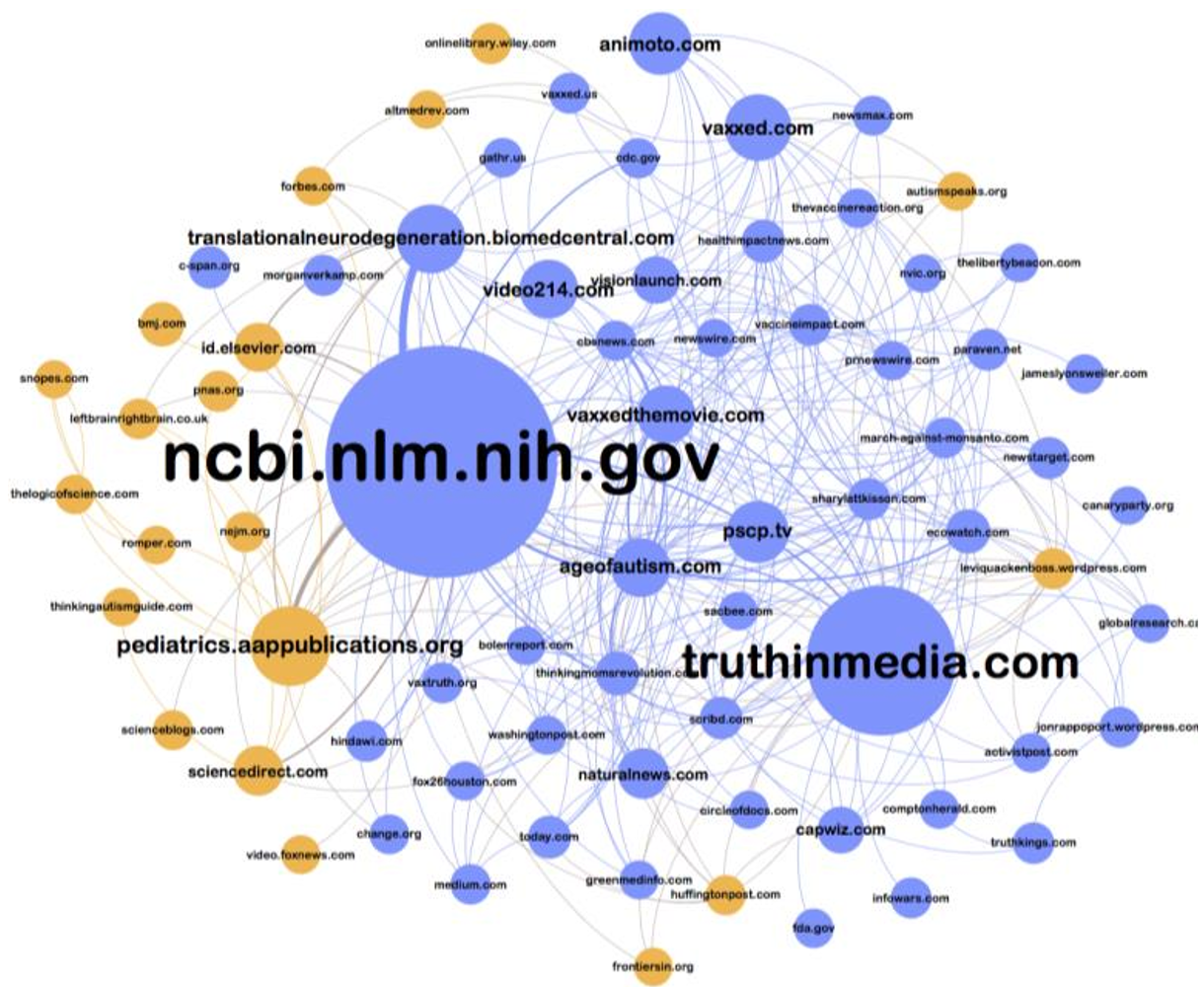 Figure 2: The domain network shows that anti-vaccine users (Purple) are highly interconnected across a few key "alternative" nodes compared to the more dispersed pro-vaccine (Orange) network.
Critical Insights & Conclusion
This research confirms that links denote credibility in the eyes of users, regardless of the link's actual scientific validity. The anti-vaccine movement effectively uses the "trappings of science"—citing PubMed IDs and technical terminology—to create a facade of rigorous evidence.
Takeaway for Public Health: Simply "providing more facts" may not work when the opposition is skilled at co-opting the language of science to support a pre-conceived narrative. Future interventions must focus on:
- Navigating and debunking specific "alternative news" nodes.
- Empowering credible scientific communication that mirrors the high-engagement narrative styles of vocal journalists.
- Understanding that "redundant linking" is a powerful psychological tool in online persuasion.
Limitations: The study is limited to English-speaking Twitter and the specific MMR debate; however, its methodology provides a blueprint for studying other areas of scientific misinformation, such as climate change or nutrition.