
Towards Learning Mechanics: The Physics of the Deep Learning Black Box
There Will Be a Scientific Theory of Deep Learning
The paper argues for the emergence of "Learning Mechanics," a scientific theory of deep learning that treats the training process as a dynamical system analogous to physics. It synthesizes five major research strands—solvable models, infinite limits, empirical laws, hyperparameter disentanglement, and universal phenomena—to provide a predictive, first-principles framework for neural networks.
TL;DR
Is deep learning a form of alchemy or a nascent science? This paper asserts that we are witnessing the birth of Learning Mechanics—a fundamental theory that treats neural network training as a physical process. By moving away from abstract statistical bounds toward first-principles dynamical equations, researchers are now beginning to predict scaling laws, automate hyperparameter tuning, and demystify the internal "circuits" of large language models.
Problem & Motivation: The Scientific Tension
Despite the ubiquitous success of LLMs, we lack a unified framework to explain why they work. We can record every weight and gradient, yet the interaction between architecture, data, and the learning rule remains a "complex, non-convex, and overparameterized" mystery.
The authors argue that the field is undergoing a phase transition: from a mathematical discipline (proving what is possible) to an empirical science (observing and predicting what is). This is the same path thermodynamics took—starting from the engineering of steam engines and leading to the fundamental laws of energy.
Methodology: The Five Pillars of Learning Mechanics
The paper identifies five converging lines of evidence that a "Mechanics" of deep learning is already here:
1. Solvable Idealized Settings
Just as physics uses the harmonic oscillator to understand waves, deep learning uses Deep Linear Networks. These models are linear in data but non-linear in parameters, revealing a "greedy low-rank bias" where the network learns simple signal components before noise.
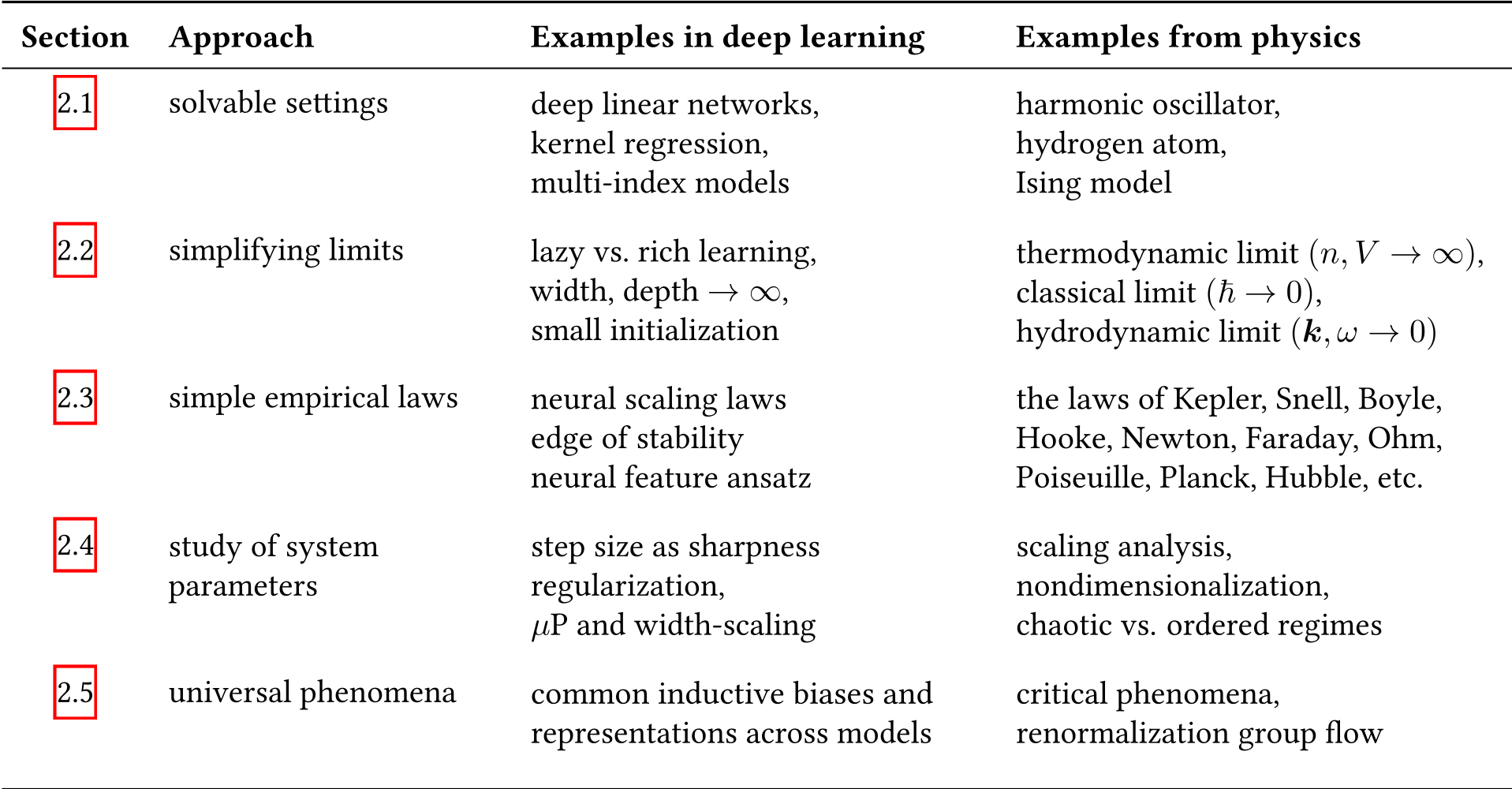
2. The Power of Infinite Limits (The Discretization Hypothesis)
A central insight is that finite networks are essentially "discretized" approximations of infinite ones.
- Lazy Regime (NTK): Where weights barely move, and the model acts like a kernel.
- Rich Regime (Feature Learning): Where weights evolve to find structure in data. The authors suggest that width and depth are to AI what space and time are to physics.
3. Macro-Laws: Neural Scaling and Stability
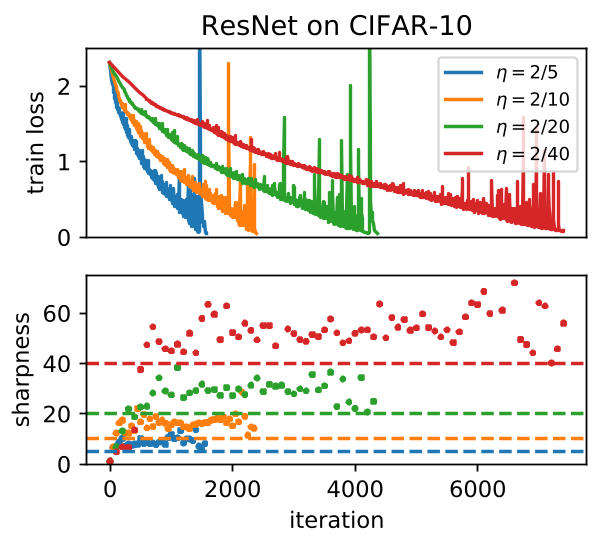
We don't need to track every atom to predict a gas's pressure; similarly, we can predict a model's loss using Neural Scaling Laws. Another striking law is the Edge of Stability, where the "sharpness" of the loss landscape plateaus at exactly (where is the learning rate).
4. Hyperparameter Disentanglement
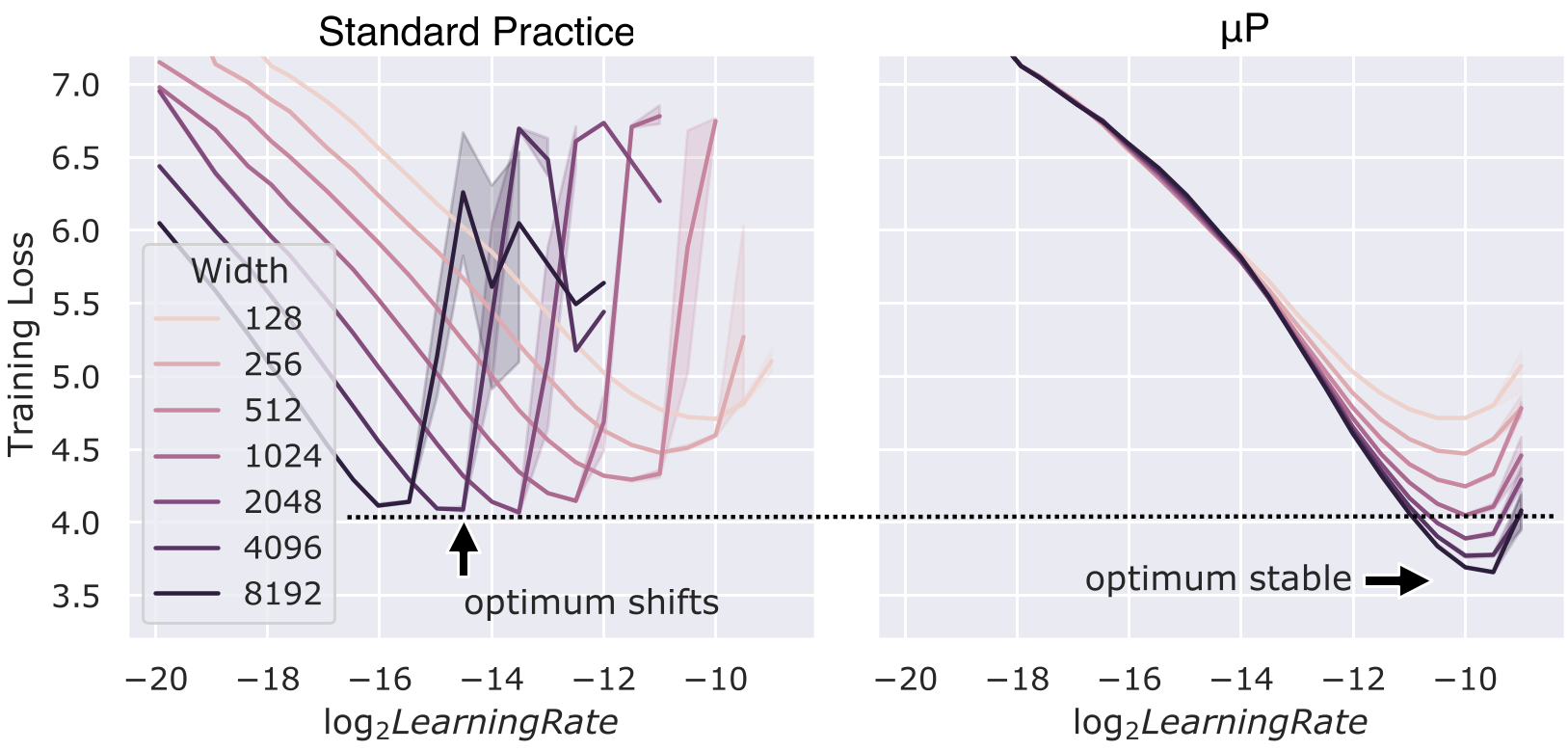
By using frameworks like Maximal Update Parameterization (µP), we can now tune a tiny "proxy" model and transfer those optimal settings directly to a model with billions of parameters. This turns the "alchemy" of tuning into a predictable scaling exercise.
5. Universal Representations
Perhaps most surprisingly, as models get larger and better, they seem to converge toward a "Platonic" representation of the world, regardless of their starting architecture. This suggests that the theory of deep learning might actually be a theory of the structure of information itself.
Deep Insight: Mechanics vs. Biology
The authors draw a fascinating parallel with the natural sciences:
- Mechanistic Interpretability is the Biology of AI: it maps the "circuits" and "cells" (neurons) to see what is happening.
- Learning Mechanics is the Physics of AI: it provides the mathematical "laws of motion" that explain how those circuits formed in the first place.
Conclusion & Future Outlook
The road to a "Grand Unified Theory" of Deep Learning is still long. The authors leave us with 10 open directions, including the challenge of predicting scaling exponents a priori and formally defining what a "feature" actually is.
The ultimate takeaway? Deep learning is not just an engineering feat; it is a natural phenomenon waiting for its Newton. By embracing the "Learning Mechanics" perspective, we can move from building machines we merely use to building machines we truly understand.