
Learning Mechanics: The Emerging Physics of Deep Learning
There Will Be a Scientific Theory of Deep Learning
This paper serves as a manifesto for an emerging scientific framework titled "Learning Mechanics," which treats deep learning as a dynamical physical system rather than a black box. It synthesizes five major research pillars—including solvable models like deep linear networks and scaling limits like P—to argue that neural network behavior is governed by predictable, quantitative first principles similar to classical or statistical mechanics.
TL;DR
Deep learning is graduating from "alchemy" to "mechanics." A new paper by researchers from UC Berkeley and Imbue argues that we are witnessing the birth of Learning Mechanics—a scientific framework that treats neural networks like physical systems. By focusing on training dynamics, aggregate statistics, and universal laws, this theory aims to replace trial-and-error tuning with first-principles engineering.
The Scientific Tension: Why We Need a "Physics"
For decades, we’ve relied on classical statistical learning theory to explain machine learning. However, modern neural networks break all the old rules: they are overparameterized, non-convex, and yet they generalize exceptionally well.
The authors argue that we should treat deep learning not as a mathematical puzzle of "what is possible," but as a scientific study of "how complex systems behave." Much like thermodynamics emerged to explain the steam engine, Learning Mechanics is emerging to explain the Large Language Model.
The Five Pillars of Learning Mechanics
The paper identifies five specific areas where "black boxes" are becoming "white boxes":
1. Solvable Idealized Settings
By stripping away nonlinearities, we get Deep Linear Networks. While they can only learn linear functions, their parameter dynamics are as complex as deep ones. They reveal a "greedy low-rank bias"—the tendency for models to learn the most important structural components of a task first.
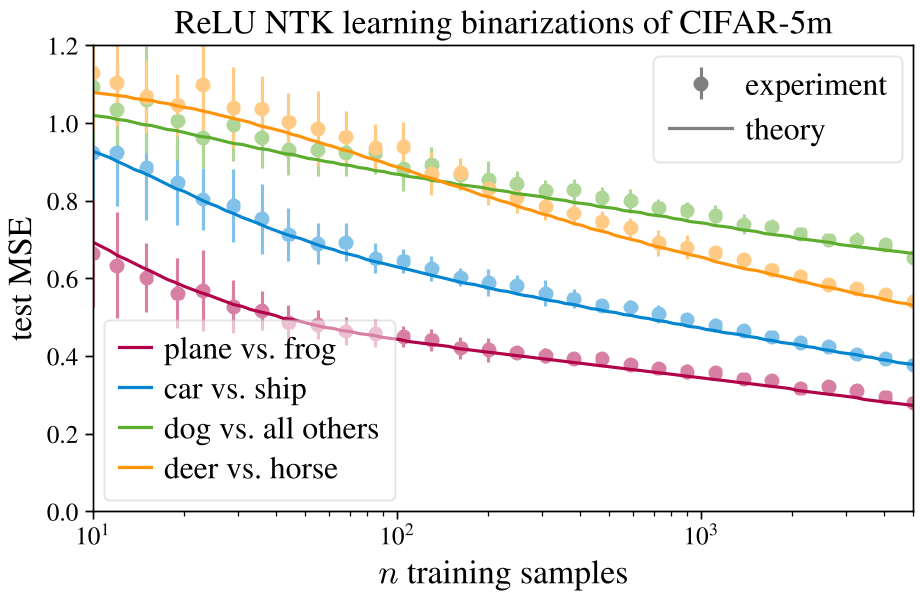
2. The Discretization Hypothesis & Infinite Limits
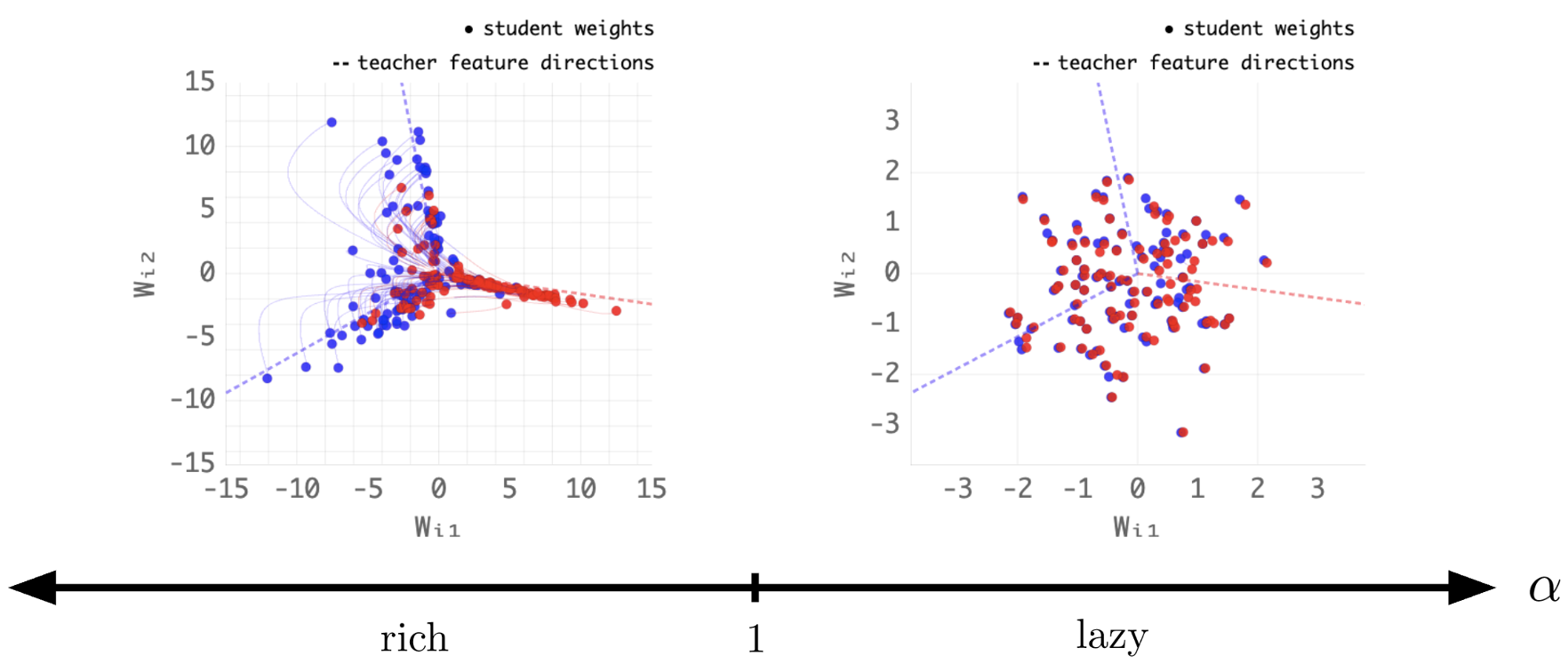
Why do billions of parameters behave predictably? Because at infinite width, networks simplify into NTK (Lazy) or Mean-Field (Rich) regimes. The "Discretization Hypothesis" suggests that our finite-sized models are just numerical approximations of these smooth, infinite continuum systems.
3. Macroscopic Laws (Scaling Laws)
Perhaps the most famous success is the "Neural Scaling Law." Test loss is a surprisingly predictable power law function of compute, data, and size. While we see the effect, Learning Mechanics seeks to explain the why—the hidden exponents governed by data structure.
4. Hyperparameter Disentanglement
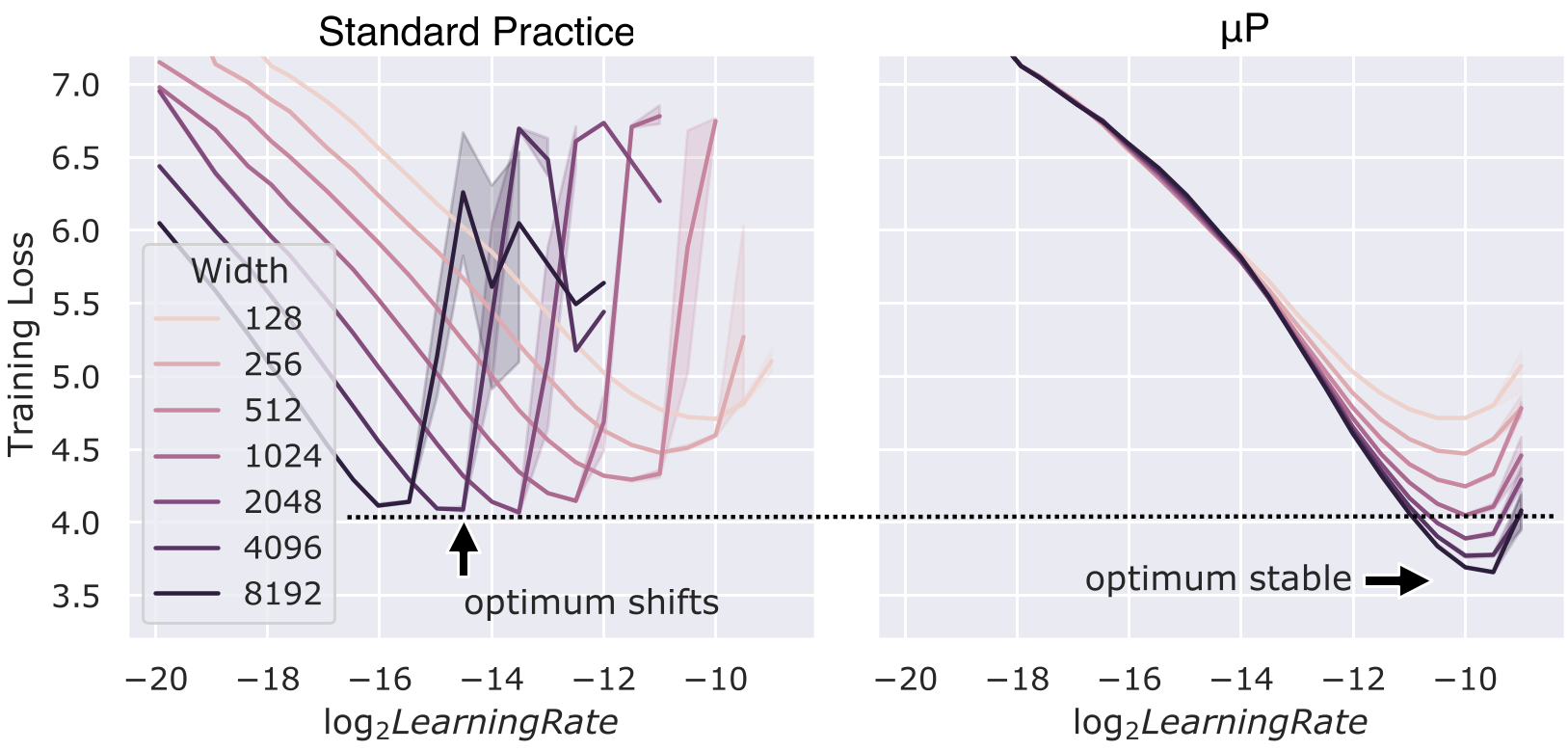
Through the Maximal Update Parameterization (P), researchers found that we can tune a tiny model and "transfer" those exact settings to a model 1000x larger. This is "mechanics" at work: understanding the scale-invariant properties of the system.
5. Universal Representations (The Platonic Hypothesis)
Evidence suggests that different models, trained on different data, eventually converge to similar internal representations of the world. This "Platonic" convergence suggests that there is a "correct" way to represent data that all competent learning systems eventually find.
A Symbiosis: Mechanics vs. Interpretability
The authors propose a beautiful analogy:
- Mechanistic Interpretability is the Biology of AI (reverse-engineering circuits and neurons).
- Learning Mechanics is the Physics of AI (calculating the forces and dynamics that create those circuits).
Without physics, biology is just a list of observations. Without biology, physics is too abstract. Together, they provide a complete roadmap for AI safety and design.
Critical Insight & The Path Ahead
The paper isn't just a summary; it's a call to action. It acknowledges that we are still primitive—we cannot yet predict scaling exponents from scratch. However, by focusing on "local theories" for things like optimizer stability or data attribution, we are building the machine learning equivalent of the periodic table.
The Takeaway: The next decade of AI won't just be about more data; it will be about predictive engineering. If we can calculate how a model will behave before we spend $100M training it, the entire industry shifts from gambling to science.