
Automated ASD Screening: Transforming the "Response-to-Name" Protocol with Multi-Sensor Vision
Screening Early Children With Autism Spectrum Disorder via Response-to-Name Protocol
This paper introduces an automated, non-contact Autism Spectrum Disorder (ASD) screening system based on a standardized Response-to-Name (RTN) protocol. By integrating multi-sensor fusion (Kinect and RGB cameras) with computer vision algorithms for gaze and head pose estimation, the system achieves a 92.7% classification accuracy in identifying ASD-related behavioral markers.
TL;DR
Early diagnosis of Autism Spectrum Disorder (ASD) is critical for effective intervention, yet clinical resources are scarce and subjective. This paper proposes a non-contact multi-sensor system that automates the "Response-to-Name" (RTN) protocol. By combining Kinect and RGB cameras with sophisticated gaze estimation, the system quantifies a child's social responsiveness with 92.7% accuracy, bridging the gap between clinical expertise and automated screening.
Problem & Motivation: The Diagnostic Bottleneck
ASD incidence is rising globally (1/45 children in some regions), yet diagnosis remains a "human-centric" bottleneck. In China, the ratio of qualified diagnosticians to children with ASD is approximately 1:10,000.
Current clinical evaluation relies on symptomatic scales like the ADOS, which are:
- Subjective: Dependent on the clinician’s experience.
- Labor-intensive: Taking up to 3 hours per session.
- Non-standardized: Susceptible to observer bias.
While wearable eye-trackers exist, children with ASD often have sensory sensitivities that make wearing hardware impossible. This paper aims to solve these issues using passive, non-contact computer vision to digitize the clinician's "gut feeling" into objective data.
Methodology: The RTN Protocol Digitized
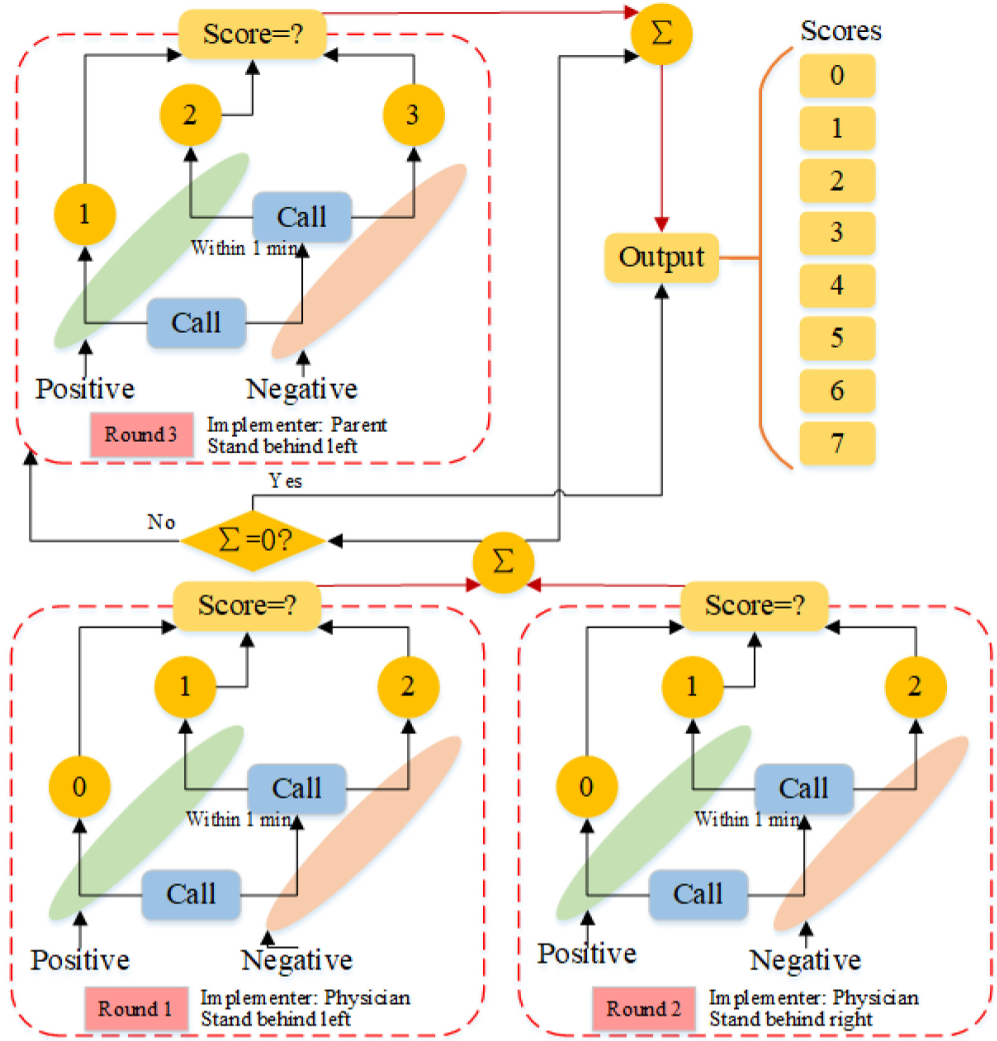
The authors focus on the Response-to-Name (RTN) task—a pivotal social marker where a child is expected to orient towards someone calling their name.
1. System Architecture
The setup utilizes a multi-sensor array to eliminate blind spots and ensure data synchronization:
- Kinect: Captures 3D skeleton data and audio.
- Global RGB Camera: Detects the implementer (physician/parent).
- Frontal RGB Camera: High-resolution face capture for landmarks and gaze.
2. Gaze Estimation in the Wild
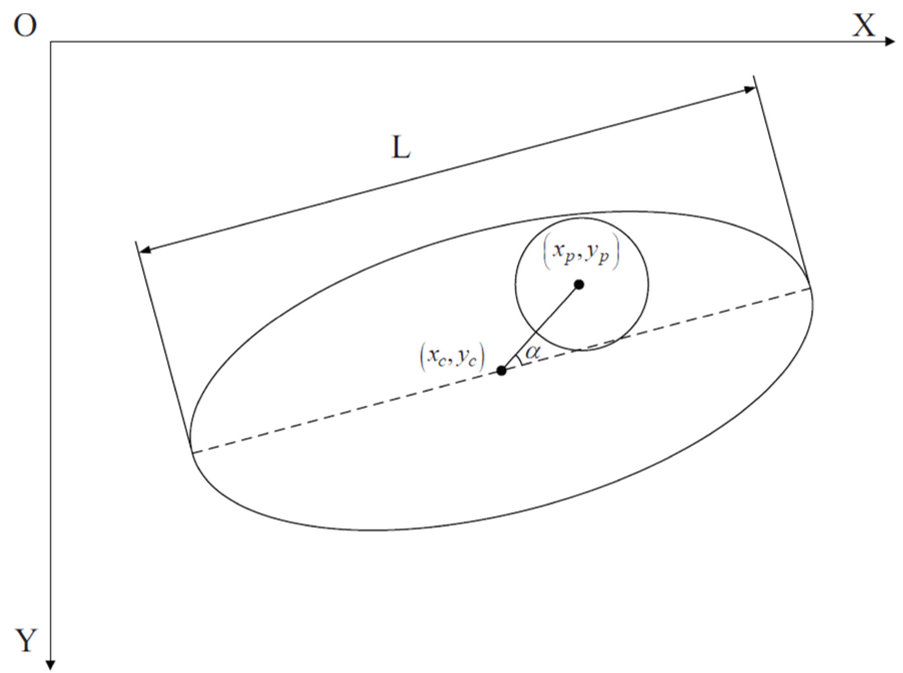
The core technical challenge is estimating gaze when the child's head is moving freely. The authors move beyond simple 2D eye-tracking by:
- Head Pose Estimation: Calculating yaw, pitch, and roll in the camera coordinate system.
- Coordinate Transformation: Mapping the gaze vector into a Global World Coordinate System to determine if the child's line of sight actually intersects with the "sphere" representing the implementer's head.
Experiments & Results: Quantifying Social Deficits
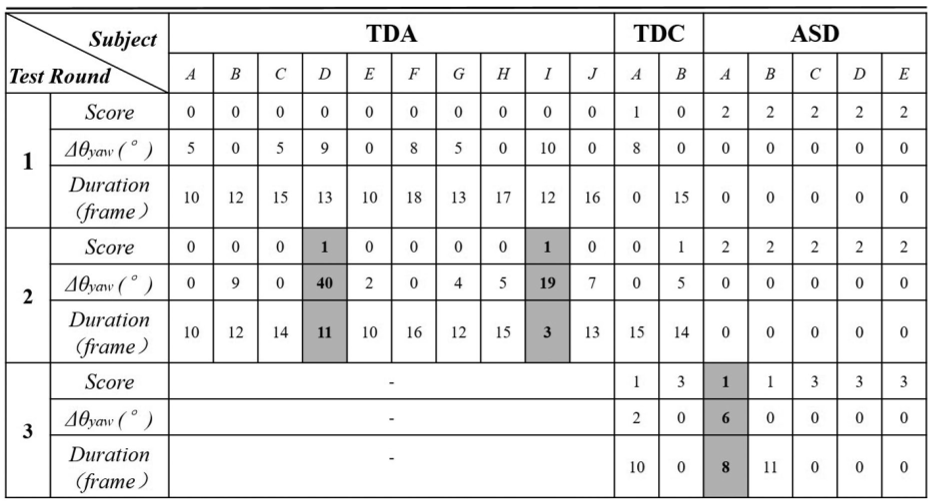
The system was tested on a cohort including 5 ASD children and 2 typically developing (TD) children.
Key Findings:
- Classification Score: The system achieved 92.7% accuracy in mirroring clinical scores.
- Social Interaction Frequency: TD children exhibited an average of 4-5 social interactions (looking up from toys to the adult) during the test, while ASD children exhibited near zero, preferring to stay fixated on non-social stimuli (toys).
- Duration Matters: Positive responses were defined not just by a glance, but by a gaze duration exceeding 10 frames within a 5-second window.
Critical Analysis & Conclusion
This work represents a significant step toward Scalable Healthcare AI. By formalizing the RTN task into mathematical thresholds (, duration, and distance), it removes the "black box" of clinical intuition.
Takeaways:
- Why it works: The fusion of 3D skeleton data (Kinect) with high-res 2D pupil tracking (RGB) provides the context needed to prove mutual gaze, not just head rotation.
- Limitations: The sample size (17 subjects) is small; future work requires the TASD (The ASD Database) to expand for more robust algorithmic training.
- Future Outlook: Integrating other protocols like "Joint Attention" (following a pointing finger) will likely lead to a comprehensive, fully automated diagnostic suite.
This system proves that we can turn a clinical room into a data-driven laboratory, making early ASD screening accessible even in remote areas.