
SDN-Enabled Social TV: Orchestrating Networks for Real-time Big Data Analytics
175_Toward an SDN-enabled big data platform for social
This paper introduces a unified big data platform for "Social TV Analytics" that integrates Software Defined Networking (SDN) with Hadoop. The system provides a cloud-centric architecture capable of real-time crawling and analysis of social responses (e.g., from Twitter or Sina Weibo) to TV programs, achieving significant acceleration in data processing via SDN-controlled shuffling.
TL;DR
The surge of "Social TV"—where viewers live-tweet their reactions to broadcasts—presents a goldmine for broadcasters, but processing this data in real-time is a networking nightmare. This paper proposes a cloud-centric, SDN-enabled big data platform that combines a distributed crawler system with an Intelligent Hadoop scheduler. By leveraging Software Defined Networking (SDN), the system optimizes the "Shuffle" phase of MapReduce, significantly reducing analysis latency and bypassing social network access constraints.
Problem & Motivation: The "Network-Blind" Bottleneck
Modern TV analytics requires immediate insights into audience sentiment. However, researchers face two "walls":
- The Access Wall: Platforms like Sina Weibo and Twitter impose strict API rate limits. Traditional centralized crawlers are quickly flagged and blocked.
- The Efficiency Wall: Big data frameworks like Hadoop are often "network-blind." They schedule tasks based on CPU/RAM but ignore the underlying network topology. In a distributed environment, the Shuffle phase—where intermediate data moves between nodes—often becomes a massive bottleneck, causing waves of congestion that stall real-time processing.
The authors' insight is that the network should not be a static pipe but a reconfigurable resource that can be optimized in tandem with the computing tasks.
Methodology: The SDN-Hadoop Synergy
1. Distributed Crawler Architecture
To solve the data acquisition problem, the authors developed a distributed system that manages "rare properties" (IP segments and API keys). By using a Zookeeper-based scheduler, the system dispatches tasks across multiple IP segments, mimicking human-like distribution to avoid OSN blocks.
2. SDN-Enabled Shuffling
The core innovation lies in the integration of an SDN controller (Floodlight) with the Hadoop framework.
- Local and Global Control: A two-layer SDN architecture monitors traffic within and across data centers.
- Dynamic Rerouting: Unlike traditional Hadoop, which fixedly shuffles data, this system calculates the sum of transmission time and processing time to select the optimal destination node for intermediate data.
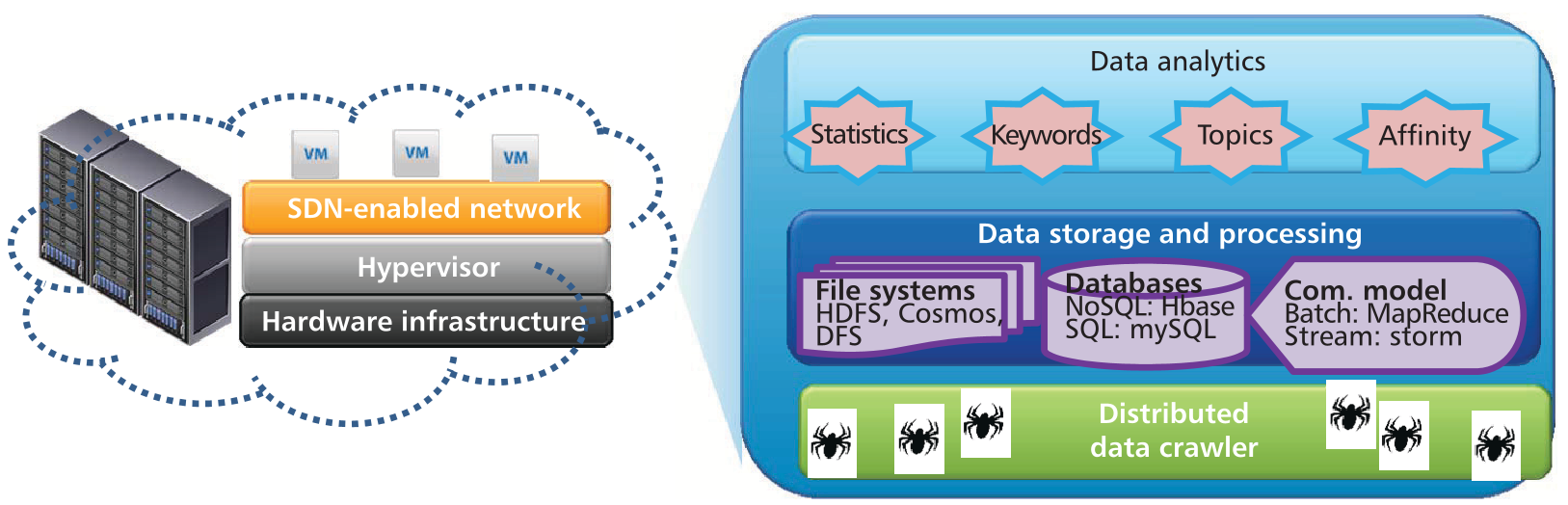 Figure 1: The layered architecture showing the integration of SDN at the infrastructure level.
Experiments & Results
The team built a proof-of-concept at Nanyang Technological University (NTU). They tested the system using a "Hadoop Sort" job, comparing traditional methods (TM) against their SDN-enabled scheme.
- Performance Gain: The SDN-enabled scheme consistently outperformed traditional methods. By sensing that one rack had higher processing capability and lower network congestion, the SDN controller proactively moved intermediate data to the faster rack, drastically cutting execution time.
- Sensing Audience Pulse: Using the "Longmen Express" TV show as a case study, the system successfully mapped geographical distributions and keyword clouds in real-time, proving its effectiveness for commercial stakeholders.
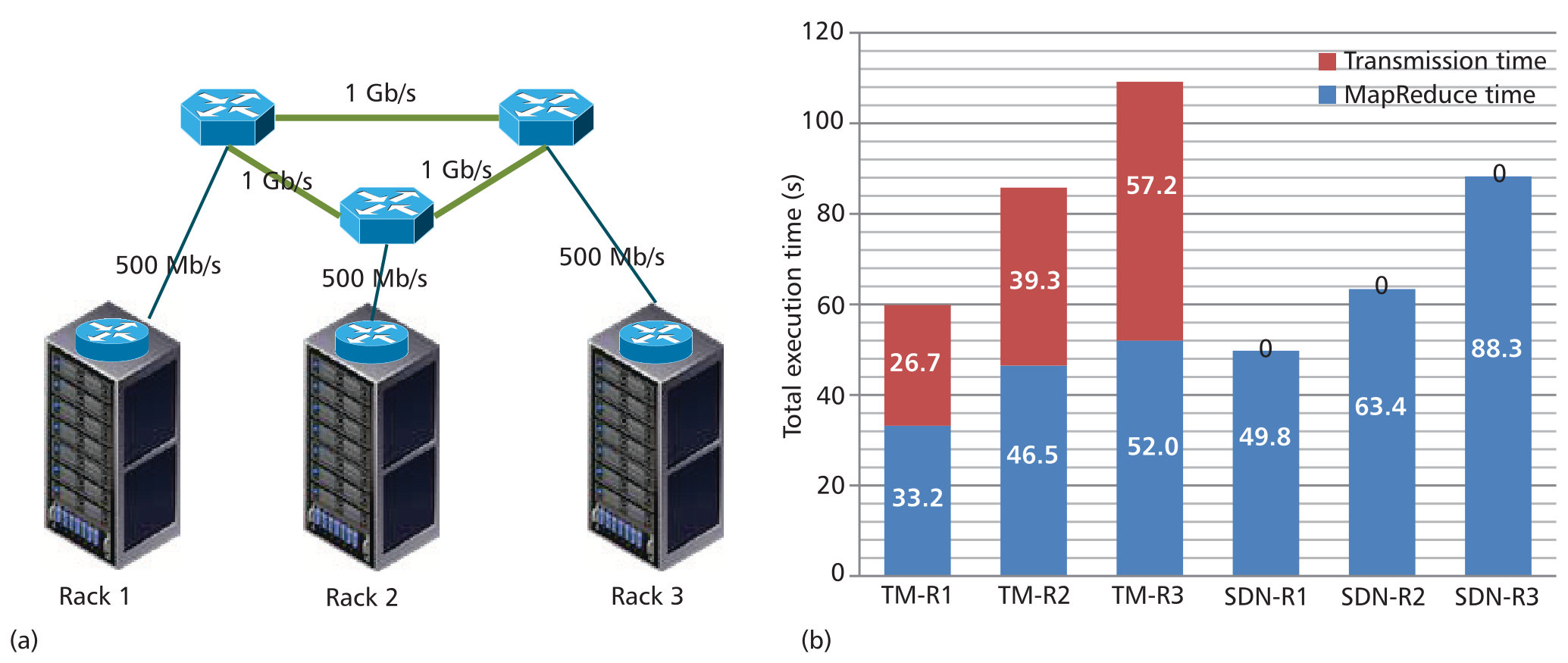 Figure 2: Execution time comparison between traditional Hadoop and the proposed SDN-enabled scheme.
Critical Analysis & Conclusion
Takeaway
This work serves as a blueprint for Network-Aware Computing. It demonstrates that for "Big Data" to truly be "Real-Time Data," the infrastructure must be able to adapt its topology to the data flow, rather than forcing the data flow to adapt to a rigid topology.
Limitations & Future Work
While the system handles text brilliantly, the authors acknowledge that multimodal analysis (images and videos posted in social threads) remains a frontier. Future iterations could integrate Deep Learning models for visual sentiment analysis. Additionally, as privacy regulations (like GDPR) tighten, the crawler system will need to evolve to incorporate privacy-preserving data harvesting techniques.
This paper successfully bridges the gap between networking and data science, charting a path toward more responsive and intelligent social media analytics.