
SRRR: Transforming Search Engines into Social-Aware Personalized Intelligence
The Searching Ranking Model Based on the Sharing and Recommending Mechanism of Social Network
The paper introduces the Sharing and Recommending Result Rank (SRRR) model, a novel search ranking mechanism that integrates social network intelligence into traditional full-text search engines. By utilizing "Forward" (sharing) and "Like" (recommending) behaviors within a user's social circle, the model provides personalized search sequences that dynamically adjust based on collective social feedback and relationship proximity.
TL;DR
The paper proposes the Sharing and Recommending Result Rank (SRRR) model, a system that injects social network "wisdom" into search engine ranking. By analyzing how your friends and high-prestige influencers share or like content, the search engine can provide a personalized result list tailored specifically to your social circle's interests.
The Problem: The "One Size Fits All" Limitation
Current search engines (SEs) are highly efficient but lack proactivity and personality. They treat every user the same. Relying on Link-based algorithms like PageRank has two major flaws:
- Static Bias: PageRank evaluates the web based on developer-defined hyperlinks, not actual reader feedback.
- SEO Fraud: Manipulative "spam links" can trick SEs into ranking low-quality content higher.
As social networks like Facebook and Twitter (X) grow, they accumulate "intelligent data"—real-time records of what people actually find valuable. The authors argue that the best way to fix SEs is to transplant the social sharing and recommending mechanism into the ranking process.
Methodology: How SRRR Works
The core of the SRRR model is based on three hypotheses:
- People with closer social distances have more similar interests.
- Content shared by high-prestige users (influencers) is higher quality.
- Content recommended by more people in your proximity should rank higher.
The Two Pillars of SRRR
- Share Ranking Factor (SRF): This measures the "Forward" behavior. It uses a PageRank-style calculation to define a Prestige Factor (PF) for users. If a high-prestige person in your circle shares a page, its SRF goes up.
- Recommending Ranking Factor (RRF): This measures "Likes." It utilizes the Six Degrees of Separation theory, where recommendations from closer friends carry more weight than those from distant strangers.
Integration Formula
Instead of replacing existing systems, SRRR acts as a "booster" to current ranking factors ():

By adjusting weights and , search engines can decide exactly how much "social influence" should affect the final order.
Experimental Results: The "Apple" Case Study
Since no massive integrated platform existed at the time of the study, the authors simulated a environment with two groups: A Software Development Team and a group of Fruit Peasants.
When both groups searched for "apple," traditional SEs gave both groups a mix of "Apple Inc." and "Apple Fruit" results.
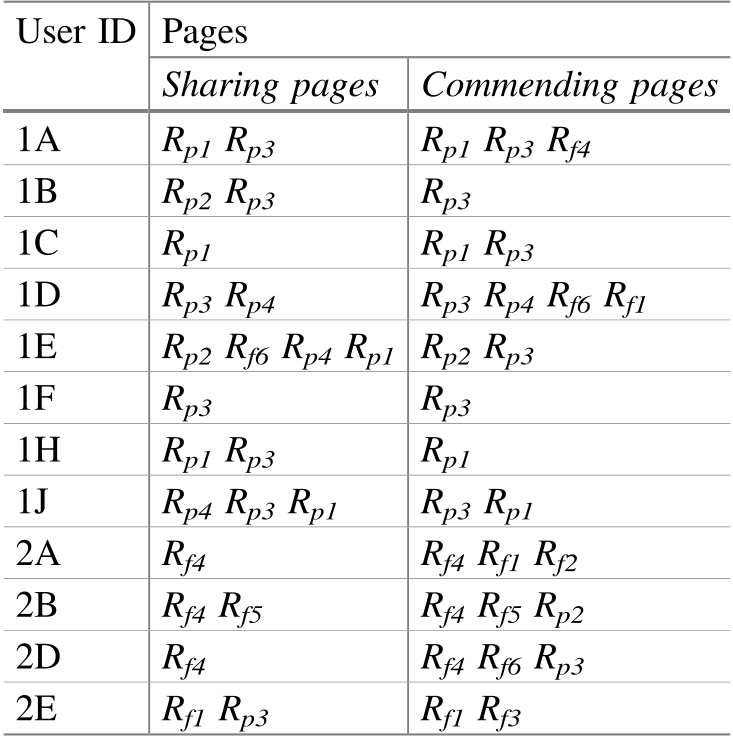
The Result:
- For the Developers, the SRRR model automatically pushed technical pages () to the top because their colleagues had shared them.
- For the Peasants, cultivation guides () dominated the top spots.
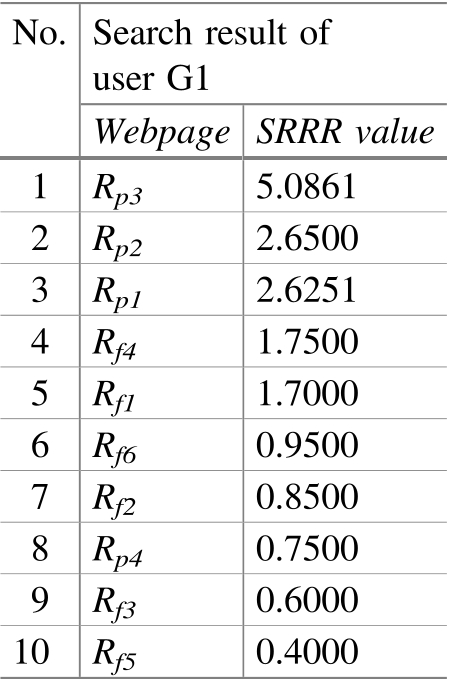
Depth Insight: Why This Matters
The genius of SRRR lies in its Software Engineering pragmatism. It obeys the "Open-Closed Principle"—you don't need to rebuild Google's core engine to implement this. You simply add social signals as additional features.
Crucially, it also addresses the Privacy Paradox. Instead of deep-mining sensitive user data, it only tracks public interactions (shares and likes), creating a "privacy-lite" path to personalization.
Limitations & Future Outlook
While the theory is sound, the authors admit that incentivizing interaction and preventing social spam (bot-likes) are significant hurdles. Future work will likely involve integrating real-time data from established APIs like Twitter/X or Mastodon to validate the model at scale.
In conclusion, SRRR proves that search is no longer just about keywords and links; it’s about the social fabric of the people doing the searching.