
Digital Ideology: Using Twitter as a Barometer for Political Conflict in Egypt
7302_Secular vs. Islamist polarization in Egypt on Twitter.
This paper presents a quantitative analysis of secular-vs.-Islamist polarization in Egypt using Twitter data. By employing a retweet-based label inference method from "seed users," the authors develop a "polarization barometer" based on hashtag usage that successfully correlates with domestic violent outbreaks.
TL;DR
Researchers from the Qatar Computing Research Institute have developed a quantitative method to track the friction between "Secular" and "Islamist" camps in Egypt. By analyzing the "valence" of hashtags used by over 7,000 users, they discovered that when these two groups stop sharing the same digital vocabulary, physical violence often follows in the streets.
Background: Beyond the US Left-vs-Right
While political science has long studied polarization, most models are built on the American bipartisan system. This paper shifts the focus to a young democracy—post-revolutionary Egypt—where the primary axis of conflict isn't just policy, but the fundamental role of religion in the state.
Methodology: Mapping the Egyptian "Tweeps"
The authors began by identifying "seed users"—prominent figures like Mohamed ElBaradei (Secular) and Muhammad Morsi (Islamist).
1. Labeling by Endorsement
The core insight is that retweeting is an act of endorsement. By calculating the ratio of Islamist-to-Secular retweets, each user was assigned a polarity score.
2. The Hashtag Barometer
The authors moved from users to content. If a hashtag like #Charity is used equally by both sides, it is "centered." If a hashtag like #Constitution is used almost exclusively by one camp, it is "polarized."
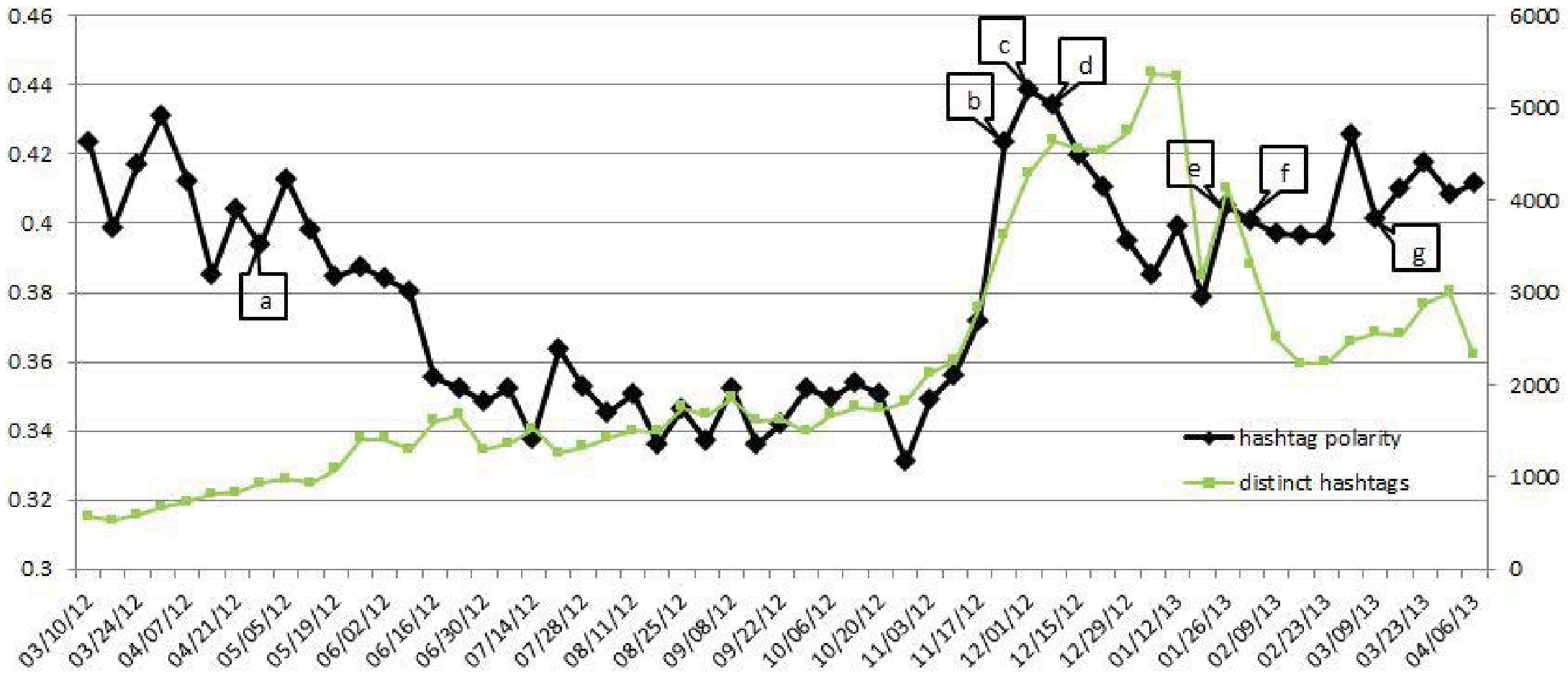 Fig 1: The retweet network shows a clear, though not absolute, split between the blue (Secular) and red (Islamist) communities.
Key Findings: Breaking Stereotypes
The study’s most provocative results came from applying "hand-crafted dictionaries" to the tweets to analyze linguistic behavior.
- The Religion-Conflict Link: As expected, users closer to the Islamist pole used more religious terms and discussed charity more frequently.
- The Hate Speech Paradox: Contrary to Western assumptions that political Islamism is linked to higher levels of religious intolerance, the data showed that Islamist users were actually less likely to use derogatory terms for other religions compared to the secular opposition.
- Media Bias: By analyzing URLs, the study quantified the leaning of Al Jazeera. The Arabic version (
aljazeera.net) showed a slight Islamist leaning, while the English version (aljazeera.com) skewed Secular.
The "Barometer of Tension"
The defining contribution of this work is the correlation between digital language and physical safety. By tracking the average polarization of all hashtags per week, the authors noticed a pattern: when the "overlap" between the two speech bubbles disappears, violence occurs.
Fig 2: Periods marked a-g represent outbreaks of violence, all of which align with peaks in hashtag polarity.
Critical Insight: Why This Matters
The "Barometer" suggests that polarization isn't just about what people say, but the divergence of the topics they care about. When a society loses its shared vocabulary (e.g., when one side only talks about one set of hashtags and the other side another), the social fabric tears.
Limitations
- Sampling Bias: Twitter users in 2012-2013 Egypt were largely urban, tech-savvy, and younger, which may not represent the rural Egyptian population.
- Language Nuance: Using dictionaries to find "derogatory terms" can miss subtle sarcasm or cultural idioms that a native speaker would catch but a keyword list might miss.
Conclusion
This research moves social media analysis from "sentiment" (happy vs. sad) to "structural tension" (shared vs. separate). It suggests that we can monitor the health of a democracy in real-time by looking at how much "shared ground" exists in the digital conversation. If the hashtags continue to drift apart, the warning lights for physical conflict should start flashing.