
Secure Socializing in the Crowd: Reinventing Encounter-Based Networks
SECURE ENCOUNTER-BASED MOBILE SOCIAL NETWORKS: REQUIREMENTS, DESIGNS, AND TRADEOFFS
The paper introduces a secure framework for Encounter-Based Social Networks (EBSNs) that connect users who share a physical location. It proposes a novel visual authentication mechanism combined with Tor-based anonymous communication to enable secure post-encounter connections, implemented in a proof-of-concept iPhone app called MeetUp.
TL;DR
Encounter-based Social Networks (EBSNs) allow you to connect with the person you just saw at a cafe without knowing their name. This paper identifies critical security flaws in existing EBSNs—specifically their vulnerability to impersonation—and presents MeetUp, a system that uses visual authentication and Tor to ensure that "who you see is who you message," all while keeping your location private from the system itself.
Background: Beyond the "Friend of a Friend" Paradigm
Most social networks (Facebook, LinkedIn) are built on pre-existing relationships. EBSNs flip this: the encounter is the edge in the graph. Whether it's a "missed connection" at a subway station or professional networking at a massive conference, EBSNs facilitate interactions between strangers who share a space-time coordinate. However, this spontaneity opens a Pandora’s box of security risks: How do you know the person messaging you later is actually the person you saw?
The "Broken" State of Prior Art
The authors critique SMILE, a previous state-of-the-art design. SMILE's fatal flaw is its reliance on unauthenticated key agreement. An attacker (or a malicious rendezvous server) could intercept keys or collude to unmask users. In technical terms, SMILE lack Unlinkability and is prone to Man-in-the-Middle (MitM) attacks because it cannot cryptographically prove that a specific physical person owns a specific digital key.
Methodology: The MeetUp Framework
The paper proposes a three-layer architecture (User, Plug-in, and Cloud) to fix these issues.
1. Visual Authentication: The Human Firewall
The core insight is that humans are exceptional at recognizing faces but poor at remembering cryptographic hashes. MeetUp uses X.509 certificates that include a photo (or a privacy-preserving cartoon version) signed by a Trusted Authority.
2. The Online/Offline Split
The protocol is divided into two phases:
- Encounter Phase (Online): Devices broadcast certificates via Bluetooth.
- Rendezvous Phase (Offline): Users later browse their "collected faces" and initiate communication.
3. Anonymity via Tor
To prevent the server from tracking users, MeetUp uses Tor Hidden Services. This ensures that even if you choose to connect with someone, your IP address and physical location remain hidden from both the server and the other party until you choose to reveal them.
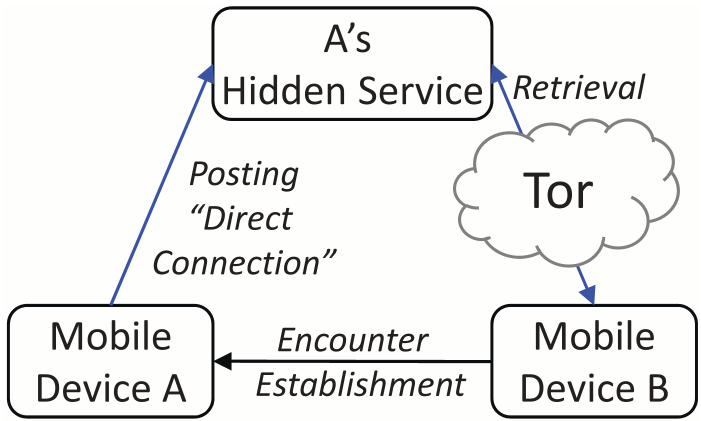 Figure 1: The generic EBSN architecture showing the User Layer, Plug-in Layer, and the storage Cloud.
Experiments & Real-World Feasibility
The authors implemented MeetUp on iOS, testing it in various urban scenarios.
- Performance: Despite Bluetooth's limitations, data exchange (20KB bundles) took less than 1 second in dense urban environments (bus stations) and as little as 250ms in clear line-of-sight.
- Reliability: The system successfully handled obstacles like walls and elevators, though naturally with higher latency.
- User Acceptance: A key finding was the "Privacy-Usability Tradeoff." While some users were hesitant about photos, the introduction of "cartoonized" avatars increased the willingness to use the system to 87%.
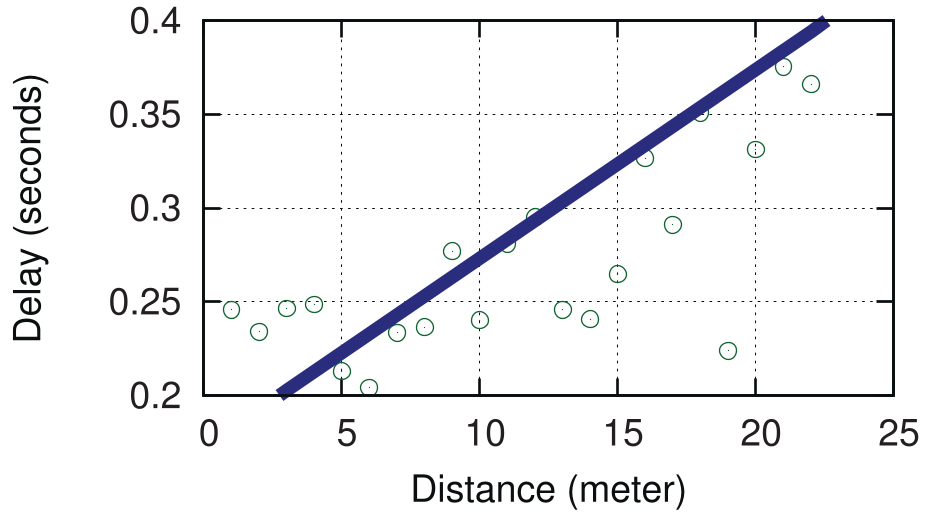 Figure 2: Information exchange delay over distance (ideal conditions, no obstacles).
Critical Insights: Why This Matters
The shift from "digital-first" to "physical-first" identity is a major trend in decentralized systems. This paper proves that Identity is Visual. By binding a public key to a face, the authors solve the MitM problem without requiring complex hardware.
However, there are limitations:
- Centralized Authority: The system still requires a Trusted Authority to sign certificates initially.
- Battery Life: Constant Bluetooth scanning (every 2 minutes) can drain a smartphone in about 8 hours.
- Face Recognition Privacy: There is a risk that an adversary could scrape these broadcast photos and use external AI (like Clearview AI) to de-anonymize users.
Summary
MeetUp demonstrates that secure, anonymous encounter-based networking is not just a theoretical curiosity but a deployable reality. By combining the physical intuition of human sight with the digital invisibility of Tor, we can finally have "stranger-to-stranger" social networking that is both authentic and private.