
Secure Interdependent Networks: Defending the P2P and Online Social Network Convergence
Secure Interdependent Networks for Peer-to-Peer and Online Social Network
This paper investigates the security vulnerabilities of interdependent Peer-to-Peer (P2P) and Online Social Networks (OSN), specifically focusing on how mutual dependence accelerates rumor propagation and malicious attacks. The authors propose the SICR (Spreader-Ignorant-Recaller-Stifler) model to characterize dynamic rumor spreading and introduce "Authentication Intervening" and "Splitting Target" as two strategic defense mechanisms.
TL;DR
As Peer-to-Peer (P2P) systems integrate with Online Social Networks (OSN) to enhance trust and efficiency, they form a "double-edged sword" of interdependence. This paper reveals that such coupling makes networks exceptionally vulnerable to intentional attacks and rumor propagation. By introducing the SICR rumor model and two novel architectural interventions—Authentication Intervening and Splitting Target—the authors provide a roadmap for containing cross-network contagion.
The "Trust-Privacy" Paradox
Modern internet architectures are increasingly interdependent. P2P systems (like BitTorrent) leverage OSNs to establish long-term trust, while OSNs use P2P's anonymous nature to preserve user privacy. However, this synergy creates a dangerous bridge: a malicious attack on a P2P identity can instantly traverse the bidirectional link to compromise a user's social profile.
Unlike traditional infrastructure (like power grids), where the main threat is physical failure, the P2P-OSN nexus suffers from Trust Crises and Privacy Disclosure. When these two layers are coupled, a single successful attack captures two nodes simultaneously, leading to a first-order phase transition—essentially a total system collapse that happens much faster than in isolated networks.
Methodology: Modeling the Contagion
To understand how rumors and malware spread across these layers, the authors propose the SICR (Spreader-Ignorant-Recaller-Stifler) model.
1. The Power-Law Vulnerability
Both P2P and OSNs are Scale-Free (SF) networks, meaning a few "hub" nodes have a massive number of connections. The paper uses percolation theory to show that intentional attacks targeting these hubs are devastating. The attack probability is weighted by the combined degree of the node in both layers: This formula suggests that "socially active" P2P users are the prime targets for bringing down the entire ecosystem.
2. The Recaller Phenomenon (SICR)
The SICR model introduces the "Recaller" (C). In a standard SIR model, a "Stifler" stays dormant. In interdependent networks, a user who initially ignored a rumor in their P2P client might be "re-infected" when they see their trusted friends sharing it on OSN.
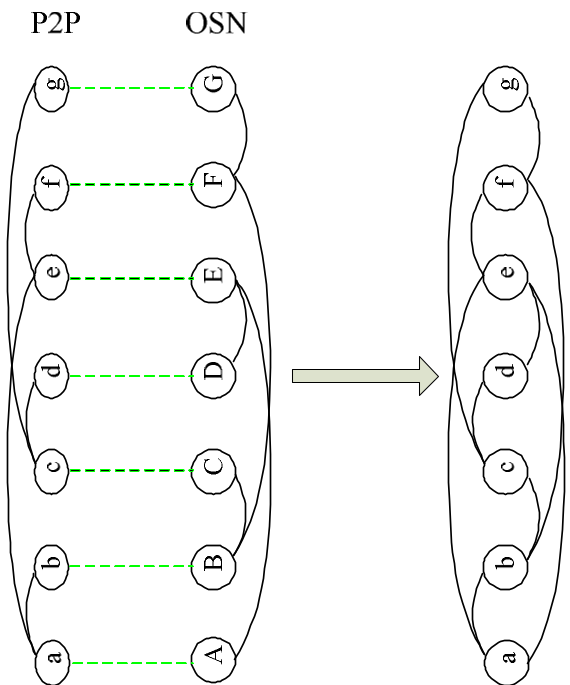 Fig 1: The bidirectional dependencies that facilitate cross-layer rumor dynamics.
Architectural Defense: Breaking the Chain
The core insight of this work is that to stop the cascade, we must decouple the bidirectional fate of the twin nodes. The authors propose two main schemes:
Scheme A: Authentication Intervening
This introduces a security "firewall" between the P2P and OSN layers. While valid data (trust scores, file metadata) can pass through, unauthorized malicious commands are blocked.
- Pros: High security, preserves full cooperation.
- Cons: Requires centralized software deployment, which can be hard in decentralized P2P environments.
Scheme B: Splitting Target
This is a structural solution: breaking one bidirectional link into two unidirectional links. For example, a single OSN identity could be linked to two separate P2P accounts.
- Pros: Highly flexible; users can implement this themselves (e.g., using different aliases).
- Cons: If a key node is compromised, privacy may still leak, but the trust degradation is contained within specific bounds.
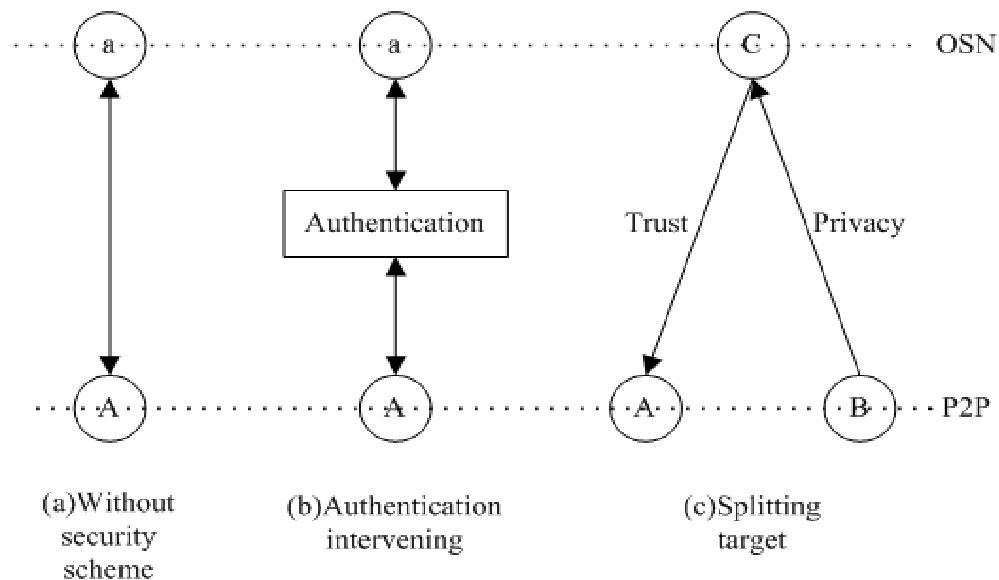 Fig 2: Visualizing the transition from direct coupling (a) to filtered (b) and split (c) architectures.
Experimental Insights
Comparing the strategies, the paper highlights a critical trade-off between deployment ease and security robustness:
| Trait | Coupling (Baseline) | Authentication | Splitting Target |
|---|---|---|---|
| Security | Low | High | Medium |
| Vulnerability | Hub nodes | N/A | Key nodes |
| Deployment | Hardware/Structural | Software | User-Flexible |
The mathematical analysis confirms that by regulating the transition rates (increasing the "stifling" rate and limiting the "recalling" rate ), these schemes can prevent a rumor from reaching a critical epidemic threshold.
Critical Analysis & Future Outlook
This paper effectively shifts the conversation from "node robustness" to "link vulnerability" in socialized P2P systems. However, a significant limitation is its reliance on the assumption of a one-to-one correspondence between P2P and OSN nodes, whereas real-world users often have multiple accounts across many platforms.
The Takeaway: As we move toward Web3 and decentralized social protocols, the "Splitting Target" strategy remains a highly relevant, low-cost method for users to protect their digital identity. Security in 2026 and beyond will depend not just on how strong your nodes are, but how intelligently you break the dependencies between your social and functional digital lives.