
Secure Social Networking: Moving Beyond Passwords with USIM-Based GAA
Secure mobile social networks using USIM in a closed environment
This paper introduces a secure architectural framework for "closed" Mobile Social Networks (MSNs) by leveraging existing 3GPP Generic Authentication Architecture (GAA) and USIM/SIM capabilities. The core method utilizes the Generic Bootstrapping Architecture (GBA) to issue X.509-based subscriber certificates for secure member enrollment and identification.
TL;DR
As the trend shifts from massive open platforms to specialized "closed" social circles, password-based security is no longer enough. This paper proposes a transition to hardware-backed security using the USIM already in your pocket. By utilizing the 3GPP Generic Authentication Architecture (GAA), the authors created a framework for Mobile Social Networking Portals (MSNP) that allows for secure, certificate-based enrollment and even offline peer-to-peer group invitations.
Background: The Security Gap in Social Media
Most social networks treat security as an afterthought, relying on easily phished passwords. However, for a "closed group"—such as a professional fashion industry team or an enterprise project group—the requirements are far stricter. These groups need:
- Strong Identity: Proof that a user is who they claim to be.
- Role-Based Access: Distinguishing between moderators and members.
- Offline Fluidity: The ability to invite a colleague to a group via Bluetooth or NFC while standing in the same room, even without a data connection.
The Core Innovation: 3G-GBA for Social Apps
The authors' masterstroke is repurposing GBA (Generic Bootstrapping Architecture). GBA is a standard that allows a mobile phone and a network operator to agree on shared secret keys based on the secret burned into the SIM card.
The Certificate Triad
Rather than one-size-fits-all logins, the architecture issues three specific X.509 certificates to every user:
- AuthCert: For logging into the portal.
- SignCert: For digitally signing requests or invitations.
- SocialCert: A dynamic certificate defining which groups you belong to and your specific roles (Moderator vs. Member).
How It Works: The Workflow
The architecture relies on the Mobile Social Networking Portal (MSNP) actiing as a bridge between the cellular network's security functions and the social application.
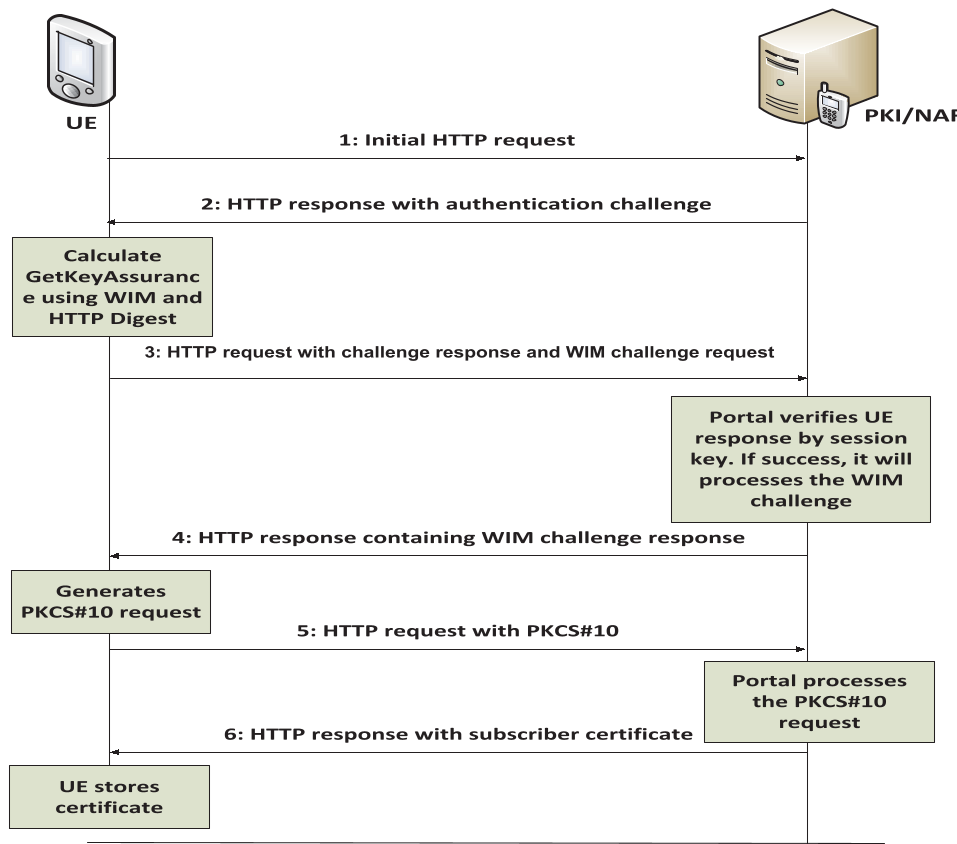
Online Enrollment
When a user joins, the MSNP triggers a GBA bootstrap. The phone talks to the BSF (Bootstrapping Server Function), authenticates via the SIM, and derives keys. These keys are then used to request the three certificates mentioned above from a PKI portal.
Offline Interaction: The "Direct Mode"
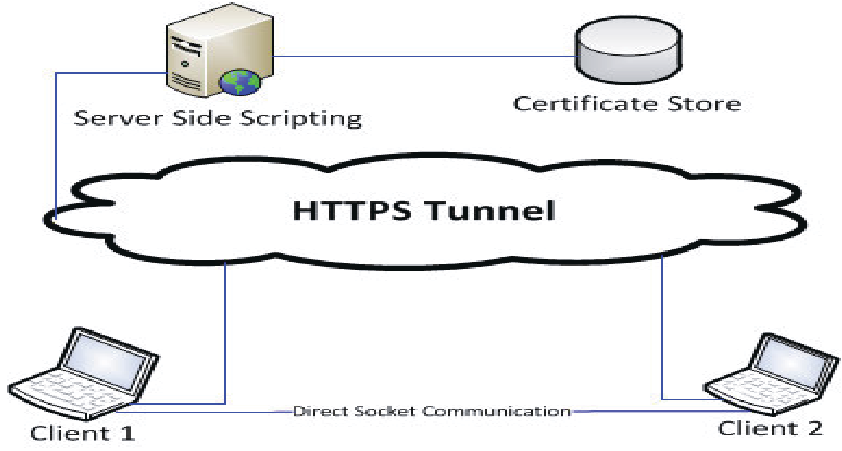
This is where the paper addresses high-stakes professional environments. Using ViDPSec (Visual Device Pairing Security Protocol), two users can verify each other's certificates locally. A moderator can sign an invitation "blob" using their SignCert, send it to a new member's phone via a short-range link, and the new member can later "redeem" this invitation once they are back online to update their SocialCert.
Prototype & Performance
To prove this isn't just theoretical, the team built a prototype using:
- Frontend: PHP 5.3 and Apache.
- Crypto: OpenSSL for 2048-bit RSA key handling.
- Database: MySQL for managing User Security Settings (USS).
The prototype successfully demonstrated that certificates could be stored directly on the USIM (using GBA_U), ensuring that even if the phone's OS is compromised, the root identity keys remain shielded within the secure element of the SIM card.
Critical Insight & Future Outlook
While the paper successfully solves Authentication and Integrity, it leaves Anonymity as a future challenge. In a world of increasing surveillance, how do we benefit from the USIM's strong identity without allowing the operator to track every social interaction?
This work serves as a blueprint for "Sovereign Identity" managed by infrastructure we already trust. By moving the "Root of Trust" from a Silicon Valley database to the Telco-grade USIM, social networks can finally reach the security levels required for professional and confidential human collaboration.
Takeaway for Architects
If you are building high-privacy communication tools, don't reinvent the wheel. The 3GPP GAA framework provides a battle-tested method to turn a mobile subscription into a hardware-backed digital identity.