
PBDSF: Balancing Security and Scalability in Healthcare Big Data
Secure Pattern-Based Data Sensitivity Framework for Big Data in Healthcare
The paper introduces the Secure Pattern-Based Data Sensitivity Framework (PBDSF), a specialized Big Data architecture for healthcare that utilizes Hadoop and Elliptic Curve Cryptography (ECC). It leverages machine learning and pattern matching to automate the identification of sensitive Electronic Medical Records (EMR) and applies tiered encryption to balance security and processing speed.
TL;DR
The Secure Pattern-Based Data Sensitivity Framework (PBDSF) is a novel architecture designed to solve the "security vs. speed" dilemma in medical Big Data. By using Hadoop for parallel processing and Elliptic Curve Cryptography (ECC) for lightweight security, it automatically identifies sensitive patterns in EMRs—such as Social Security Numbers and medical codes—and encrypts them based on their importance.
Contextual Positioning
As the healthcare industry moves toward zettabyte-scale data, the conflict between data utility (analytics) and data privacy (HIPAA compliance) intensifies. Most current solutions are either too slow (heavy encryption) or too rigid (static access control). PBDSF sits at the intersection of Big Data Analytics and Privacy-Preserving Systems, offering a scalable, automated pipeline for secure Electronic Medical Record (EMR) management.
The Core Challenge: The Unstructured Sensitivity Trap
Healthcare data is notoriously heterogeneous. A patient's record contains low-sensitivity data (gender, marital status) and high-sensitivity data (SSN, specific ICD-10 diagnosis codes). Traditional encryption methods often treat the entire dataset as a monolithic block, leading to:
- Computational Waste: Encrypting non-sensitive data consumes unnecessary CPU cycles.
- Latency: Standard algorithms like RSA require long keys, which slow down distributed processing in Hadoop environments.
The authors' insight is simple: Not all data is created equal. By identifying patterns and frequencies, we can encrypt only what is strictly necessary with high-strength, low-overhead algorithms.
Methodology: The PBDSF Pipeline
The framework operates through a series of modules integrated into the Hadoop Distributed File System (HDFS).
1. Sensitivity Classification (The Brain)
The system uses Regex and Natural Language Processing (NLP) to categorize data:
- High Sensitivity: SSN, Patient ID, CPT/ICD-10 Codes.
- Medium Sensitivity: Name, Address, Date of Birth.
- Low Sensitivity: Gender, Race, Insurance policy type.
Interestingly, the system uses a Frequency Counter as an inverse proxy for sensitivity. If a term appears very frequently (e.g., "Male"), it is generally considered less sensitive individually than a unique identifier.
2. Encryption Strategy (The Shield)
Instead of RSA, the paper employs Elliptic Curve Cryptography (ECC).
- Mechanism: It relies on the algebraic structure of elliptic curves over finite fields ().
- Benefit: A 160-bit ECC key provides the same security as a 1024-bit RSA key, significantly reducing the burden on the MapReduce worker nodes.
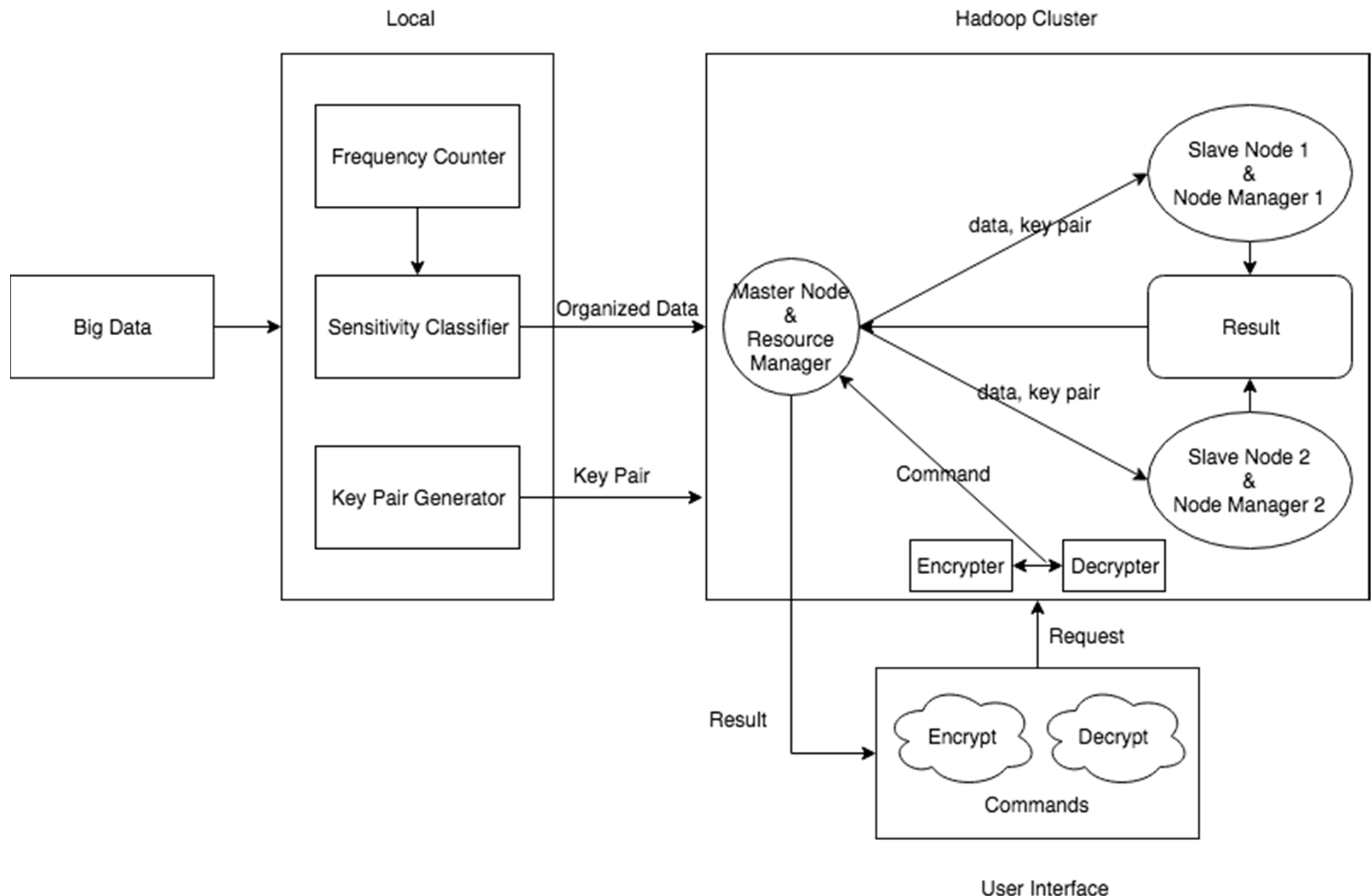 Fig 1. The PBDSF Workflow: From Raw Big Data to Sensitivity-Rated Encrypted Output.
Experimental Validation
The authors tested the framework on a 3-node cluster (Ubuntu/Hadoop). They measured performance as the dataset grew from 10,000 to 200,000 rows.
Key Findings:
- Parallel Efficiency: The "2-slave node" setup was consistently faster than single-node setups, proving the framework scales effectively with hardware.
- Encryption Speed: Encrypting 200,000 rows took roughly 34 seconds, a remarkably low figure for high-security medical records.
- NLP Bottleneck: The sensitivity estimation (using Python's NLTK) was the slowest part of the process (~462 seconds for 200k rows). However, the authors argue this is a one-time overhead for data ingestion.
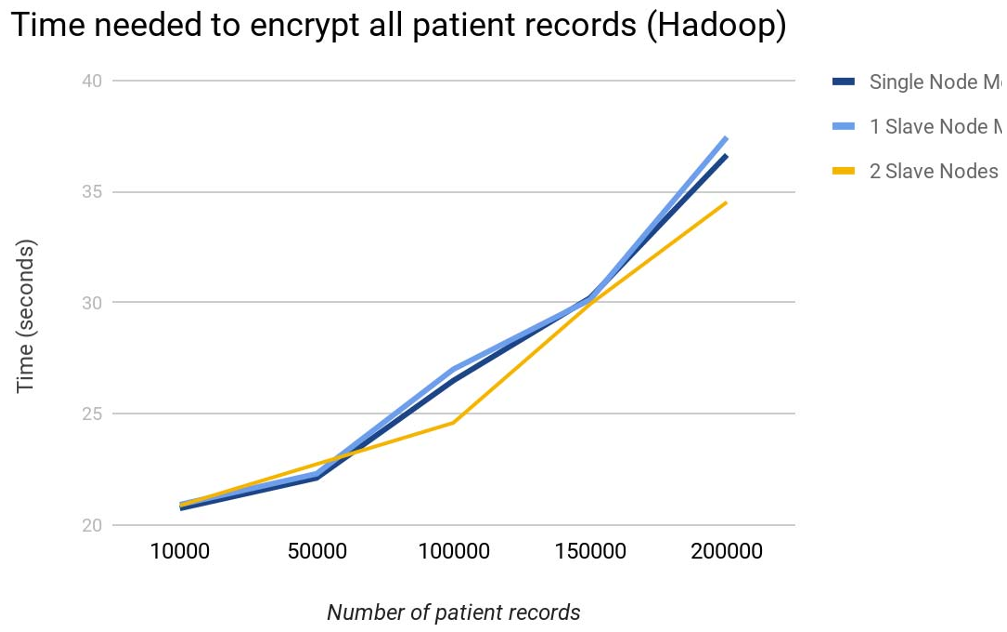 Fig 2. Encryption Time Comparison: Demonstrating the benefits of slave-node parallelization.
Critical Insight & Future Directions
The strength of PBDSF lies in its granularity. By moving away from "all-or-nothing" encryption, it allows healthcare providers to maintain high-speed analytics on non-sensitive attributes while locking down PHI (Protected Health Information).
Limitations: The current reliance on NLTK for sensitivity estimation is a serial bottleneck. Future iterations could benefit from distributed NLP (using Spark NLP) to parallelize the "thinking" part of the pipeline as effectively as the "encrypting" part.
Conclusion: PBDSF represents a pragmatic leap forward. It acknowledges that in the world of Healthcare Big Data, security must be as agile as the data it protects. By marrying the structural awareness of pattern matching with the mathematical efficiency of ECC, the authors provide a blueprint for HIPAA-compliant, high-performance medical clouds.