
Secure Social Sensor Networks: Bridging the Gap Between IoT, Cloud, and Social Collaboration
Towards a secure social sensor network
The paper introduces a secure Social Sensor Network (SSN) framework that integrates Wireless Sensor Networks (WSN), Cloud Computing, and Social Networking. By deploying the iSensors middleware on an IaaS cloud and implementing Ciphertext-Policy Attribute-Based Encryption (CP-ABE), it enables scalable, fine-grained data sharing among collaborators while ensuring user privacy.
TL;DR
This research presents a novel architecture that merges Wireless Sensor Networks (WSN) with Social Networking paradigms. By hosting personalized middleware in the cloud and applying Ciphertext-Policy Attribute-Based Encryption (CP-ABE), the system allows users to share sensitive sensor data (like health metrics) with specific groups (doctors, friends) using fine-grained, attribute-driven security policies.
Background: The Isolation of Sensor Data
For years, sensor networks have operated in silos. Whether it’s military surveillance or home healthcare, the data generated is often locked within proprietary formats or local databases. Even when moved to the cloud, sharing this data with external collaborators—such as a specialist doctor or an environmental scientist—presents a nightmare for Privacy and Access Control.
The authors identify a critical gap: existing social integrations (e.g., posting sensor updates to Facebook) give up too much control to the social platform provider. Instead, we need a system that is as social as Facebook but as secure as a private medical database.
Methodology: The Sensor Social Platform
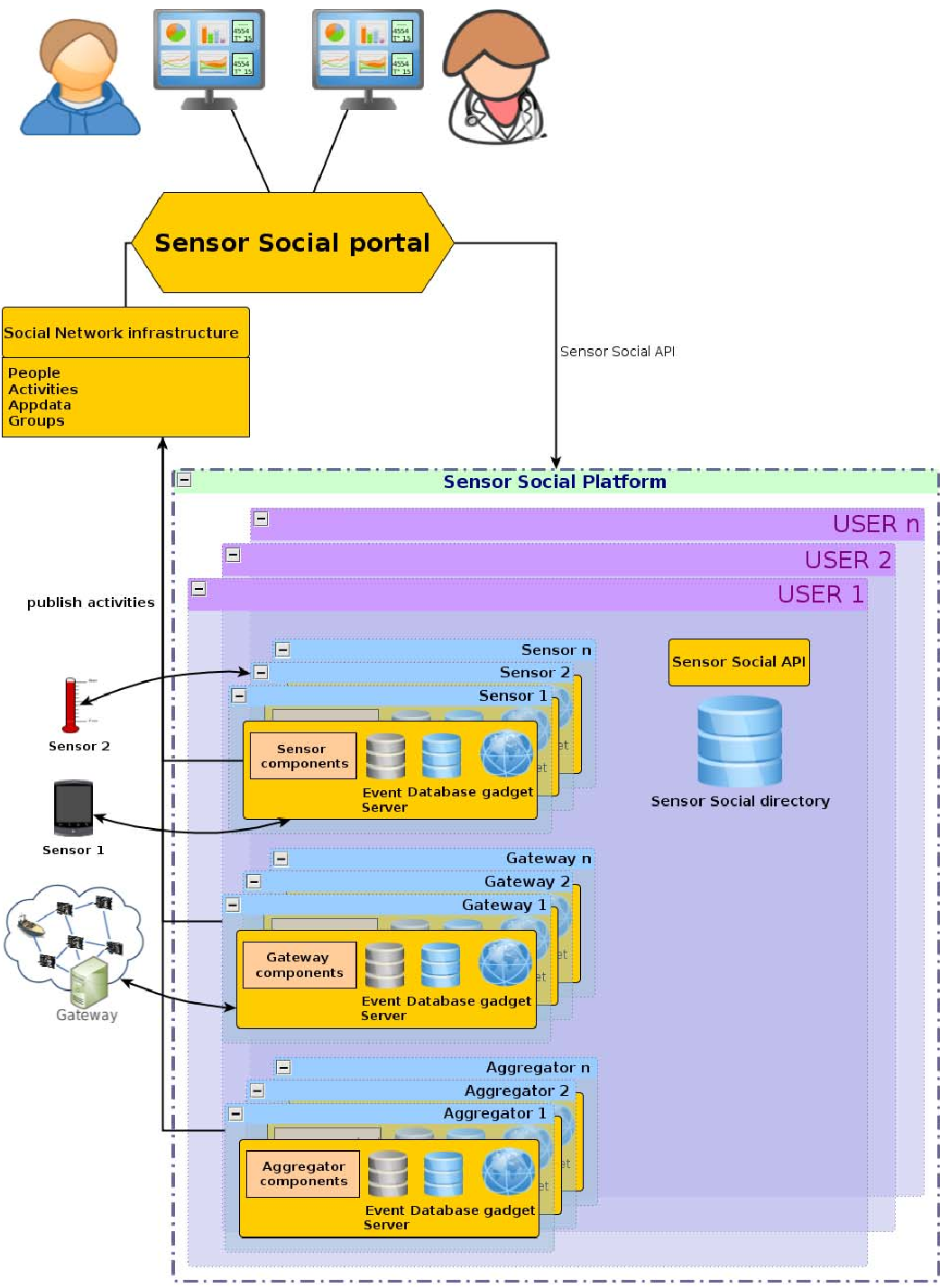
The proposed system, built upon the iSensors middleware, is structured around three technological pillars:
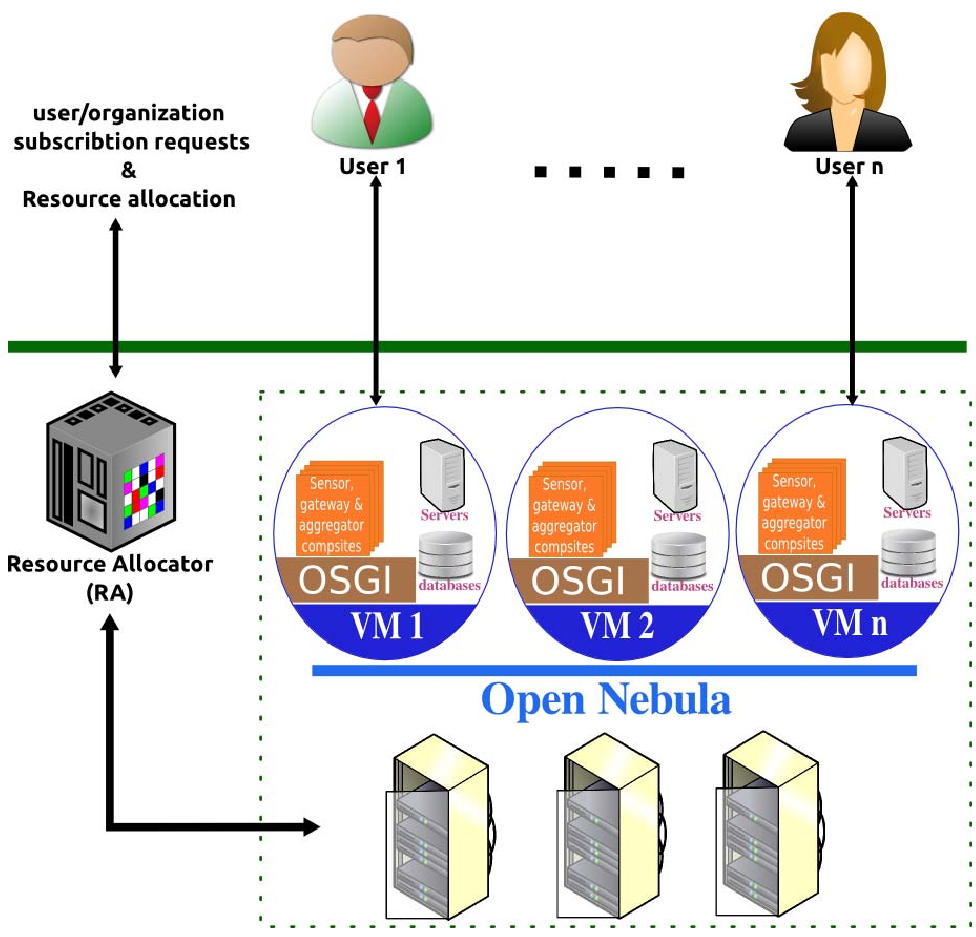
- Cloud Infrastructure (IaaS): Utilizing OpenNebula, the system assigns a dedicated Virtual Machine (VM) to each user. This ensures data isolation and allows for scalable resource allocation.
- Social Mashup Engine: Each sensor is represented as a "composite" gadget. These gadgets can be imported into a user’s social portal, allowing friends to view real-time data streams if authorized.
- CP-ABE Security: This is the "secret sauce." Unlike traditional encryption where you encrypt for a person, CP-ABE encrypts for a policy.
- Example Policy:
(Role: Doctor AND Hospital: Antoine-Béclère) OR (Relation: Parent). - The data owner issues keys to friends based on their attributes. If the friend's attributes satisfy the policy, they can decrypt the stream.
- Example Policy:
Why store data un-encrypted?
One unique insight in this paper is the decision to store data un-encrypted within the user's private VM. This allows the Alert Generator to analyze the raw data and trigger events. Encryption only happens at the "exit point"—when data is sent as an alert or a query response—balancing local processing efficiency with external transit security.
Experiments & Security Implementation
The architecture introduces two critical local components:
- Authorization Authority (AA): Manages the generation, delivery, and—crucially—the revocation of keys.
- Local Security Component (LSC): Intercepts alerts and API queries to apply the CP-ABE encryption in real-time.
The Revocation Challenge
One of the biggest hurdles in Attribute-Based Encryption is revoking access. If a friend is no longer a "Doctor," how do you stop them from reading future data? The authors propose a versioning mechanism:
- Attributes are tagged (e.g.,
doctor-v5.1). - A minor version update forces a key redistribution to current valid holders.
- A major version update occurs periodically to ensure long-term "cryptographic freshness."
Critical Analysis & Takeaways
The strength of this work lies in its convergence. It doesn't just treat sensors as data sources; it treats them as social objects.
Pros:
- Inductive Bias toward Privacy: Data stays in a user-controlled VM, not a centralized social media database.
- Decoupled Identity: Encryption doesn't need to know who the receiver is, only what attributes they have.
Limitations:
- Computational Overhead: CP-ABE is heavier than standard AES. The paper focuses on the cloud side, but the "Personalized Gateway" (mobile phones) might struggle with high-frequency encryption.
- Trust in the Cloud Admin: While data is isolated in VMs, the cloud provider still holds the physical hardware. True zero-trust would require End-to-End Encryption from the sensor node itself.
Conclusion
This paper paves the way for a more collaborative and secure Internet of Things. By moving the "Social" aspect into a private cloud infrastructure and securing it with CP-ABE, the authors provide a blueprint for a system where we can share our digital lives without sacrificing our privacy.