
Decentralizing Trust: A Blockchain-Enhanced CP-ABE Scheme for Vehicular Social Networks
A Secure and Verifiable Data Sharing Scheme Based on Blockchain in Vehicular Social Networks
This paper proposes a secure and verifiable data sharing scheme for Vehicular Social Networks (VSNs) by integrating Ciphertext-Policy Attribute-Based Encryption (CP-ABE) with blockchain technology. The system enables fine-grained, one-to-many data sharing while leveraging a consortium blockchain to ensure access policy integrity and cloud non-repudiation.
TL;DR
Vehicular Social Networks (VSNs) require secure, one-to-many data sharing (e.g., traffic alerts or multimedia). This paper introduces a hybrid framework combining CP-ABE (for fine-grained control) and Blockchain (for non-repudiation). By moving access policy management from the cloud to a distributed ledger, the authors eliminate the single point of trust and enable users to verify their own access rights independently.
Background & Motivation: The Problem with Centralized Cloud
In traditional VSNs, encryption often relies on a Cloud Service Provider (CSP). However, the CSP is a "black box" that can:
- Tamper with Data: Silently modify the shared files.
- Deny Access: Refuse service to authorized users.
- Leak Information: Expose sensitive access policies (e.g., "shared only with male taxi drivers under 30").
The core research intuition here is that Blockchain's immutability makes it the perfect "witness" to ensure that what the data owner intended (the policy) is exactly what the cloud executes.
Methodology: The Architecture of Trust
The system transition from a single-authority model to a multi-entity consortium:
- Consortium Blockchain: Uses PBFT consensus among reputable vehicular members to store access policies and data hashes.
- Tiered Decryption: To save the vehicle's "brainpower," the CSP performs a Pre-decryption step. The vehicle only performs a final, lightweight computation using its private key.
- Policy Hiding: Instead of storing raw attributes, the scheme uses hash-based mapping () to prevent eavesdroppers from learning who the target audience is.
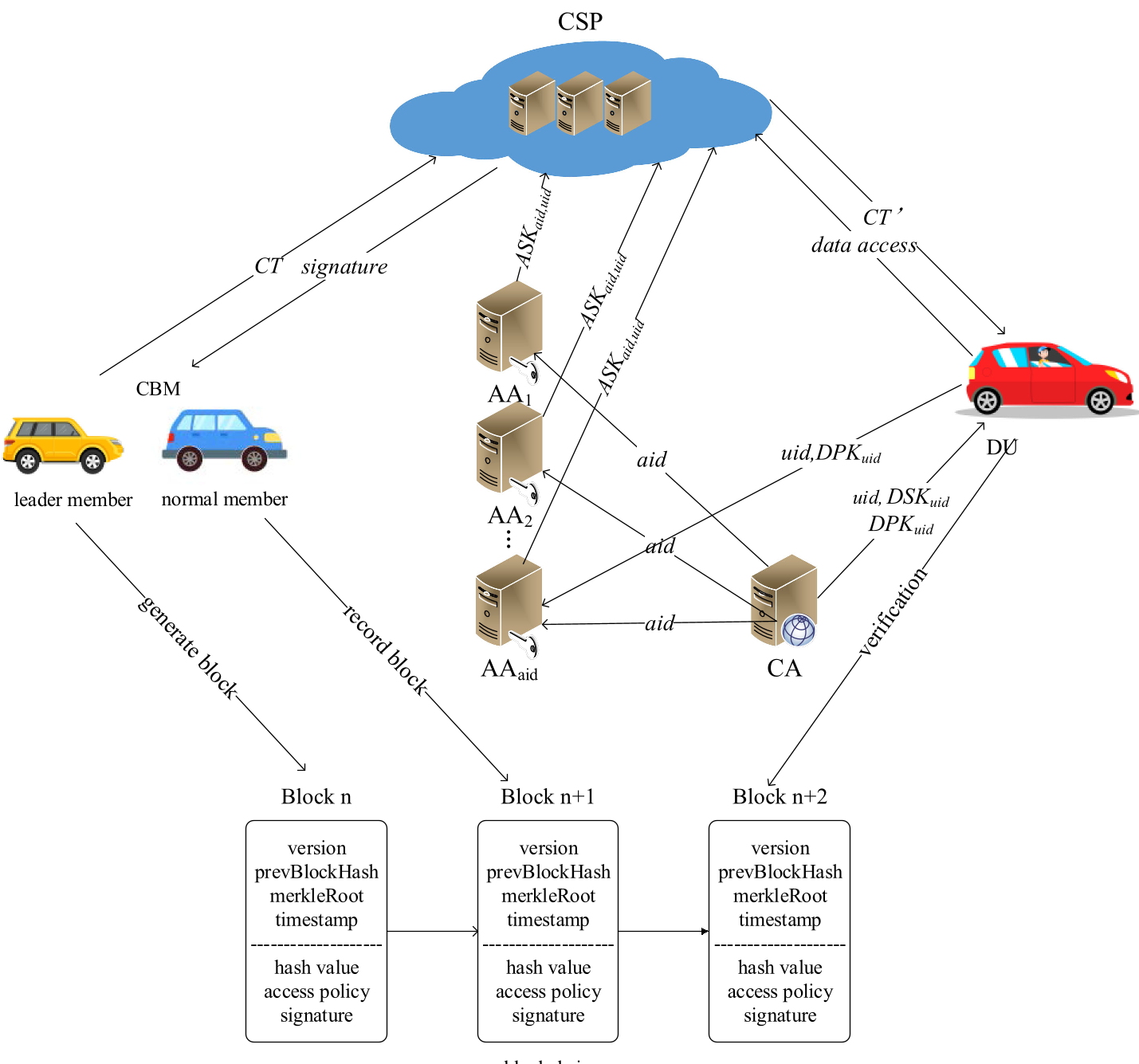 Figure 1: The proposed system model involving CBMs, CSP, Authorities, and Blockchain.
Technical Deep-Dive: Verifiable Sharing
The workflow follows a rigorous cryptographic chain:
- Encryption: CBMs encrypt data using a Linear Secret Sharing Scheme (LSSS) matrix representing the access policy.
- Verification: Before requesting data, a user checks the Blockchain. If their attributes don't satisfy the LSSS matrix, they don't even waste bandwidth talking to the cloud.
- Integrity: Once data is received, the user hashes it and compares it against the hash stored on the blockchain, ensuring zero-tampering.
Performance & Experiments
The authors validated their scheme against well-known baselines like Chase’s and Fan’s schemes.
- Encryption Efficiency: Even with 50 attributes, the encryption time is under 1 second, which is significantly faster than previous policy-hiding ABE models.
- Decryption Stability: Thanks to outsourcing, the decryption time on the vehicle remains a flat ~0.2s regardless of policy complexity.
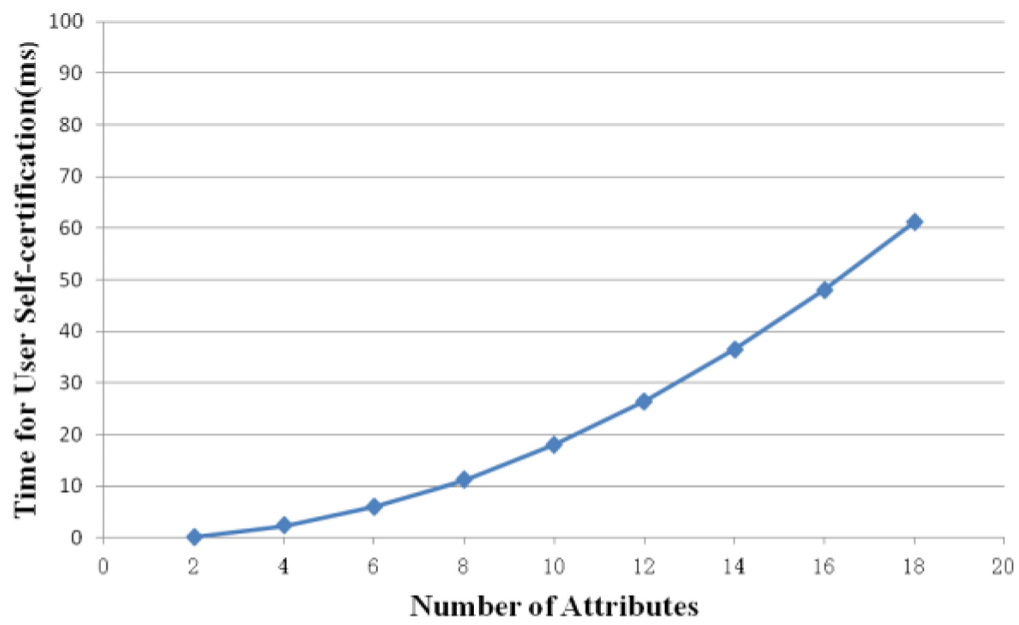 Figure 2: Time cost comparison for encryption and decryption phases.
Critical Insight & Conclusion
The true value of this work lies in the Data Revocation and Self-Certification features. In a dynamic VSN, links are transient. Using blockchain to manage the "access lifecycle" allows owners to revoke data access almost instantly by appending a revocation transaction, which all nodes must respect.
Limitations: While PBFT is secure, its communication complexity is , meaning the system might struggle if the number of "Leader" vehicles grows too large. Future work should focus on more scalable consensus models (like HotStuff) or sharding to support massive metropolitan VSNs.
Takeaway: By combining the "Mathematical Gatekeeper" (CP-ABE) with the "Digital Notary" (Blockchain), we can finally achieve secure data sharing in environments where the infrastructure cannot be fully trusted.