
Security and Privacy in MSNs: Architecting Trust in a Decentralized World
6550_Security and privacy in mobile social networks- challenges and solutions.
This paper provides a comprehensive taxonomic overview of Security and Privacy in Mobile Social Networks (MSNs). It introduces a tiered architecture (SU, LSP, ISP), defines three primary application categories, and presents specialized protocols like gesture-based authentication and Trustworthy Service Evaluation (TSE) to achieve SOTA privacy-preserving interactions.
TL;DR
Mobile Social Networking (MSN) is the convergence of social media and ubiquitous sensing. This paper outlines a robust security framework for MSNs, addressing the inherent risks of location leakage and Sybil attacks. The author introduces novel mechanisms like gesture-based handshake protocols and aggregate signature schemes that allow users to interact and share reviews without sacrificing their digital or physical safety.
Background & Motivation: The Trust Gap
In traditional social networks (Facebook, Twitter), users typically trust the central provider (ISP) with their data. However, MSNs introduce a new paradigm: Autonomous Mobile Applications. Here, users (SUs) communicate directly via Bluetooth, WiFi Direct, or NFC to find nearby services or exchange business cards.
The pain point is clear: How can you trust a stranger or a local restaurant with your precise location or health symptoms in an ad-hoc setting? Existing solutions often fail because they lack a "trust mediator."
Methodology: Engineering Privacy-By-Design
The paper categorizes MSN communication into three patterns—SU-to-ISP, SU-to-LSP, and SU-to-SU—and proposes specific technical fixes for each:
1. Gesture-Assisted Secure Sharing
To solve the "Man-in-the-Middle" risk during electronic business card exchange, the author proposes a Gesture-Authentication Scheme.
- The Intuition: Unlike wireless signals that can be intercepted from distance, physical gestures (shaking a phone in a specific pattern) are only visible to those in immediate proximity.
- Technique: Accelerometers and gyroscopes detect the motion, creating a session-specific secret key derived from an optical verification.
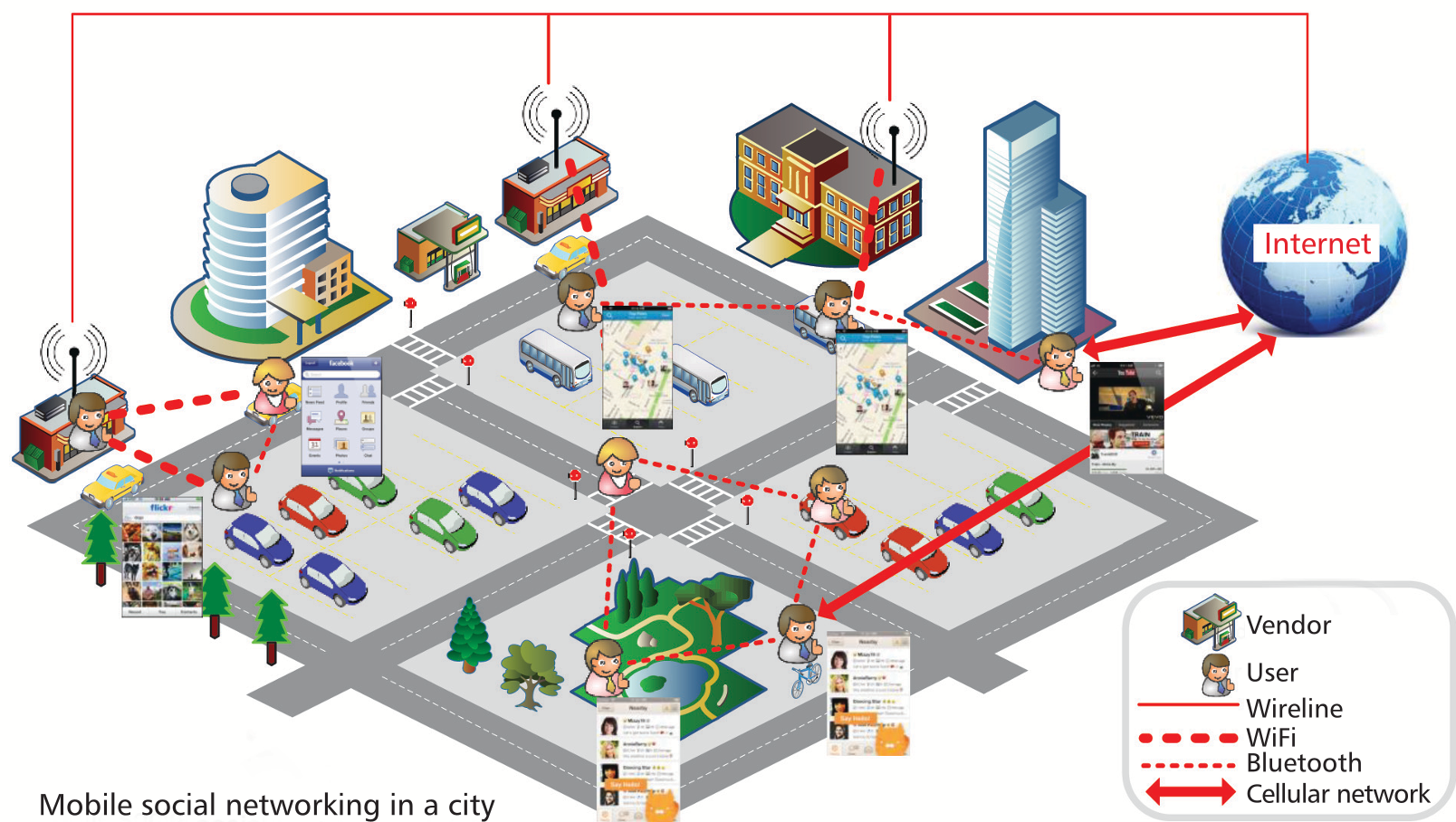 Figure 1: The overall MSN architecture showing SUs, LSPs (Local Service Providers), and ISPs.
2. Trustworthy Service Evaluation (TSE)
When users leave reviews for a restaurant (LSP), a malicious owner might delete negative comments. The paper utilizes Aggregate Signatures:
- Reviews from multiple SUs are bundled into a single signature.
- Because the signature is mathematically "locked" as a batch, the LSP cannot delete a single negative review without invalidating the entire set.
Experiments & Results: Resilience Under Fire
The most striking evidence of the paper's methodology is found in the TSE simulation. In environments where LSPs actively tried to suppress negative reviews (Rejection Attacks), the proposed TSE system proved significantly more robust than legacy systems.
| Metric | Password-Based | Gesture-Based |
|---|---|---|
| Complexity | High | Low |
| Update Frequency | Per User | Per Session |
| Channel | Wireless (Vulnerable) | Optical/Physical (Secure) |
| Usability | Hard | Easy |
| Table 1: Comparison of traditional vs. proposed gesture-based authentication. |
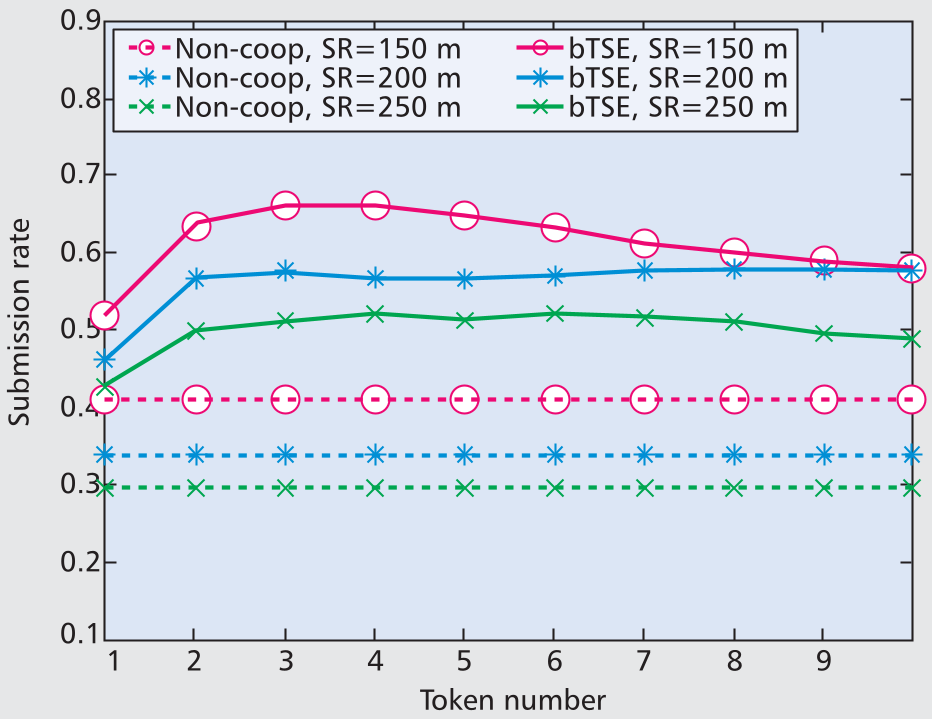 Figure 2: Performance of the TSE system. Note the 100% submission rate even under heavy rejection attacks (Graph b).
Critical Insight: Social Context Matters
The author concludes with a vital observation: Social-Context-Based Management. Privacy is skip-level; a user might share their "Researcher" profile in a university hall but hide it in a shopping mall. Future MSN protocols must be dynamic, adjusting identity disclosure based on the semantic environment, not just the technical one.
Summary & Future Outlook
This work moves MSN from a "leaky" broadcast medium to a structured, secure environment. While the current overhead of aggregate signatures is a challenge for older mobile devices, the rise of specialized AI and security chips in modern smartphones makes these protocols increasingly viable.
Key Takeaway: Security in the mobile age is not just about stronger encryption; it’s about binding digital proofs to physical, human-observable actions.