
Harmonizing Social Dynamics with Cryptographic Trust: An ESN-Based Web of Trust
Security and Trust through Electronic Social Network-Based Interactions
The paper proposes an Electronic Social Network (ESN)-based framework to enhance the Web of Trust (WoT) model for Public Key Infrastructure (PKI). By replacing physical "key signing parties" with continuous monitoring of ESN interactions, the authors introduce a mechanism to establish and manage cryptographic trust transparently for non-technical users.
TL;DR
The Web of Trust (WoT) has long been the "holy grail" of decentralized security, yet it remains largely unused due to the friction of physical identity verification. This paper presents a paradigm shift: leveraging the dynamic interaction data within Electronic Social Networks (ESNs) to automate trust establishment. By treating social media activity as identity evidence, the authors provide a pathway to make sophisticated PKI accessible to the average, non-technical user.
The Friction of Traditional Trust
Historically, if you wanted to trust a person's PGP key, you had to attend a "Key Signing Party." You would look at their passport, verify their fingerprint, and sign their key. This process is:
- Inflexible: It relies on "all-or-nothing" physical verification.
- Brittle: Lose your private key, and the entire web collapses—you must visit everyone again.
- Opaque: Non-technical users find the concepts of fingerprints and signatures alienating.
The authors' core insight is that long-term social mimicry is hard. Impersonating someone for a single email is easy; maintaining a consistent social persona—including live chats, tagging photos with common friends, and responding to shared memories—is as difficult as forging a high-quality physical ID.
Methodology: From Interaction to Confidence
The paper formalizes trust as a dynamic variable rather than a binary state.
1. Confidence Level ()
This is a subjective value reflecting user 's belief that a profile belongs to person . It is fueled by evidence:
- Implicit Evidence: Browsing history, common friends, and long-term profile stability.
- Explicit Evidence: Active chats, voice verification, or knowledge of shared past events.
2. The Threshold Mechanism
The ESN monitors and compares it against a threshold . Once the interaction quality crosses this line, the system prompts the user: "You have interacted with Alice frequently; do you want to sign her public key?"
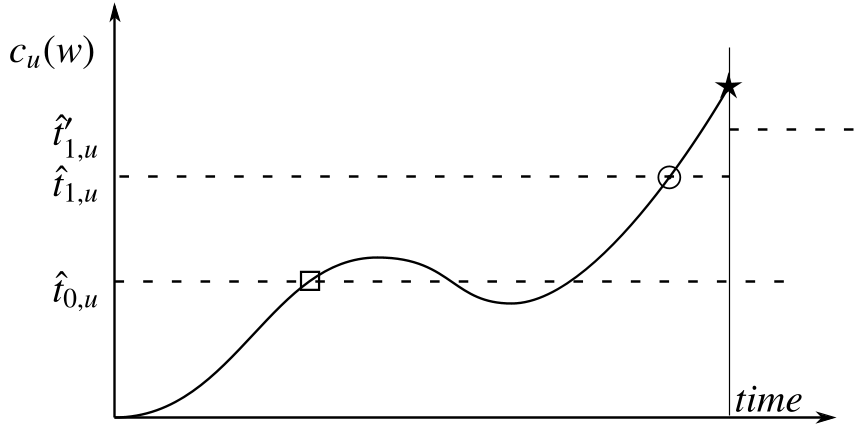 Fig 1: The feedback loop where ESN adapts the trust threshold based on user acceptance or rejection of signing proposals.
Key Breakthroughs in Trust Management
The ESN serves as more than just a matchmaker; it acts as a Management Layer:
- Transparent Key Distribution: When you log in from a new device (e.g., an internet cafe), the ESN can transparently provide your "Key Ring" (the list of public keys you trust).
- Graceful Recovery: If you lose your private key but can still authenticate via the ESN (using traditional passwords/MFA), your social graph can quickly re-verify your new key, restoring your cryptographic standing without a single face-to-face meeting.
- Short Life-Cycles: To enhance security, keys can be set to expire quickly, with the ESN handling the automated "silent" renewal as long as the social interaction remains consistent.
Critical Analysis & Future Outlook
While the paper successfully addresses the usability crisis of WoT, it introduces a significant new risk: Platform Centralization.
The authors acknowledge that current ESNs (like Facebook or LinkedIn) are "walled gardens." They propose a multi-ESN integration where trust from one network (LinkedIn) could potentially boost your confidence level in another (Facebook) via the public WoT ledger. However, this creates a privacy paradox—to be secure, the system needs to "see" your social life.
Final Takeaway
This work marks a transition from Identity by Document to Identity by Interaction. In an era where digital presence is as persistent as physical presence, using the "social proof" inherent in our daily apps to secure our communications is not just convenient—it's the only way to facilitate mass-market encryption.
Future Research Directions
- Privacy-Preserving Verification: How can we prove social interaction quality without revealing the content of those interactions to the ESN itself?
- Sybil Attack Resistance: Strengthening the threshold logic to prevent bot swarms from "simulating" trust.