
Engineering Trust and Breaking Borders: Lessons from Large-Scale Social Network Security Measurements
Security and Privacy Measurements in Social Networks: Experiences and Lessons Learned
This paper provides a retrospective analysis of large-scale security and privacy measurements within Online Social Networks (OSNs), specifically focusing on Facebook. It introduces a systematic "meta-workflow" for researchers, highlighting the evaluation of face-based Social Authentication (SA) and the success of breaking such systems using automated crawling and face recognition.
TL;DR
Conducting security research on massive platforms like Facebook is more of an "art of logistics" than just a technical challenge. This paper systematizes years of experience in probing Social Authentication (SA) mechanisms. The authors reveal how they broke Facebook’s photo-based identity checks using automated scrapers and face recognition, while providing a roadmap for navigating the ethical, legal, and technical minefields of modern OSN research.
The Friction Point: Why OSN Research is Hard
Most security researchers are trained to find technical vulnerabilities (buffer overflows, injection flaws). However, in Social Networks, the "vulnerabilities" are often conceptual or human-centric. Existing methodologies hit a wall because:
- Scale vs. Latency: Crawling millions of profiles triggers rate-limiters and anti-bot scripts.
- Ethical Purgatory: IRBs (Institutional Review Boards) are often ill-equipped to handle studies involving "dummy accounts" or "scraping public-yet-private data."
- The Terms of Service (ToS) Trap: To study how an attacker works, a researcher must often behave like one, which technically violates the platform's ToS.
Methodology: The "Meta-Workflow"
The authors propose a structured yet flexible approach to bypass these hurdles, divided into two key phases.
1. The Design Phase (Strategy & Ethics)
Before a single line of code is written, the researcher must secure "Institutional Air Cover."
- The Scalability Paradox: The authors argue against heavy, complex "Big Data" frameworks. Instead, they champion MongoDB and GridFS for their ability to "scale down"—allowing for quick, iterative queries during the early exploration phase.
- The Ethical Blueprint: Using dummy accounts and simulating attacks offline (using indexed face data) instead of constantly hammering the live service is crucial for staying under the radar.
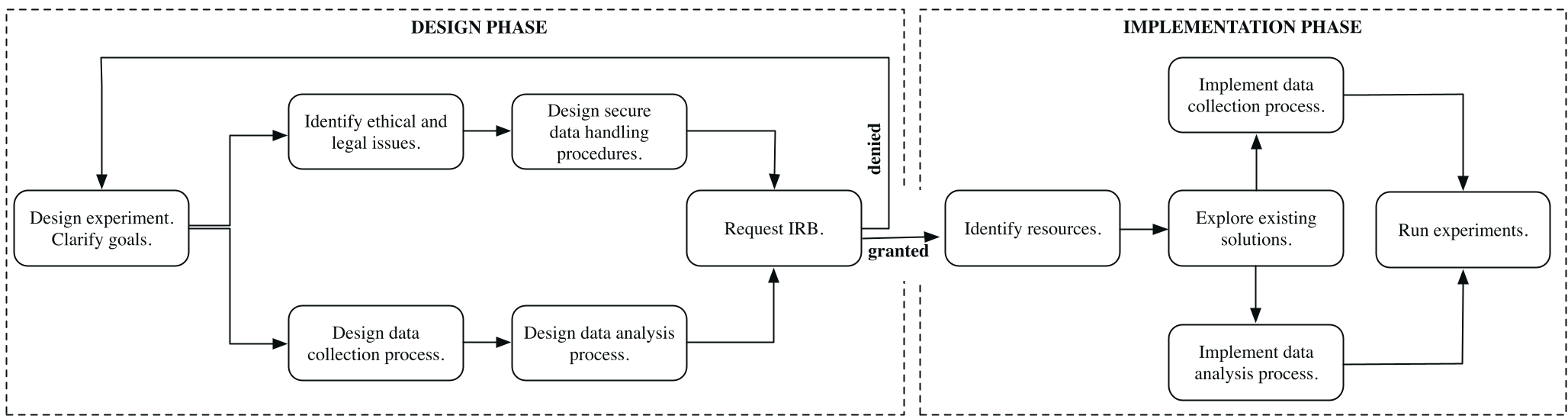 Fig 1: The systematic path from Design to Implementation, highlighting the feedback loops between technical feasibility and ethical approval.
2. The Implementation Phase (Tactics)
This is where the "cat and mouse" game begins.
- Asynchronous Crawling: Standard sequential scraping is too slow. The authors built a modular pipeline (Friend Collector -> Album Collector -> Photo Downloader) using asynchronous queues to manage bottlenecks.
- Multi-Presence: To trigger location-based security checks, the authors used the Tor network to simulate logins from globally dispersed IPs.
- Mimicking Humanity: To avoid detection, their bots didn't just scrape; they "liked" posts and updated statuses to simulate a realistic user profile.
Experimental Battleground: Breaking Social Authentication
The core use case was Facebook’s Photo-based Social Authentication. The mechanism assumes that only you know who your friends are. The authors proved this assumption false.
Key Evidence:
- Exploiting Public Data: An attacker can find enough public photos to train classifiers for roughly 42% of a target's social circle.
- Face Recognition Accuracy: Using a hybrid of custom OpenCV models and cloud-based APIs (Face.com), the researchers broke 22% of tests automatically and gained a massive "informed guess" advantage in 56% more.
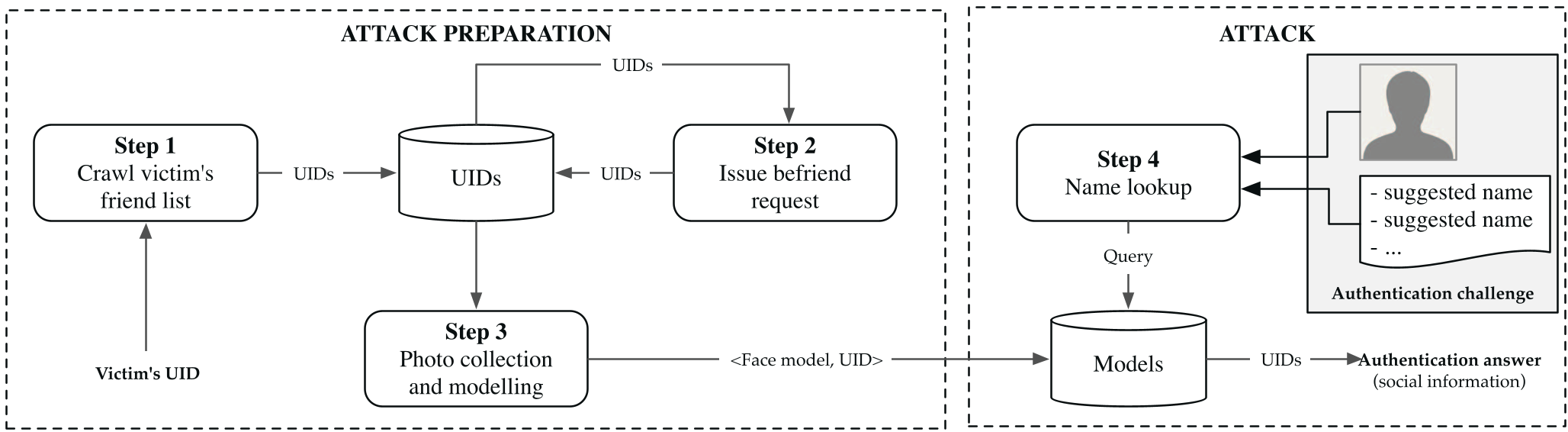 Fig 2: The 4-step automated system used to harvest UID data and build facial classifiers to defeat identity challenges.
Critical Insight: The Human Element
The paper offers a surprising takeaway regarding Crowd-sourcing:
- Amazon Mechanical Turk (AMT) was largely a failure for this deep security research. Workers were focused on rewards and often failed "sentinel checks."
- Direct Engagement (building a trustworthy project website) led to higher quality data and participants who responsibly reported bugs to the researchers.
Conclusion & Future Outlook
The value of this work isn't just in the "break" of an old Facebook feature, but in the systematization of the struggle.
Takeaways for the Industry:
- Privacy is Contextual: Data being "public" does not mean it is meant for large-scale ingestion.
- Flexibility over Complexity: In a world of evolving APIs, simple, modular codebases beat monolithic architectures.
- Future Work: As AI-generated content (Deepfakes) becomes trivial, the reliance on "visual social knowledge" as a security factor is likely dead on arrival.
The "Lessons Learned" here remain the gold standard for anyone looking to measure the insecure heart of the social web.