
Crowd-Powered Defense: Redefining SECaaS Through Collective Intelligence
Security Services Using Crowdsourcing
This paper proposes a unified framework for Security-as-a-Service (SECaaS) powered by "crowdsourcing," leveraging the idle computing resources of distributed subscribers. The system, overseen by a central SECaaS provider, uses lightweight virtualization (Terra) to perform security verifications while ensuring user anonymity and fault tolerance.
TL;DR
This paper introduces a paradigm shift in cloud security by moving away from expensive, provider-heavy models toward a Crowdsourced Security-as-a-Service (SECaaS) framework. By utilizing the idle CPU cycles of a global "crowd" of subscribers and securing them through lightweight virtualization, the authors create a scalable, fault-tolerant system capable of performing deep security audits without the need for massive centralized data centers.
Background: The Cost of Centralized Security
As "Anything-as-a-Service" (XaaS) matures, security remains a bottleneck. Traditional Managed Security Service Providers (MSSPs) face high operational costs and the risk of being a single point of failure. The authors identify a massive untapped resource: the billions of idle smartphones, laptops, and tablets worldwide. Their goal is to harness this "Volunteer Computing" power—much like SETI@home—but specifically for detecting security breaches and vulnerabilities.
The "Á la carte" Methodology
The heart of the proposal is a unified framework that splits security into distinct layers, allowing the crowd to verify different aspects of a requester's environment in parallel.
1. Architectural Innovation: Subscriber as Worker
In this model, a subscriber is not just a consumer. They can be a Requester (seeking a security audit) or a Computational Node (providing resources). The central SECaaS Provider acts as a "Journaler" and "Scheduler" rather than a primary compute engine.
2. Trust Through Virtualization
A major challenge in crowdsourcing security is Trust. Can you trust a stranger's computer to audit your firewall? The authors solve this by porting a tiny, secure hypervisor (such as Terra) to the worker nodes.
- Isolation: The security task runs in a VM, isolated from the worker's host OS.
- Control: The Provider maintains a "Control Channel" to monitor the VM's health via Heartbeat signals (IsAlive, CurrentLoad).
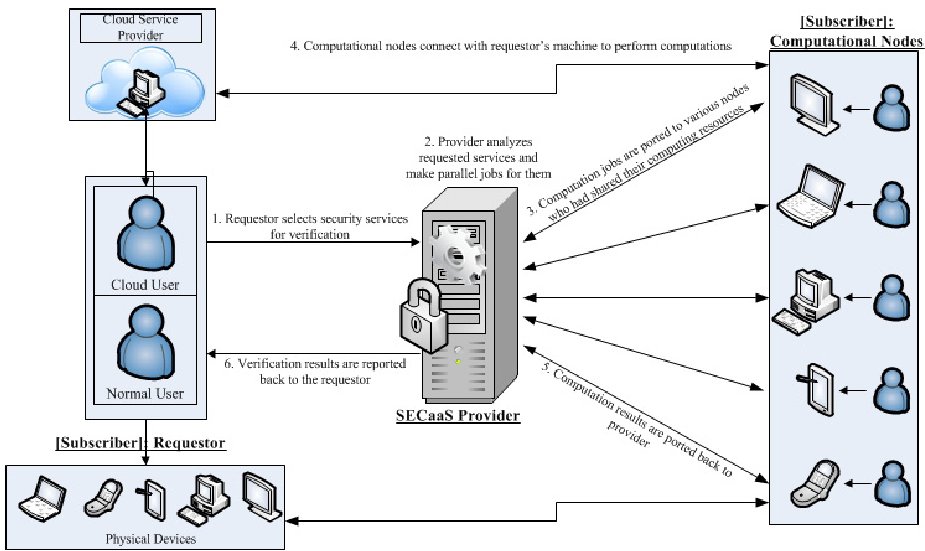 Figure 1: The SECaaS Provider-Subscriber interaction model showing the flow from registration to resource pooling.
3. Layered Security Verification
The system doesn't just look for viruses; it offers a multi-tier audit:
- Physical Layer: Storage and side-channel analysis.
- Network Layer: Firewall status and IP-based attack detection.
- Platform Layer: Detecting VM sprawling or "Blue Pill" rootkit attacks.
- Application Layer: Identity control and browser security.
Experimental Insight: Managing the Chaos
Crowdsourced environments are inherently unstable. Nodes might disconnect or fail intentionally. The authors propose a Proactive Fault Tolerance mechanism:
- Fault Oracle: Predicts failures at the node level.
- Live Migration: If a node is about to go offline, the Provider can migrate the "Security VM" to a healthy node without losing the audit's progress.
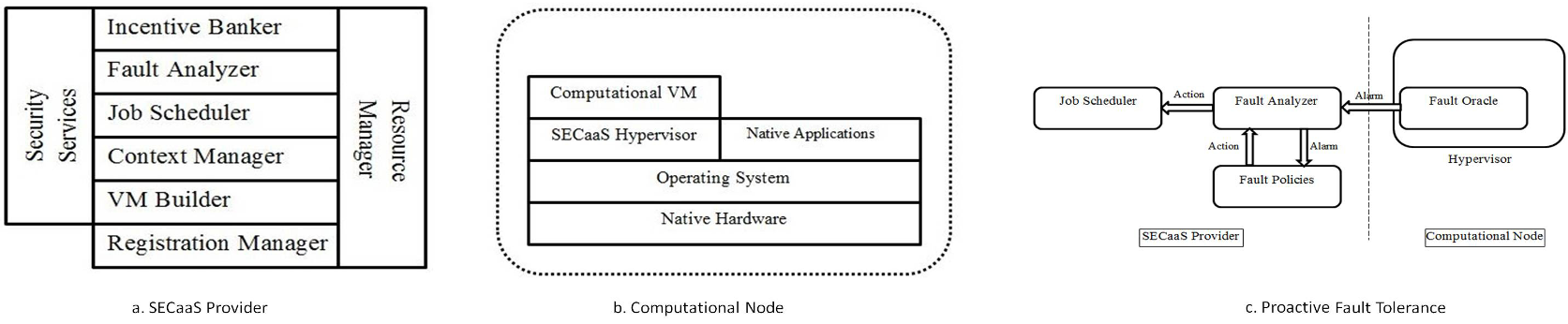 Figure 2: Detail of the Provider's internal modules (Job Scheduler, Incentive Banker) and the Virtualization layer on subscriber devices.
The Incentive Engine
To combat "Free-riders" (those who use the service but don't share resources), the Incentive Banker module manages credit points. Users earn points by successfully completing jobs, which can then be "spent" on their own security requests.
Critical Analysis & Conclusion
Takeaways
The paper successfully demonstrates that SECaaS does not have to be a top-down, expensive service. By leveraging Trustworthy Virtualization, the authors transform the "untrusted crowd" into a reliable security infrastructure. The use of a "layered" approach allows for massive parallelization, potentially outperforming a single supercomputer.
Limitations
While the architecture is robust, it faces a few real-world hurdles:
- Bandwidth Latency: Moving VMs across the internet (Live Migration) requires significant bandwidth, which might be a bottleneck on mobile networks.
- Malicious Workers: While virtualization protects the host, a malicious worker could still attempt to forge "Pass" results for a security audit. The paper suggests replication (running the same job on multiple nodes) as a fix, but this increases resource consumption.
Future Outlook
This work lays the foundation for a "Global Security Mesh." As edge computing and mobile virtualization become more standard, we could see a future where our devices constantly, silently audit each other, creating a self-healing and perpetually verified digital ecosystem.