
S3CA: Re-engineering Viral Marketing with Social Coupon Allocation
Seed Selection and Social Coupon Allocation for Redemption Maximization in Online Social Networks
This paper introduces a novel optimization problem called Seed Selection and Social Coupon allocation for Redemption Maximization (S3CRM). It proposes the S3CA algorithm, which jointly optimizes the selection of seed users and the allocation of social coupons to internal nodes to maximize the redemption rate (benefit-to-cost ratio), significantly outperforming traditional influence maximization methods.
TL;DR
Viral marketing is no longer just about picking the right "influencers" (seeds). This paper introduces S3CRM, a framework that treats internal nodes in a social network as active participants who require resource allocation (Social Coupons). By introducing the S3CA algorithm, the authors demonstrate that jointly optimizing seed selection and coupon allocation can boost marketing efficiency (redemption rate) by up to 30x compared to traditional methods.
Background: The Limits of Traditional Influence Maximization
For over a decade, researchers have focused on Influence Maximization (IM)—finding the most influential nodes to trigger a cascade. However, in modern apps like Airbnb, Dropbox, or Booking.com, the spread isn't free. Users are incentivized by rewards (e.g., "Inviting a friend earns you $20").
Existing models fail because:
- Resource Neglect: They only care about the seeds, not the internal "referrers."
- Fixed Logic: They assume a user can influence an unlimited number of friends, whereas real coupons have strict caps (e.g., Dropbox limits referral space up to 16GB).
- Efficiency vs. Scale: Maximizing the number of people influenced often leads to a terrible ROI if the activation costs are high.
Methodology: The S3CA Framework
The core of the paper is the S3CA (Seed Selection and Social Coupon allocation) algorithm. It moves away from the simple "greedy influencer" approach toward a more nuanced, surgical deployment of capital.
1. Marginal Redemption (MR)
Instead of just looking at potential reach, S3CA calculates the Marginal Redemption. This is a metric that evaluates: "If I spend \1$ more on this node as a seed versus giving them one more coupon to share, which gives me a better benefit return?"
2. Guaranteed Paths (GP)
One of the most innovative contributions is the Guaranteed Path. In traditional models, influence is probabilistic and often "thins out" as it gets further from the seed. S3CA proactively identifies paths to high-benefit nodes that are currently inactive and allocates sufficient coupons to "guarantee" (statistically maximize) a path of activation.
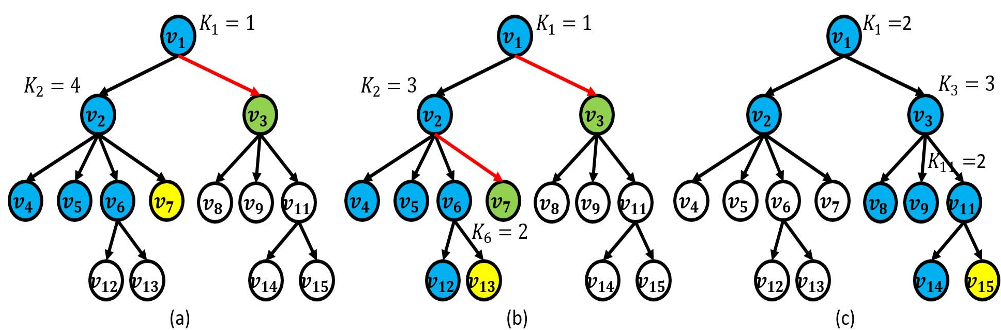 Figure 1: Examples of structural path identification to maximize reach toward high-value clusters.
3. The Maneuver Phase
The algorithm doesn't stop at deployment. It uses a Maneuver phase where it evaluates the Amelioration Index (AI) and Deterioration Index (DI). If shifting a coupon from Node A (low improvement) to Node B (high improvement) increases the overall redemption rate, the algorithm "maneuvers" the budget dynamically.
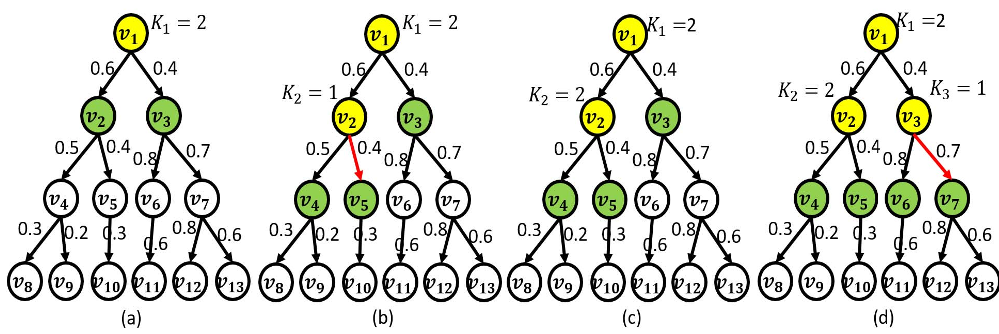 Figure 2: Step-by-step investment deployment illustrating how the spread is shaped deeper based on MR.
Experiments and Results
The authors tested S3CA against five baselines (IM and PM derivatives) across real-world datasets like Facebook and Douban.
- Redemption Rate: S3CA consistently maintained a much higher benefit-to-cost ratio. While other algorithms hit a plateau or saw efficiency drop as the budget increased, S3CA stayed lean.
- Reach Depth: Most IM algorithms result in "shallow" spreads (1.0-1.9 hops). S3CA achieved spreads of 3.1-3.5 hops, proving that coupon allocation is the key to sustaining a viral cascade beyond the immediate friends of an influencer.
- Scalability: Despite the complexity of S3CRM (which is NP-hard), the algorithm scales linearly with the number of edges, making it practical for massive social networks.
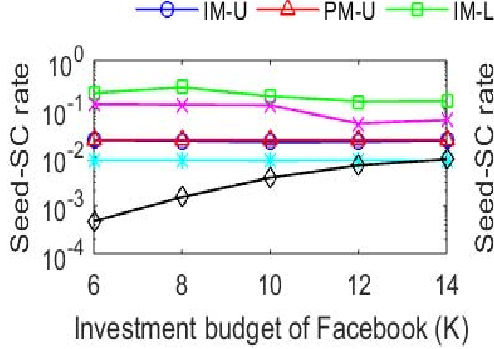 Figure 3: Case studies using Airbnb and Booking.com parameters, showing S3CA's superior efficiency across different profit margins.
Critical Insight & Conclusion
The genius of this work lies in the realization that social influence is a controllable resource, not just a mathematical probability. By treating the social graph as a pipeline where "pressure" (coupons) can be adjusted at any joint, S3CA allows marketers to reach high-value targets that are deep in the network—targets that traditional "spray and pray" influencer marketing would miss.
Takeaway for the Industry: ROI in social marketing isn't just about who you pay to talk; it's about how many tools you give the mid-tier users to keep the conversation going.