
Beyond Static Graphs: Why Time is the Secret Ingredient in Social Influence
Seed Selection for Spread of Influence in Social Networks: Temporal vs. Static Approach
This paper investigates the optimal seed selection problem for influence maximization using a Temporal Social Network (TSN) approach rather than traditional static aggregation. By applying the Linear Threshold (LT) model to five real-world datasets, the authors demonstrate that leveraging temporal granularity and time-dependent ranking heuristics significantly enhances the spread of influence.
TL;DR
The problem of finding the most influential "seeds" in a social network is usually solved using static snapshots. This paper proves that approach is fundamentally flawed. By treating networks as temporal sequences and using exponential forgetting to prioritize recent activity, we can double the effectiveness of an influence campaign.
Context: This work shifts the focus from "who has the most connections overall" to "who is currently most active and strategically positioned in the evolving network structure."
The "Static Blind Spot" in Social Networks
Most influence maximization algorithms aggregate years of data into a single graph. If Alice emailed Bob once in 2010, they are "connected" in a static model even if they haven't spoken since.
The authors argue this creates a "Static Blind Spot":
- Node Inactivity: A highly connected node in the past might be "dead" (inactive) when the campaign starts.
- Structural Drift: The "bridges" between communities change over time as new users join.
- Diluted Metrics: Static aggregation masks "bursty" behavior, treating a one-time viral spike the same as consistent, current engagement.
Methodology: The Power of Granularity and Forgetting
The researchers proposed a three-step framework to capture social dynamics:
1. Temporal Granularity
They split the "past" (learning period) into different granularities: TSN1 (static), TSN5 (5 windows), and TSN10 (10 windows).
2. Time-Dependent Ranking (Forgetting Mechanisms)
Instead of simple degree counts, they introduced mathematical "forgetting" filters. For a node with measure at time :
- Exponential Forgetting (): This forces the algorithm to focus on the most recent behavior while still acknowledging historical context.
3. Structural Heuristics
The study evaluated classic metrics like In-Degree, Out-Degree (OutExp), Betweenness (BetHyp), and Closeness (CloPow) through these temporal filters.
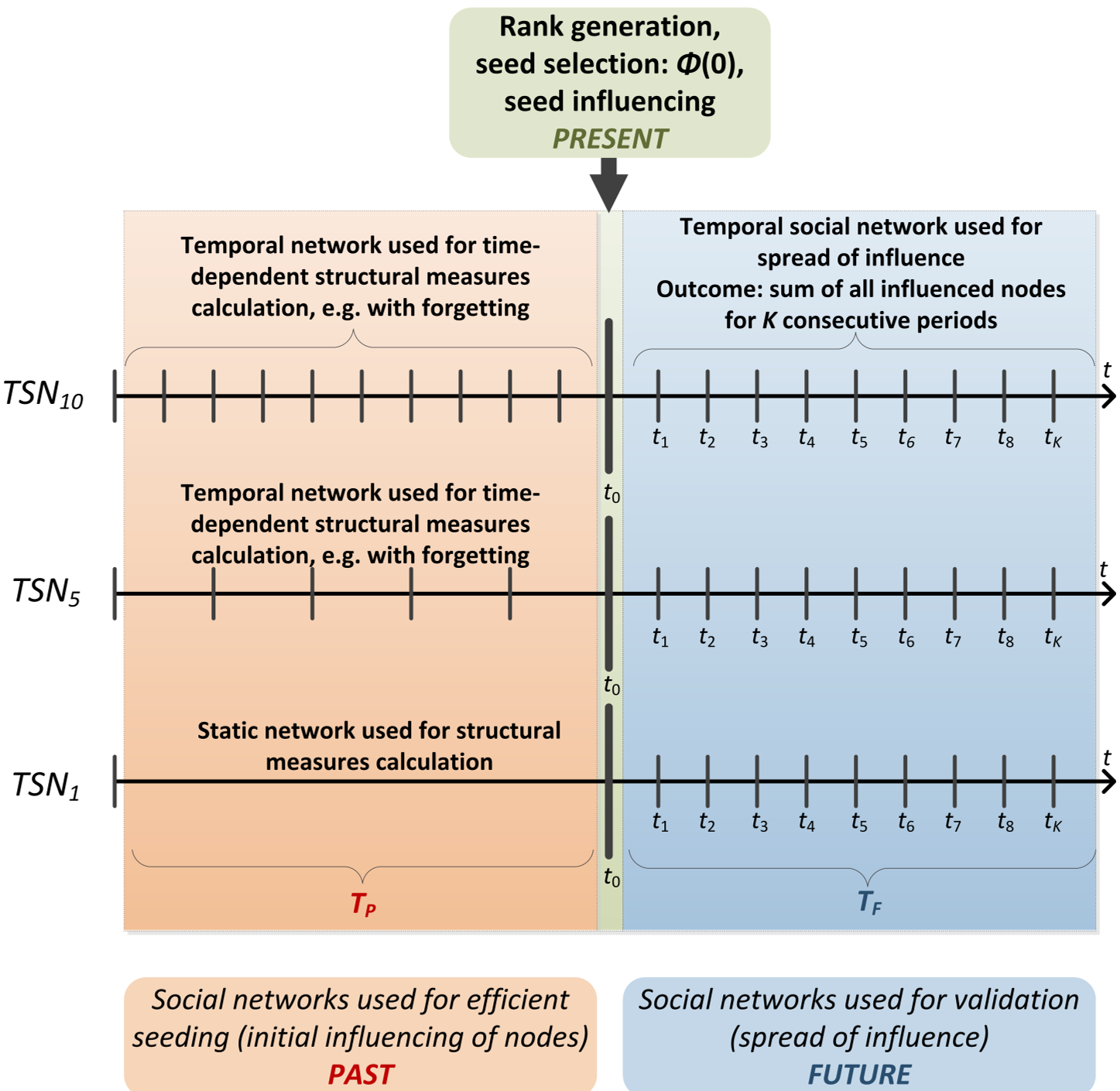 Figure 1: The workflow of learning from past dynamics to predict future spread.
Experiments: Breaking the 2x Barrier
The team tested their approach on five real-world datasets, including Enron emails and Facebook wall posts.
Key Findings:
- The Granularity Gain: In the Facebook dataset, moving from a static view (TSN1) to a 10-window temporal view (TSN10) nearly doubled the number of influenced nodes.
- The Winning Heuristic: Out-Degree with Exponential Forgetting (OutExp) was the gold standard. It outperformed complex measures like betweenness because it effectively identified nodes that "swap" neighbors frequently, reaching fresh audiences in every time window.
- Center vs. Periphery: Visual analysis showed that temporal seeds were rarely clumped together; they were strategically distributed near the network's shifting center.
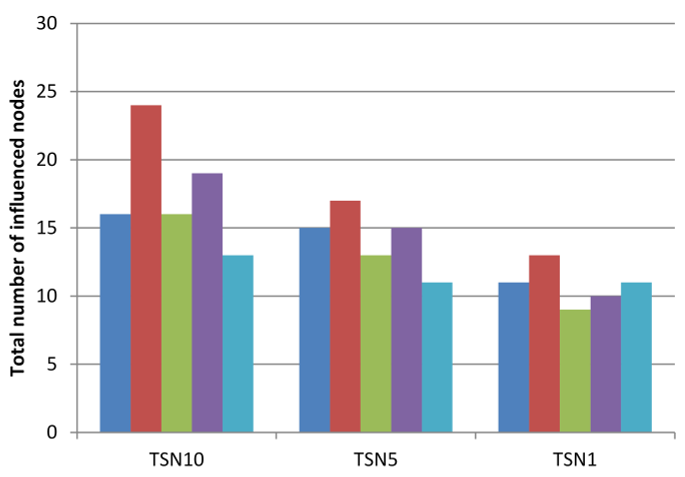 Figure 2: Performance comparison showing TSN10 (left bars) consistently beating TSN1 (right bars) across different metrics.
Critical Insight: Why Does This Work?
Static models choose "retired giants"—nodes that used to be important. Temporal models choose "rising stars" or "active hubs."
The data reveals that top-ranked temporal seeds have a much higher neighborhood exchange rate (25.4% vs 7.5% for random). They aren't just talking to the same people; they are conduits of information that move through different social circles as the network evolves.
Summary & Future Outlook
This paper is a wake-up call for researchers working on GNNs (Graph Neural Networks) and social dynamics.
- Takeaway: If you aren't accounting for time windows and "forgetting" old edges, your influence model is likely vastly underperforming.
- Limitation: The study uses uniform thresholds for the LT model. In reality, different people require different levels of "peer pressure" to be influenced.
- The Next Frontier: The authors suggest combining Out-Degree with Betweenness into a hybrid temporal measure, potentially using Link Prediction to guess where the network will move tomorrow.
Academic Reference: Michalski, R., et al. "Seed Selection for Spread of Influence in Social Networks: Temporal vs. Static Approach."