
SeeSpeech: Bridging the Gap Between Semantics and Emotion in Human-Computer Interaction
SeeSpeech: See Emotions in The Speech
SeeSpeech is a novel speech emotion classification framework that integrates Convolutional Neural Networks (CNN) with a Transformer encoder architecture. By leveraging Mel-frequency Cepstral Envelope (MCEP) features and a dual-normalization strategy, it achieves a state-of-the-art accuracy of 97% on the RAVDESS dataset.
TL;DR
SeeSpeech is a high-accuracy emotion recognition system that combines CNNs and Transformers to "see" the emotional state behind the spoken word. By extracting high-dimensional spectral features and utilizing a unique dual-normalization approach, it achieves a remarkable 97% accuracy on standard benchmarks and demonstrates robust performance (85%) when deployed on real-world edge gateways.
Background: Why Emotions Matter in Speech
While modern AI is adept at transcribing what we say (semantics), it frequently fails to understand how we say it (affect). Emotion can refine, strengthen, or even completely flip the meaning of a sentence. Previous attempts at Speech Emotion Recognition (SER) often hit a performance ceiling due to the limitations of single-model architectures like pure CNNs or traditional SVMs, which struggle to capture both local spectral textures and global temporal context simultaneously.
Methodology: The Hybrid Advantage
The core innovation of SeeSpeech lies in its architecture, which treats speech features (MCEP) as a multi-dimensional "image" while respecting their sequential nature.
1. Feature Extraction
The system uses Mel-frequency Cepstral Envelope (MCEP) features. These spectral envelopes filter out background noise while preserving dimensions related to vocal tract response and prosody—the "fingerprint" of emotion.
2. Dual-Stream Processing
Instead of choosing between local and global features, SeeSpeech utilizes both:
- CNN Module: Four convolution modules with Batch Normalization focus on local patterns in the feature matrix, optimized via SGD.
- Transformer Module: A Transformer encoder using Layer Normalization and Multi-Head Attention focuses on the long-term dependencies of the entire sentence.
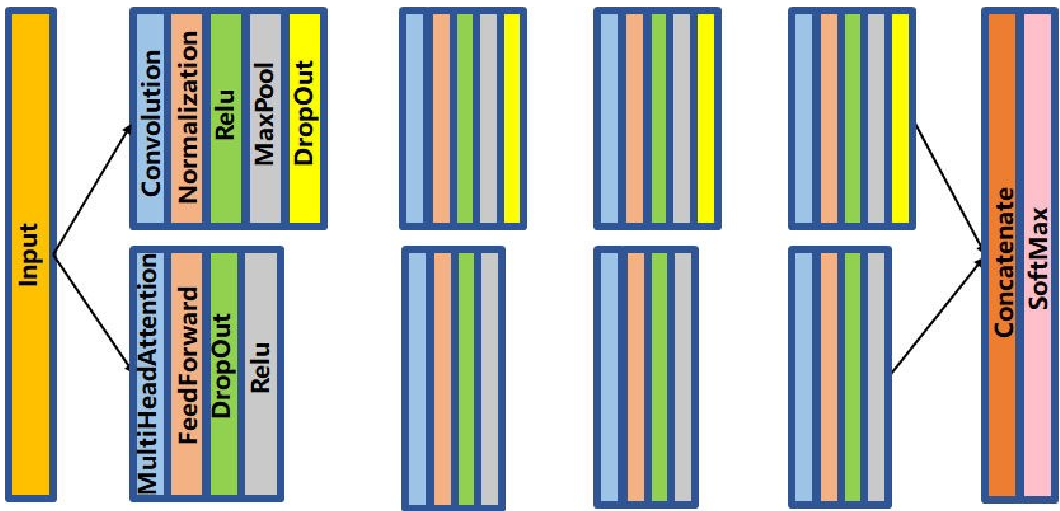
3. The Normalization Insight
The authors discovered that using Instance Normalization in the Transformer (common in style transfer) limited results. By switching the Transformer branch to Layer Normalization, they allowed the model to normalize across all neurons in a layer for each specific sentence, providing "richer" features that complement the CNN’s batch-wise distribution.
Experiments and SOTA Performance
The model was validated on the RAVDESS dataset (1440 audio files across 8 emotions).
- Ablation Study:
- CNNSpeech (CNN only): 92.17%
- RawSeeSpeech (CNN + Transformer w/ Instance Norm): 94.23%
- SeeSpeech (Final Hybrid + Dual Norm): 97.00%
The results show that the combination of models and the specific tuning of normalization layers pushed the accuracy beyond the previous "ceiling."

Real-World Implementation
A standout feature of this research is the deployment on an Edge Gateway. In practical testing using a different database (EMA) and a mobile microphone:
- Denoising: Band-pass and Wavelet filtering were used to handle ambient noise.
- Performance: The model maintained an 85% accuracy rate.
- Efficiency: The high accuracy of the "Angry" emotion (93.33%) suggests the model is particularly effective at identifying high-intensity emotional states, which is critical for emergency or service-center applications.
Critical Analysis & Conclusion
Takeaway
SeeSpeech proves that the "Transformer-meets-CNN" trend in CV and NLP is equally potent for Audio analysis. The distinction between Batch and Layer normalization is not just a technicality; it is a vital design choice for multimodal feature fusion.
Limitations & Future Work
The drop from 97% (dataset) to 85% (real-world) highlights the domain shift problem. The model's reliance on professional actor datasets (RAVDESS/EMA) means it may struggle with the "subtle" emotions of daily life. Future iterations should focus on unsupervised domain adaptation and more robust noise-suppression techniques to bridge the gap between lab-recorded data and messy real-world environments.
Senior Technical Editor's Note: This work provides a clear blueprint for building affective computing systems that are accurate enough for clinical use yet efficient enough for edge deployment.