
Improved-ID3: Decoding the Gamer’s Mind through Experiential Marketing and Data Mining
Segmenting online game customers – The perspective of experiential marketing
The paper proposes an "Improved-ID3" decision tree algorithm to segment online game customers based on Bernd Schmitt's Strategic Experiential Modules (SEMs). By integrating experiential marketing with data mining, it identifies the specific psychological and service-related drivers behind customer loyalty, specifically targeting repurchase, recommendation, and cross-purchase desires.
TL;DR
Online gaming is no longer just about software features; it is about the experience. This paper introduces an Improved-ID3 decision tree algorithm that segments gamers not just by demographic data, but by how they sense, feel, think, act, and relate to a game. By applying this to loyalty metrics, the researchers discovered that while Service Quality keeps players paying, Game Difficulty is what makes them recommend the game to others.
Background: The Shift to the "Experience Economy"
In the modern gaming landscape, players don't just consume a product; they live a virtual life. Traditional "features-and-benefits" marketing models fall short because they ignore the subjective emotional journey. The authors adopt Bernd Schmitt’s Strategic Experiential Modules (SEMs)—Sense (sensory), Feel (affective), Think (cognitive), Act (physical), and Relate (social)—to provide a high-resolution map of customer satisfaction.
The Problem: Noise in the Logic Tree
While data mining via the ID3 algorithm is a staple for generating "if-then" rules, standard versions often create overly complex, "bushy" trees that overfit the data. The research identifies a need for a more efficient pruning method that eliminates "weak" branches while maintaining "sufficient" nodes that represent significant player segments.
Methodology: The Improved-ID3 Algorithm
The core innovation lies in the Improved-ID3, which adds logical constraints to the classic information gain calculations.
1. The Decision Architecture
The researchers defined three target attributes for Loyalty:
- Repurchase Desire: Will they keep playing?
- Public Praise & Recommendation: Will they bring friends?
- Cross-purchase Desire: Will they buy the DLC or peripheral merchandise?
2. Pruning for Precision
By introducing PURITY (the concentration of a class in a node) and SUPPORT (the percentage of total samples represented), the algorithm stops branching when a node is "Sufficient" (Purity > 80%). This ensures the resulting marketing rules are actionable and statistically significant.
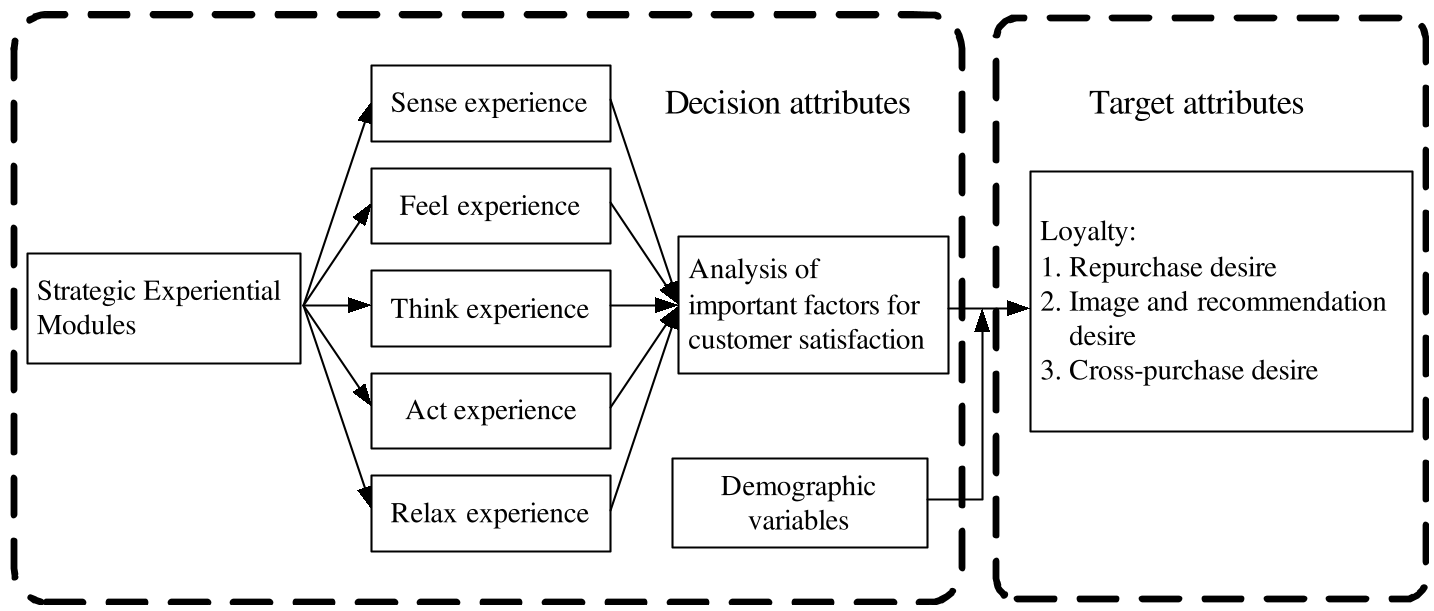 Figure 1: The Research Design integrating SEMs and Customer Loyalty via Data Mining.
Key Insights and Experimental Results
The study analyzed 286 valid samples, predominantly aged 19–24. The decision trees yielded several "Golden Rules" for game developers:
1. Service is the Safety Net
For Repurchase Desire, the "Quality of Service" (Act module) was the most critical root node. If service is high, repurchase desire is high (84% purity). Interestingly, if service is only mediocre, players only stay if the Social Interaction and Brainstorming levels are extremely high.
2. Challenge Drives Virality
For Recommendation Desire, "Difficulty and Challenge" (Think module) replaced service as the most important factor. High challenge levels directly correlate with high recommendation rates (86% purity). If a game is too easy, players are unlikely to promote it, regardless of service quality.
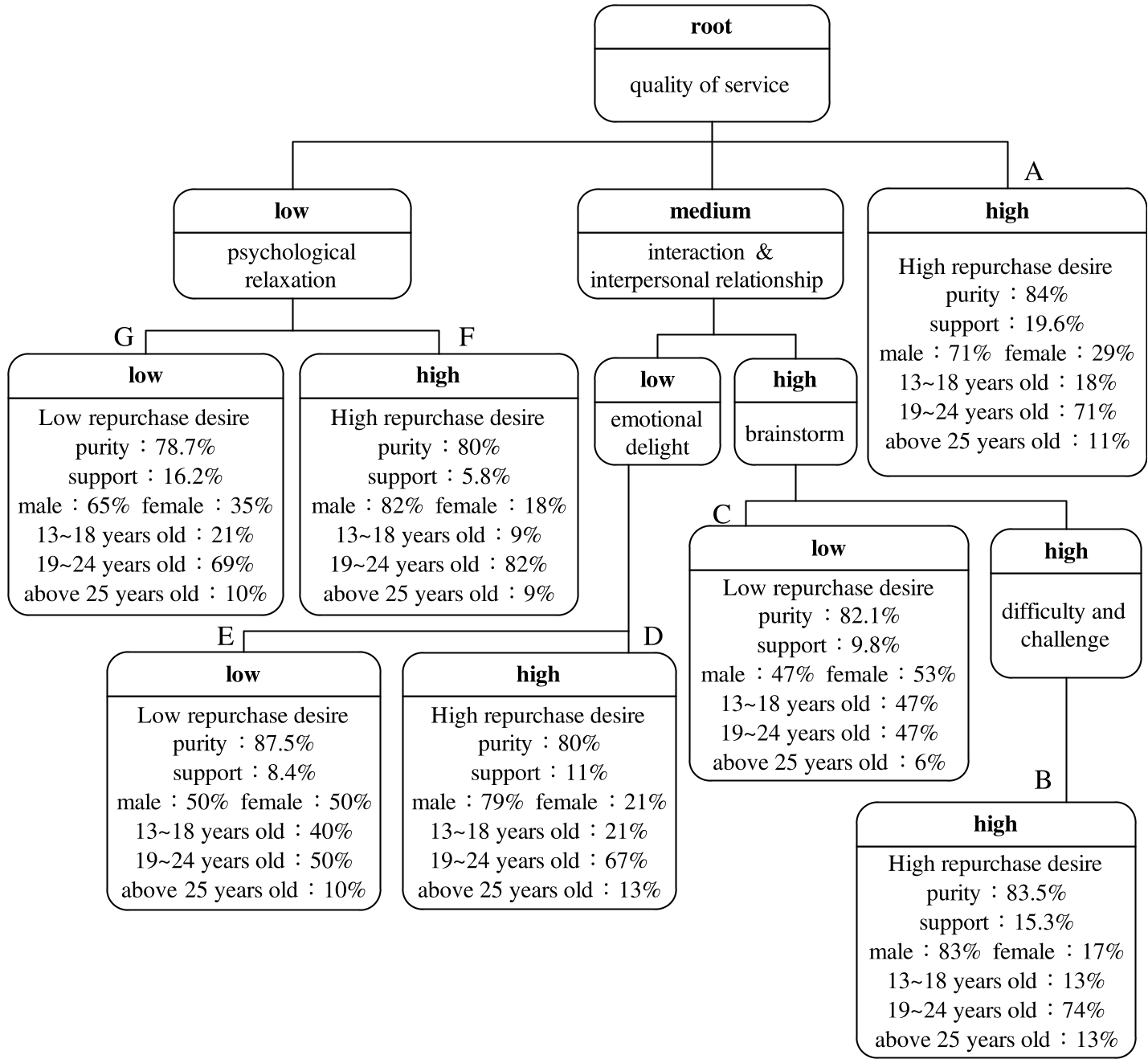 Figure 2: The complex decision paths for Repurchase Desire, highlighting the interplay between Service and Social Interaction.
3. Gender and Age Nuances
- Female Players: Generally more sensitive to Service Quality. Their loyalty drops sharper than males when support services are poor.
- Younger Players (<18): Their recommendation desire is highly volatile, swinging wildly based on the perceived Difficulty of the game.
Critical Analysis & Future Outlook
The Improved-ID3 approach provides a bridge between qualitative marketing theory and quantitative data science. By pruning the trees, the authors provide "clean" rules that a Marketing Director can actually use to allocate budgets.
Limitations: The study was conducted with a sample of 286, which is small for modern Big Data standards. Additionally, "Sense" (graphics/audio) surprisingly played a smaller role in the final decision trees compared to "Think" and "Act," suggesting that while graphics attract players, they don't necessarily keep them.
Conclusion: To win in the online game market, firms must pivot: Invest in customer service to stabilize revenue (repurchase), but invest in game depth and challenge to drive organic growth (recommendation).