
SV-VSNs: Turning Urban Traffic into High-Precision Marketing Engines
On Selecting Vehicles as Recommenders for Vehicular Social Networks
This paper introduces the SV-VSNs scheme, a vehicular recommender system for Vehicular Social Networks (VSNs) aimed at optimizing marketing effectiveness. It proposes three algorithms—coverage-based, benefit-based, and a multi-factor comprehensive model—to select the optimal set of vehicles as mobile recommenders, achieving significant improvements in both urban coverage and marketer profit ratios.
TL;DR
The paper "On Selecting Vehicles as Recommenders for Vehicular Social Networks" addresses a critical inefficiency in mobile advertising: random distribution. By analyzing millions of GPS data points, the authors developed the SV-VSNs scheme, which optimizes vehicle selection based on Coverage (where they go) and Benefit (who they reach). The result is a marketing performance boost of up to 21% in profitability and 13% in urban reach.
Background & Motivation: Beyond Random Selection
In the age of Vehicular Social Networks (VSNs), vehicles are no longer just transport—they are mobile nodes in a distributed "Fog computing" ecosystem. Marketers often use vehicle bodies or internal screens for recommendations, but the industry has long suffered from "blind selection."
Why does this matter?
- Randomness is Wasteful: Selecting a taxi that only cruises the suburbs is useless for a luxury brand.
- Static Models Fail: Traffic density changes, and a vehicle's value is tied to the specific regions it traverses over time.
Methodology: The SV-VSNs Framework
The researchers proposed three distinct strategies to move away from zero-sum selection:
1. The Benefit Model ((U_i))
This mimics a "harvesting" strategy. It targets high-density urban centers where the probability of a user purchasing a recommended item is highest.
2. The Coverage Model ((C_i))
This is a "growth" strategy. It selects vehicles that visit the most diverse set of geographical indicators, maximizing brand awareness even in less profitable suburbs.
3. The Comprehensive Optimization Model ((F_i))
The core innovation is the selection degree formula: [ g_i = \mu \cdot A _ {i} + (1 - \mu) \cdot P _ {i} ] By adjusting the influence factor (\mu), marketers can fine-tune their campaign to be either "aggressive expansion" ((\mu o 1)) or "profit extraction" ((\mu o 0)).
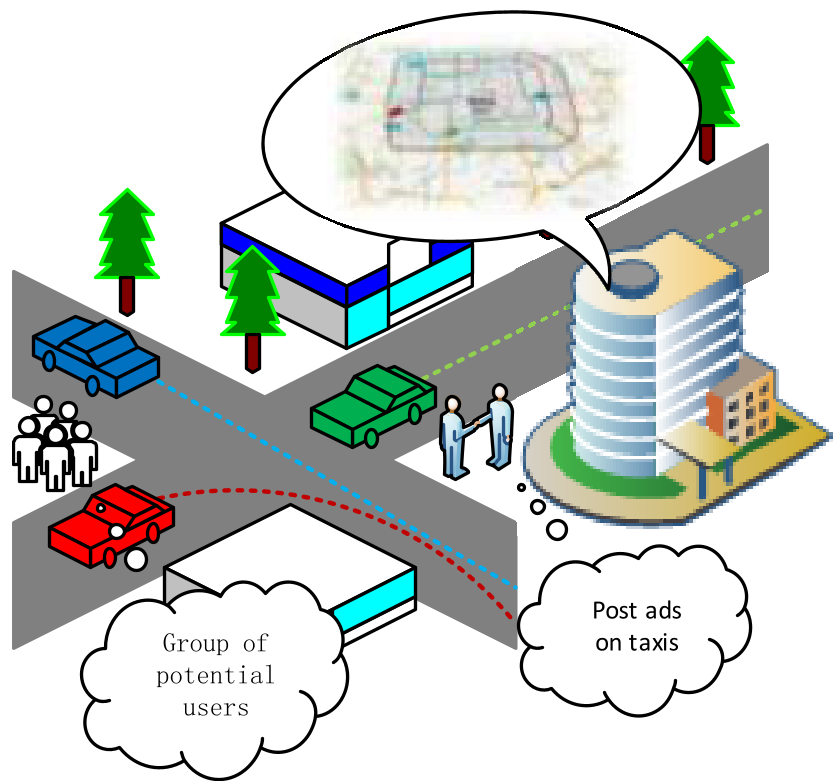 Figure 1: Conceptual architecture of vehicular recommenders interacting with users in a Fog/Cloud environment.
Experiments: Real-World Evidence from Beijing
The authors validated their algorithms using the T-Drive dataset, comprising 15 million GPS points from over 10,000 taxis in Beijing.
Key Findings:
- The 21% Benefit Jump: When focusing purely on profit, the algorithm outperformed random selection by 21% by identifying vehicles that spend the most time in "Class 1" (high-density) regions.
- The (\mu = 0.7) Sweet Spot: The research found that a weight of 0.7 for coverage provided the best overall balance (the (F_i) metric), achieving nearly 98% of potential benefits while maintaining 94% urban coverage.
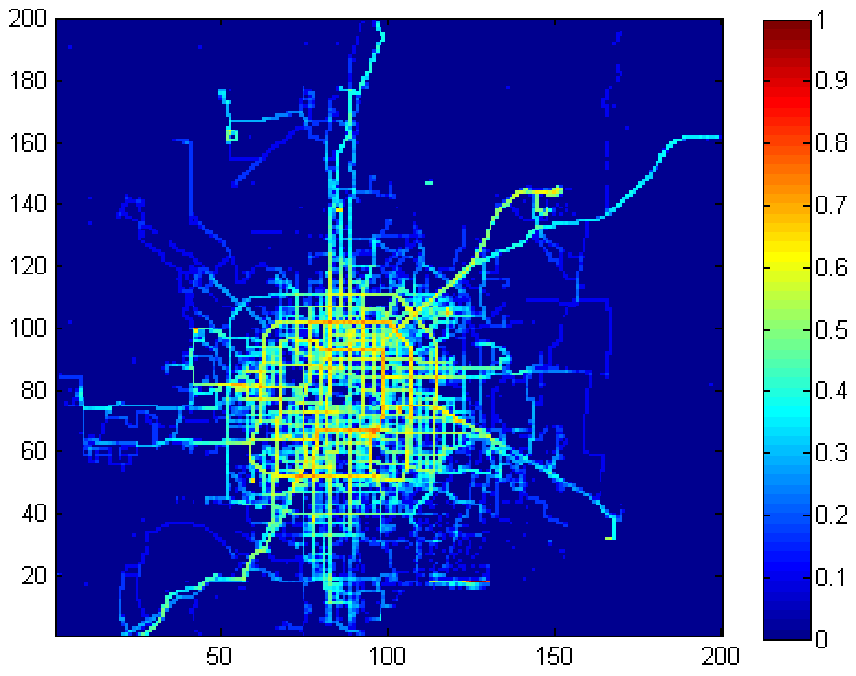 Figure 2: The raw T-Drive data visualization used to determine urban density classes.
Critical Insight: Why Does This Work?
The effectiveness of SV-VSNs lies in its Inductive Bias toward urban density. The algorithm recognizes that "Benefit" is not just about moving—it's about the quality of the time spent in specific coordinates. By filtering out "invalid" GPS points (data cleaning) and applying Quicksort to vehicle weights, the system provides a computationally efficient way to manage massive fleets.
Challenges & The Path Ahead
While SV-VSNs is a leap forward, it assumes that past trajectories are a perfect predictor of future ones. In a dynamic city with road closures or major events, these patterns might shift.
Future Outlook: The authors suggest the next step is integrating "Potential User Factors"—essentially adding a layer of real-time social data to the mobility patterns to determine not just where a vehicle is, but who is standing next to it.
Conclusion
The SV-VSNs scheme proves that in the future of VSNs, data is the fuel. By mathematically balancing coverage and profit, marketers can finally treat urban fleets as a programmable, high-ROI advertising medium.