
IoT-Driven Home Care: Beyond Simple Pulse Tracking to Personalized Warning Systems
A Self-administered Healthcare Warning Mechanism Based on Internet of Things
The paper presents a "Self-administered Healthcare Warning Mechanism" based on the Internet of Things (IoT) specifically designed for postoperative cardiovascular patients. By integrating wireless EKG and vital sign sensors with an event-driven intelligent platform, the system achieves a SOTA-level personalized remote monitoring framework that categorizes health risks into three distinct warning levels.
TL;DR
This research moves beyond passive health tracking by introducing an active, IoT-based Self-administered Healthcare Warning Mechanism. By combining wireless EKG sensors with a multi-tiered alert system (Abnormal, Critical, Urgent), the platform provides personalized cardiovascular monitoring that bridges the gap between hospital discharge and long-term home recovery.
Background & Motivation: The Gap in Telecare
Postoperative care for cardiovascular diseases is a high-stakes environment. While "Subacute Care" bridges the period between acute illness and full recovery, the transition to home care often results in a "data black hole." Existing telecare systems often suffer from two extremes: they are either too simple (basic logging) or too rigid (using generic clinical thresholds that don't account for individual variability). The authors recognized that a patient's "normal" is highly idiosyncratic, depending on past medical history and age.
The Core Methodology: Multi-Tiered Intelligent Response
The system's intelligence lies in its personalized baseline adjustment. During the first month of use, doctors evaluate the collected vital signs—including EKG, respiration, temperature, and blood oxygen—to reset the "Safe" and "Critical" boundaries specifically for that individual.
The Warning Hierarchy
The workflow categorizes health events into three actionable levels:
- Abnormal: Primarily a behavioral nudge. If data isn't received, the system reminds the patient to measure their vital signs.
- Critical: High-risk but not immediate. The system triggers an earlier clinical appointment based on the doctor's remote diagnosis.
- Urgent: Life-threatening. The system bypasses routine checks to initiate immediate medical intervention and emergency contact notification.
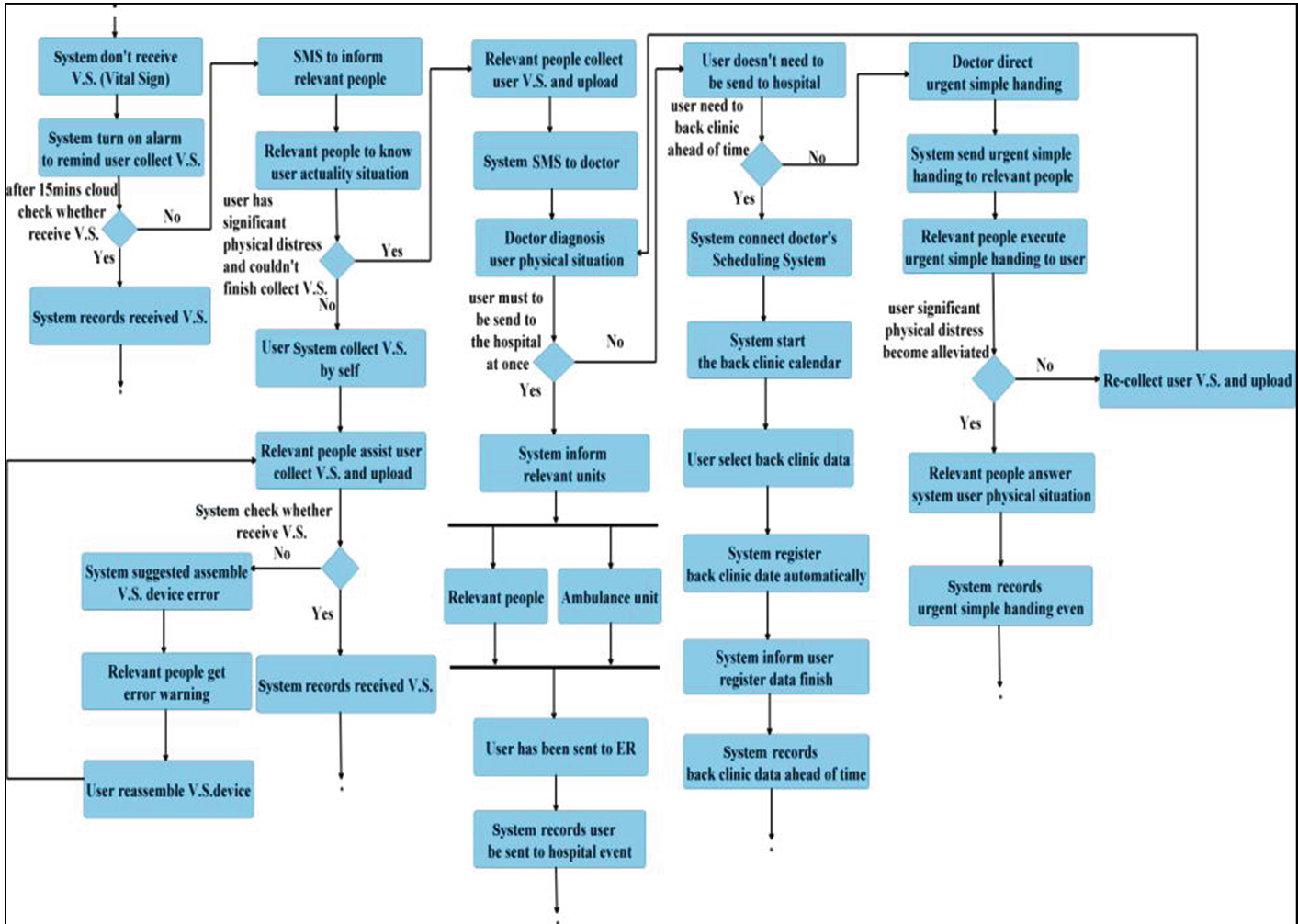 Figure 1: The logical flow of the event-driven warning mechanism, illustrating the escalation from data collection to physician intervention.
Simulation & Clinical Impact
The study simulated a scenario where a patient is unable to perform self-measurement. If the 15-minute window passes without an update, the system's "Self-Administered" nature shifts to an "Assisted" mode, notifying emergency contacts via SMS.
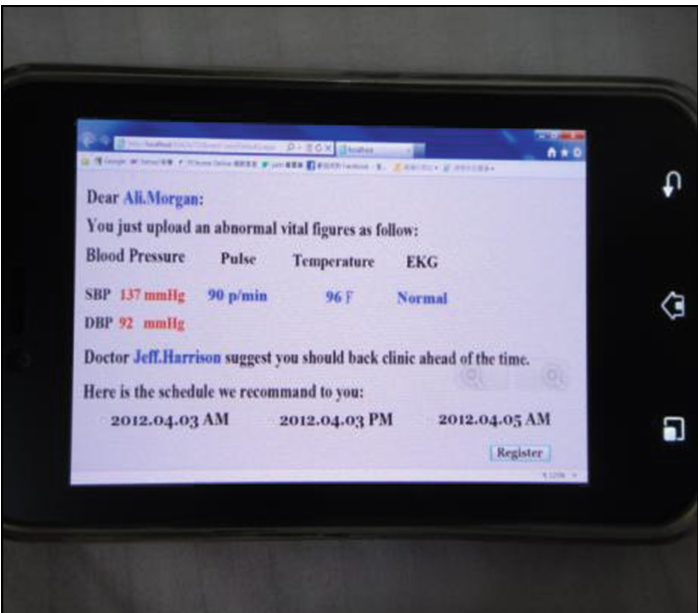 Figure 2: The decision-support interface for attending physicians to issue immediate order requests based on transmitted IoT data.
In cases where the condition is serious but not fatal, the system automatically checks the physician's schedule and proposes a revised appointment, effectively creating a "dynamic scheduling" loop that reacts to real-time physiological stress.
Critical Insights & Future Outlook
The primary contribution of this work is the Inductive Bias that home care cannot rely on static thresholds. By involving the physician in the "Control Loop" through a dedicated platform, the system ensures that IoT data is not just "big data," but "actionable data."
Limitations & Future Work:
- Data Quality: The paper relies on EKG and wireless sensors; future iterations could benefit from Edge AI to filter out noise caused by patient movement.
- User Experience: While the 15-minute SMS trigger is effective for safety, it may cause "alert fatigue" for caregivers if measurement errors occur frequently.
- Expansion: Extending this logic to multi-modal data—such as activity levels via accelerometers—could provide a more holistic view of patient recovery.
Conclusion
This IoT mechanism represents a shift toward Patient-Centered Healthcare. By treating the home as a subacute ward, we can significantly reduce hospital readmission rates and provide cardiovascular patients with the security of professional monitoring in the comfort of their own environment.