
The Post That Wasn’t: Why We Self-Censor and How AI Could Fix It
The post that wasn't: exploring self-censorship on facebook
This study investigates the phenomenon of self-censorship on Facebook, identifying that users frequently withhold content due to audience management concerns. The researchers conducted a diary study and interviews with 18 participants, revealing that approximately 50% of unposted content would have been shared if "optimal selective sharing" tools were available.
TL;DR
Ever typed out a witty Facebook status or a heated political take only to hit "delete" instead of "post"? You aren't alone. Carnegie Mellon researchers found that we self-censor a massive variety of content—not because the content is bad, but because our audience is too messy. Strikingly, 50% of this unshared content would be posted if we had better tools to target specific "vibes" or interest groups rather than just "All Friends."
The Problem: Context Collapse
The fundamental issue identified in this research is Context Collapse. On Facebook, your boss, your high school track coach, your religious aunt, and your college roommates are all lumped into one bucket: "Friends."
The study highlights that users aren't just hiding "bad" behavior. They are managing their identity. A post about a "weird" movie might offend a religious relative; a political link might trigger a 200-comment argument you don't have time for. Current tools (like Facebook Lists) fail because they require too much manual effort and don't account for the context of a specific post.
Methodology: Capturing the "Unspoken"
How do you study something that never happened? The researchers used a Diary Study approach.
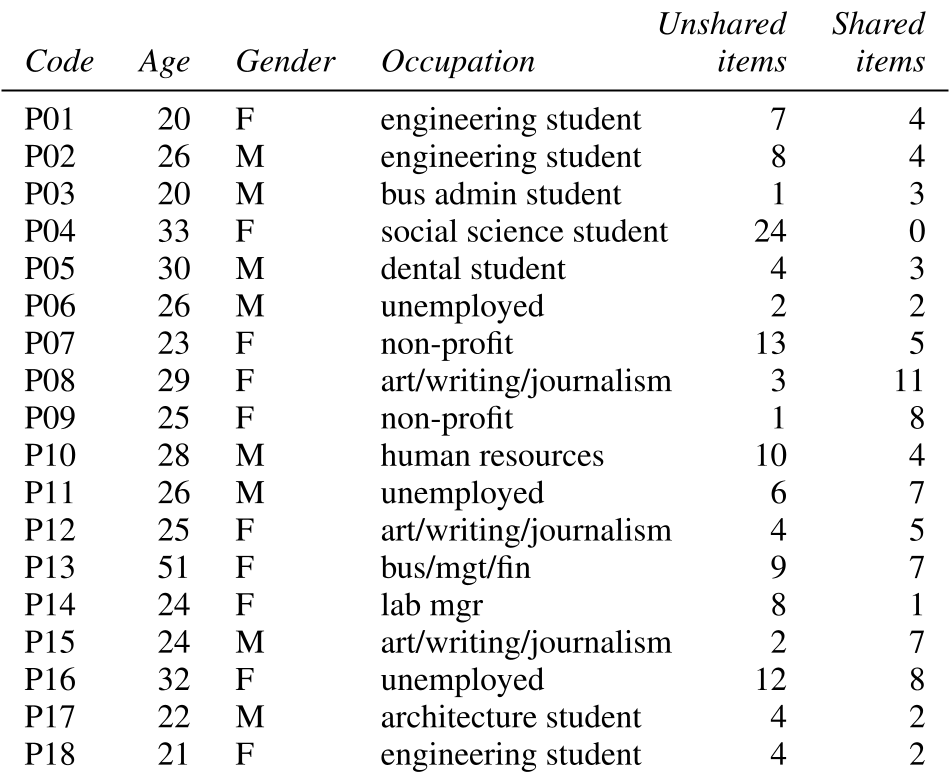
- SMS Tracking: 18 participants texted the researchers every time they thought about posting but decided not to.
- Nightly Surveys: Detailed follow-ups on the "Why" and "Who."
- In-depth Interviews: Coding 122 unshared items to understand the physical intuition behind the decision to stay silent.
Key Insights: What Are We Hiding?
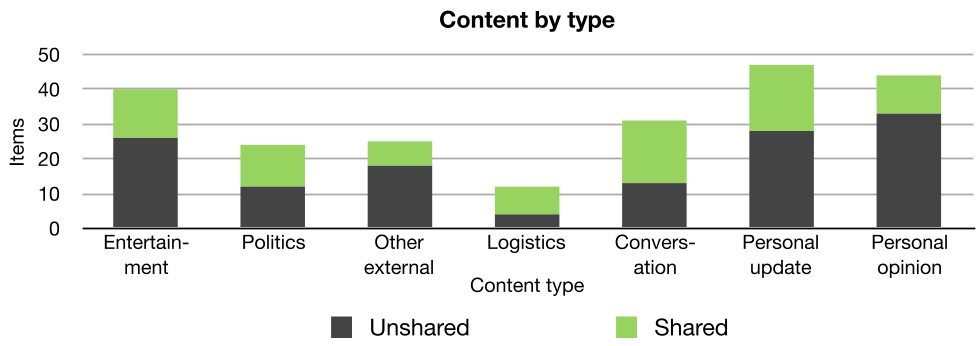
The study categorized content into External (Entertainment, Politics) and Personal (Updates, Opinions).
- Entertainment & Politics: These are the most censored. Users fear offending others or starting "Drama."
- The "Boring" Filter: Many personal updates are deleted simply because the user feels they are being "redundant" or "whining."
- Presentation of Self: This was the #1 reason for self-censorship (34%). It's the "I don't want to look silly" factor.
The "Invisible" Potential: Optimal Selective Sharing
The most "Academic-Alpha" finding of this paper is the gap between actual sharing and potential sharing.
When asked if they would post the item if they could perfectly target an audience, users said "Yes" nearly 50% of the time. This suggests that the "social burden" of a broad audience acts as a tax on platform activity.
What do these "Optimal Groups" look like? Surprisingly, they aren't just "Family" or "Coworkers." They are often Relationship to Post groups:
- "My comic book friends."
- "People who would agree with this political take."
- "People who also babysit and understand the struggle."
Critical Analysis: Is AI the Answer?
The authors suggest that the path forward isn't just "better buttons" (which users ignore), but intelligent, dynamic grouping.
- The Opportunity: If a platform can predict who would be interested in your "The Avengers" rant (e.g., using "Likes" or NLP on your friends' posts), it could automatically suggest a "Comic Fans" circle at the moment of posting.
- The Trust Gap: The study notes that users don't trust Facebook's privacy settings. Even if the AI is perfect, if the user doesn't trust that the religious aunt is actually blocked, they will still self-censor.
Conclusion
This paper serves as a vital reminder that Silence != Lack of Interest. We are all curators of our digital selves, but our tools are blunt instruments. For future product designers and AI researchers, the goal shouldn't just be "more sharing," but "higher-fidelity sharing" that respects the nuanced boundaries of human relationships.
Takeaway: We don't need fewer friends; we need smarter ways to talk to them one "vibe" at a time.