
Beyond Nationality: How Self-Construal Shapes Participation in Virtual Multicultural Teams
On Relationship between Self-construal and Individual Behavior in Video-Mediated Multicultural Group Decision Making
This study investigates the influence of self-construal (individual-level cultural identity) on participation and decision change within video-mediated multicultural groups. Using a preference decision-making task (the "Moon Survival" scenario), the authors demonstrate that relational-interdependent self-construal negatively correlates with individual participation in virtual environments.
Executive Summary
TL;DR: In the era of global remote work, nationality is a blunt instrument for predicting team dynamics. This research reveals that Relational-Interdependent Self-Construal—the degree to which an individual defines themselves through relationships—is a significant negative predictor of participation in video-mediated meetings. While extraversion matters, your internal cultural "self-view" determines how much floor time you claim in a digital room.
Academic Context: This work shifts the focus from macro-level cultural stereotypes (e.g., "All Germans are X") to micro-level psychological traits, positioning itself as a vital bridge between social psychology and Computer-Supported Cooperative Work (CSCW).
The Problem: The "Nationality Trap" in Global Teams
Traditionally, researchers used Hofstede’s dimensions to explain why multicultural teams struggle. However, this approach has two major flaws:
- Scale Requirements: Hofstede’s metrics require large homogeneous samples (N > 20-50), making them useless for a 5-person "ad-hoc" team of developers from 5 different countries.
- Stereotyping: It ignores the fact that an individual from a "collectivist" country might have a highly "independent" self-view.
Furthermore, Video-Mediated Communication (VMC) introduces a unique barrier. Unlike face-to-face meetings, VMC lacks subtle eye contact and body language cues, creating a "low social presence" environment that typically rewards assertive, task-oriented behavior.
Methodology: The "Moon Survival" Experiment
The authors tasked 10 multicultural groups (forming a mix of 14 nationalities) with a consensus-based decision task: ranking survival items on the moon.
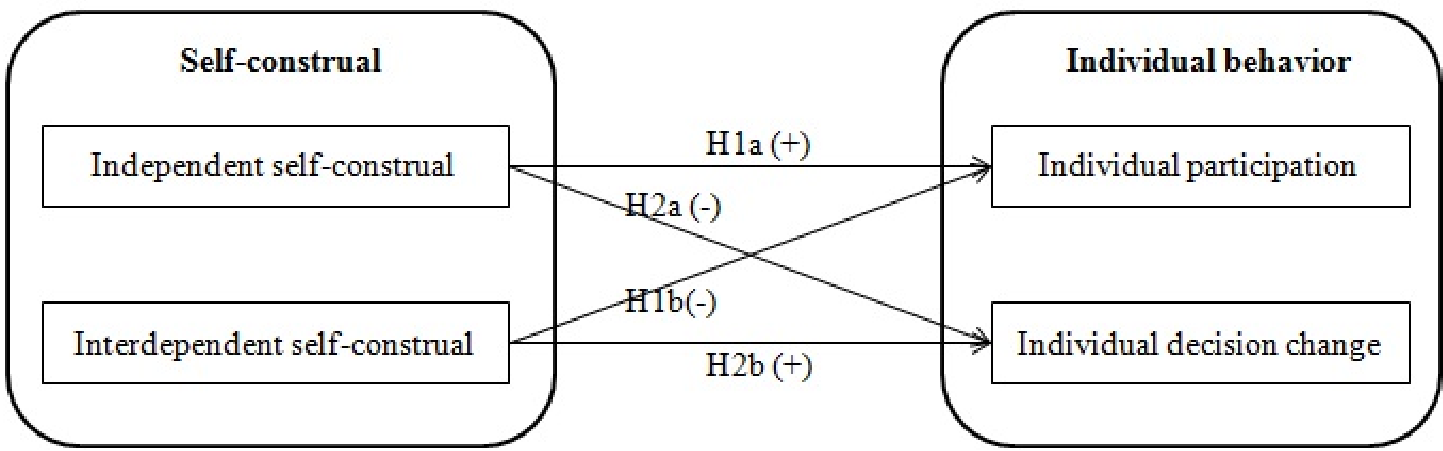
The study utilized:
- Independent Variable: Self-Construal (Measured via Brewer and Chen’s scales).
- Calculated Controls: Extraversion (EPQ-R) and Self-efficacy in communication.
- Method: Hierarchical multiple regression to see if cultural self-view explains participation above and beyond just being an extrovert.
Key Insights: Why the "Interdependent Self" Stays Silent
The most striking finding was the negative relationship between interdependent self-construal and individual participation.
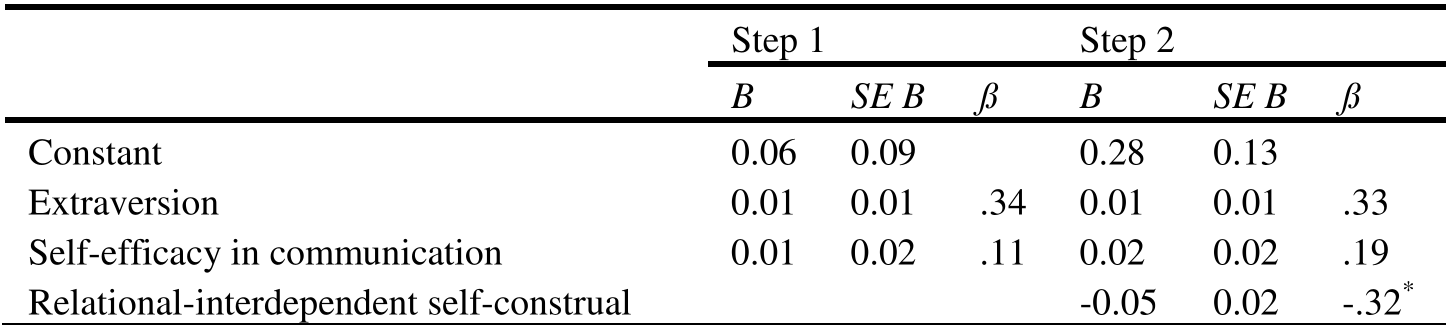
The "Soft Suggestion" Trap
The authors observed that interdependent individuals:
- Only spoke when they felt 100% certain.
- Framed their ideas as "soft suggestions" rather than arguments.
- Refrained from defending their opinions to maintain group harmony.
Interestingly, Hypothesis 2 (Decision Change) was rejected. Self-construal did not predict who changed their mind. The data suggests that decision change is more about how much the other team members listen; if an interdependent member isn't heard, they simply align with the group silently to avoid conflict.
Critical Analysis & Future Outlook
Takeaway for Managers: Extroversion isn't the only thing determining who speaks. In video calls, individuals who value group relationships (interdependent) are systematically "muted" by the medium itself.
Limitations: The study’s sample (students at a Chinese university) and the use of Skype in a lab setting might not fully capture the "high-stakes" pressure of corporate global boardrooms. However, the insight into communication styles—where a "forceful" comment by a Chinese member might still seem "mild" to a German colleague—points to a profound linguistic-cultural gap that self-construal alone doesn't bridge.
Future Work: The researchers propose a Moderation System. Imagine a Zoom plugin that monitors talk time and automatically nudges the group to "ask the opinion of member X" or dynamically adjusts microphone gains to empower softer-spoken, interdependent contributors.
Final Assessment: A pioneering effort in moving cross-cultural UX design away from national labels and toward psychological reality.