
Digital Vigilantes: How Netizens Self-Coordinate Peer-to-Peer Defense Against Cyberhate
Self-Coordinated Defense Mechanisms against Cyberhate: An Analysis of Postings Related to the 2010 Haiti Earthquake on Facebook
This paper explores the evolution of ad-hoc "anti-cyberhate" (ACH) efforts on Facebook following the 2010 Haiti earthquake, conceptualizing the transition from spontaneous self-coordination to institutionalized self-governance. By analyzing longitudinal data from two major Facebook groups, the authors identify how netizens voluntarily act as de facto defenders to contain hate messages in post-disaster digital environments.
TL;DR
In the wake of the 2010 Haiti earthquake, a digital "tug-of-war" broke out on Facebook between malicious actors and compassionate netizens. This paper analyzes how spontaneous groups of strangers evolved into sophisticated, self-governing anti-hate institutions. It reveals a roadmap for how online communities can police themselves through ad-hoc policy setting, panoptic surveillance, and relational coordination when formal laws fail to keep pace.
Background: The Anarchy of the Digital Commons
When disaster strikes, the immediate reaction in cyberspace is typically a flood of sympathy. However, the 2010 Haiti earthquake revealed a darker side: a surge in "cyberhate"—online messages promoting hostility based on race or nationality. Unlike corporate teams, these Facebook groups had no bosses, no contracts, and no standard operating procedures. The paper identifies this as a critical gap in coordination theory: How do random subscribers effectively fight back against organized hate?
The Evolution of Self-Coordination
The authors suggest that anti-cyberhate (ACH) efforts aren't just random; they follow a path toward Institutionalization.
1. Ad-Hoc Policy Setting
Initially, coordination is "negotiated." Admins (the group creators) and active members post implicit or explicit codes of conduct. When someone posts a "nuke Haiti" comment, the community doesn't wait for a judge; they immediately invoke "folkways" and "mores"—unwritten social rules—to shame the offender.
2. Volunteer-Based Intelligence
Netizens act as a "surveillance antenna." Much like a neighborhood watch, members monitor walls for scammers and hate-mongers. This "Panoptic Control" ensures that the haters know they are being watched by the masses, even if they aren't being watched by the law.
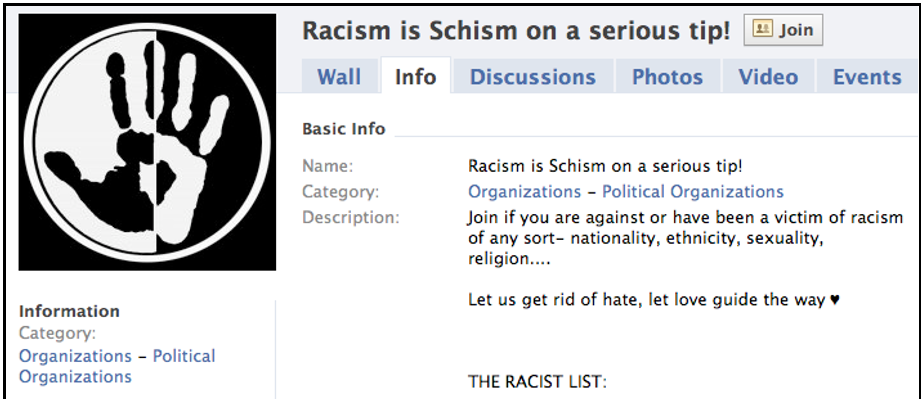 Figure 1: Example of a specialized Facebook group "Racism is Schism" used to archive and expose hate-mongers.
The "Thermostat" of Enforcement
The paper introduces a compelling "Cybernetic" view of group moderation. Using the analogy of a thermostat, ACH efforts function through:
- Observers: Members who detect hate.
- Evaluators: Those who judge the post against community norms.
- Effectors: Admins who take action (deleting posts or banning users).
This process is a form of "Inanimate Control" where automated scripts or rigid moderation rules act as the cooling mechanism for the heated digital environment.
Methodology: The Netnographic Approach
The researchers used Netnography, a longitudinal, non-participative qualitative method. By remaining "invisible" while archiving six months of public communications, they avoided the "observer bias" that often plagues social studies. They focused on two major groups containing over 700,000 members, reaching "theoretical saturation" once new data stopped providing new insights into governance patterns.
Key Results: From "Us vs. Them" to "Common Identity"
The study highlights the Common Ingroup Identity Model. By encouraging interaction between different groups, Admins can trigger "De-categorization." Haters are forced to see victims as "human beings in disaster" rather than an "out-group." This social re-engineering is the core achievement of self-coordinated governance.
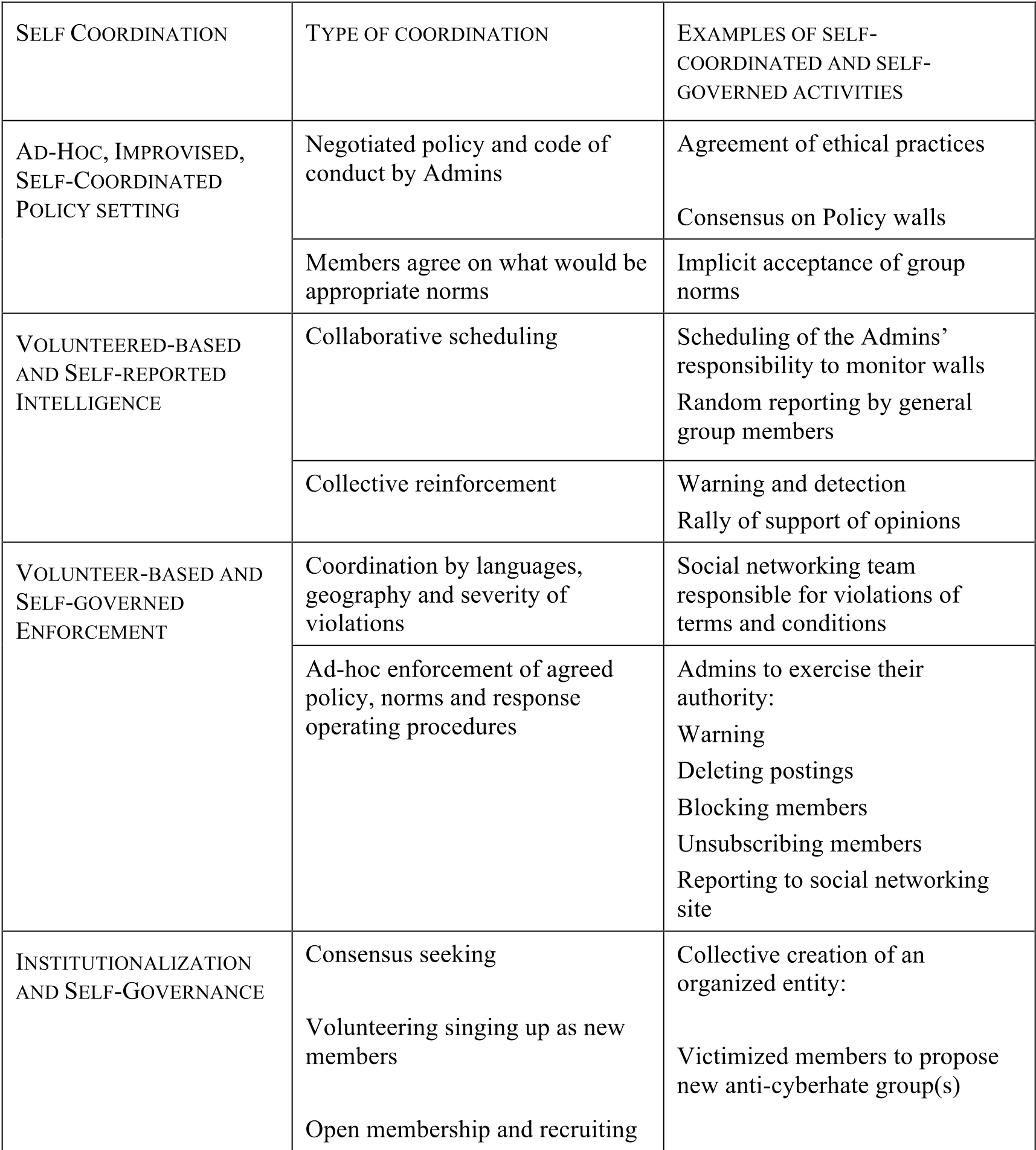 Table 1: The hierarchical evolution from ad-hoc responses to institutionalized self-governance.
Insight and Conclusion: The Limits of "Muddling Through"
While the paper praises the resilience of netizens, it concludes that Facebook groups are "still muddling, not yet through." The high transaction cost of human-led moderation leads to inefficiencies.
The Takeaway: As we look toward the future of the web, the "Admins" of 2010 were the precursors to modern decentralized governance. The survival of digital civil society depends on our ability to transition from "loose coordination" to structured, legitimate "self-governance" platforms that can scale faster than the hate they seek to contain.
Limitations: This study focuses on English-language forums on one platform—future work must examine how these dynamics play out in cross-linguistic settings and on encrypted platforms where "panoptic control" is harder to achieve.