
Digital Compulsion: How Loneliness Drives High-Risk Self-Disclosure on Facebook
Self-disclosure on Facebook among female users and its relationship to feelings of loneliness
This study investigates the correlation between feelings of loneliness and self-disclosure patterns among female Facebook users. By analyzing 616 public profiles categorized as 'lonely' or 'connected' based on status updates, the researchers identified that lonely users disclose significantly more high-risk personal data (Address, Relationships) compared to their more socially connected counterparts.
TL;DR
A deep dive into the digital behavior of female Facebook users reveals a startling paradox: those who express feelings of loneliness are significantly more likely to publish sensitive data—including their physical addresses and relationship statuses—than those who feel socially connected. This behavior creates a "perfect storm" for cyber-criminals, transforming social isolation into a tangible security risk.
The "Why" Behind the Share: Motivation and Vulnerability
In the physical world, we guard our home addresses and relationship intimate details with care. However, the "disinhibition effect" of computer-mediated communication (CMC) blurs these boundaries. The researchers hypothesize that lonely individuals use self-disclosure as a strategic tool to reduce the "friction" for others to approach them. By laying their lives bare, they hope to transition from "lonely" to "connected."
The study highlights a critical gap: while prior work focused on how much time people spend online, this research pivots to what they are actually revealing.
Methodology: Decoding the Profile
The study utilized a sample of 616 female users, divided equally into "Lonely" and "Connected" groups based on their own self-reported status updates.
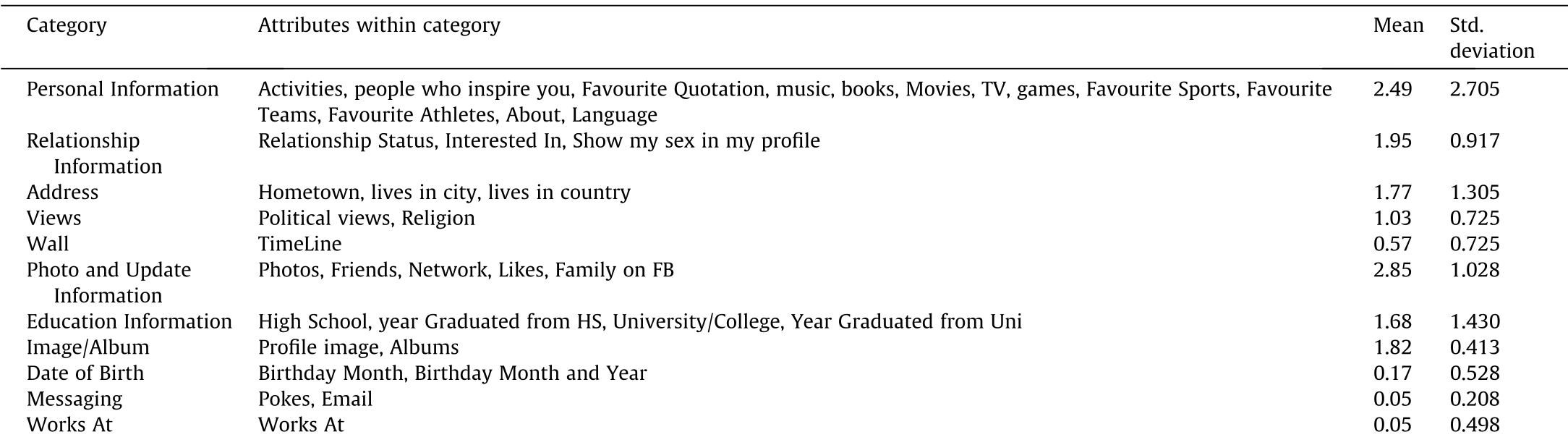
Using Poisson and Binomial Generalized Linear Models, the researchers quantified disclosure across 45 variables. This technical approach allowed them to move beyond anecdotal evidence to statistically significant patterns of behavior.
Key Findings: The Disclosure Gap
The data suggests that loneliness acts as a catalyst for "Deep Disclosure."
- Personal & Relationship Data: Lonely users were far more likely to list their hobbies, favorite athletes, and relationship preferences.
- The Address Risk: Perhaps most concerningly, 72.72% of lonely users disclosed their physical address, compared to 65.91% of connected users.
- The "Active" Counter-Trend: Interestingly, "connected" users showed higher disclosure in their Views (Politics/Religion) and their Wall (Timeline activity). This suggests that "connectedness" is associated with active social participation, whereas "loneliness" is associated with a static broadcast of personal identifiers.
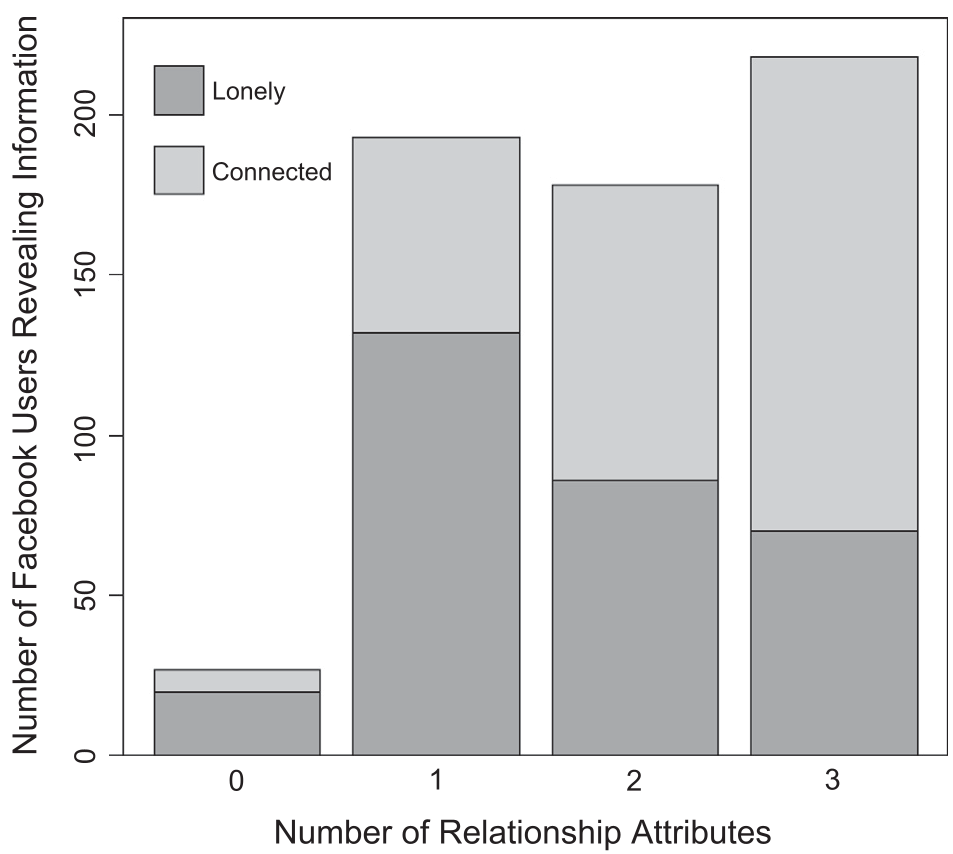 Fig 1: The total number of Personal Information attributes revealed on Facebook by category.
Critical Insight: The "Enabler" Effect
As the authors point out, social media does not create new crimes like stalking or identity theft; rather, it acts as an enabler. For a lonely user, the "About Me" section is a handshake; for a cyber-criminal, it is a dossier.
The disclosure of an Address combined with Relationship Status (e.g., "Single") and Interests creates a high-resolution target for:
- Stalking & Harassment: Facilitating "credible threats" by monitoring physical locations.
- Identity Theft: Using PII (Personally Identifiable Information) to bypass security questions.
- Physical Crimes: Status updates and address disclosures have even been linked to real-world burglaries.
Conclusion and Future Outlook
This study serves as a sobering reminder that our psychological state dictates our digital footprint. The "loneliness" expressed in a status update isn't just a cry for connection; it is a signal of decreased privacy vigilance.
Limitations: The study focused exclusively on females and utilized a search engine (OpenBook) that relied on public profiles.
Future Work: We need to understand if this pattern holds for male users and how newer, more ephemeral platforms (like Snapchat or Instagram Stories) alter the relationship between emotional state and disclosure. As AI-driven data mining becomes more sophisticated, the risk to vulnerable, lonely populations will only intensify.