
Co-Evolutionary Intelligence: How Information Diffusion Rebuilds Trust in Social Networks
A Self-Learning Information Diffusion Model for Smart Social Networks
This paper introduces a self-learning information diffusion model for social networks, distinguishing between "smart" and "normal" individuals and "true" and "false" messages. By implementing a trust-based reward/punishment mechanism, the study demonstrates how information flow can dynamically rebuild network trust, significantly enhancing the network's Information Filtering Ability (IFA).
TL;DR
While we often ask how social networks spread news, this paper asks the reverse: How does news spread change the network? By introducing a self-learning mechanism where individuals reward "truth-tellers" with trust, the authors demonstrate that networks can "evolve" to become smarter, filtering out fake news through the emergence of social stratification and crossover advantages.
Context: Why "Static" Social Models are Failing
Most classic epidemic or rumor models (like SIR or SIS) treat the network as a fixed pipe. However, humans are adaptive. If a friend consistently shares "fake news," you stop trusting them—effectively weakening that "link" in the network. This paper addresses this gap by modeling the reciprocity between information flow and trust dynamics.
Methodology: The Self-Learning Calculus
The authors propose a framework involving two node types and two message types:
- Smart Nodes: Can perfectly distinguish true from false; they only forward the truth.
- Normal Nodes: Cannot distinguish truth; they forward based on their "Trust" (link weight ) in the sender.
- Self-Learning Mechanism: If node A receives a true message from B, trust increases (). If the message is false, trust decreases ().
Key Architectural Motifs
The study focuses on two fundamental building blocks of social structures:
- Chain Networks: Testing how influence diminishes over distance.
- Star Networks: Testing the power of centralized hubs.
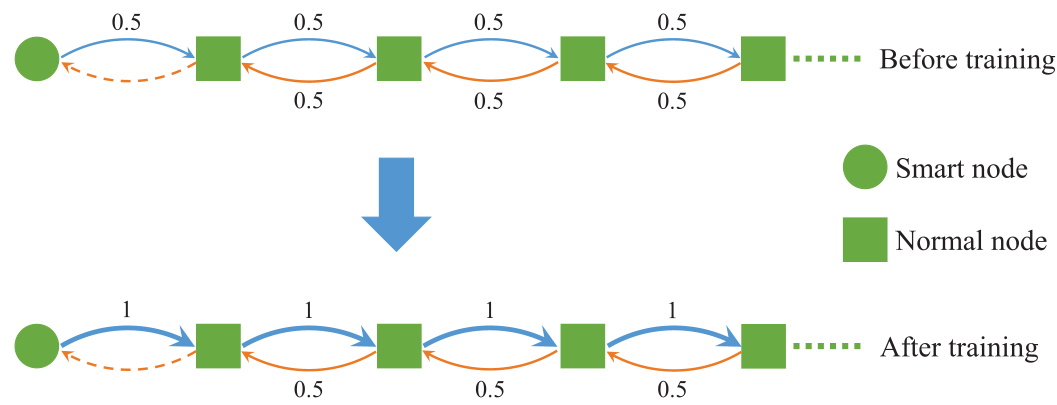 Figure 1 & 2: Structural representations of Chain and Star networks with smart node placements.
Deep Insights: Stratification and Crossover
The paper uncovers three profound social phenomena through mathematical proof:
1. The Scaling of Information Filtering Ability (IFA)
IFA measures how much better a network is at spreading truth versus lies.
- In Star Networks, IFA grows linearly with size. The larger the "audience" of a smart hub, the smarter the network.
- In Chain Networks, IFA collapses as the chain grows (), showing that "whisper chains" are incredibly poor at maintaining truth.
2. The Emergence of Social Stratification
"Social position" is often defined by wealth, but here it is defined by Information Diffusion Power. Smart nodes create a "stratum" where normal nodes physically closer to them gain significantly more influence than those at the periphery. The self-learning mechanism amplifies this gap.
3. Crossover Advantage
When two separate chain networks are connected by a bridge, the "bridge nodes" (v and u in Fig 3) see a massive spike in social influence. This validates the Structural Holes theory: individuals who connect disparate groups command the most power in a network.
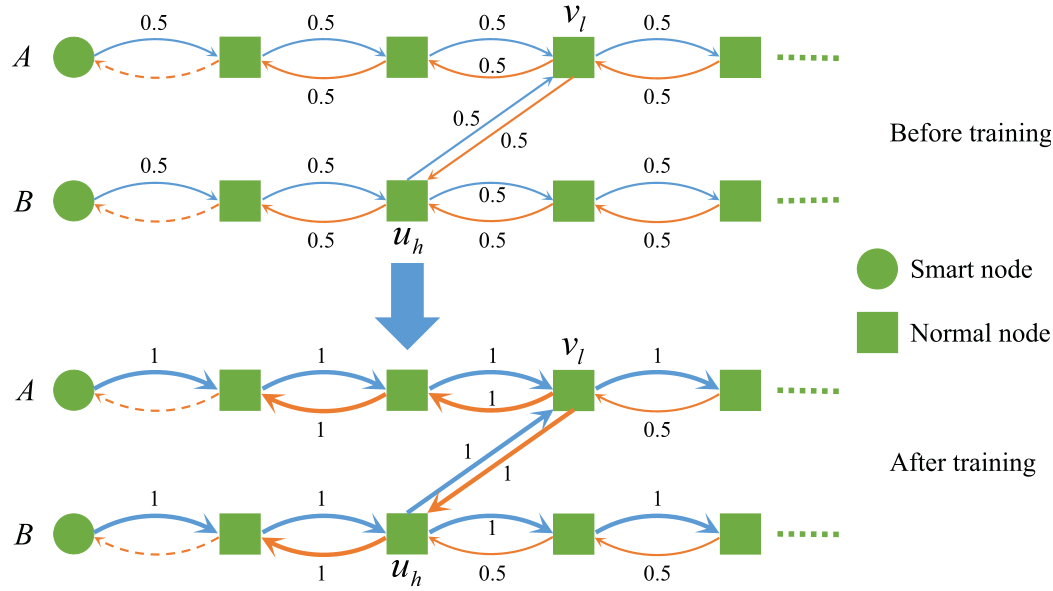 Figure 3: Interconnection between two chains, showing how trust propagates across the bridge.
Experimental Validation
The authors used simulations with various Natural Forwarding Rates () to verify their proofs.
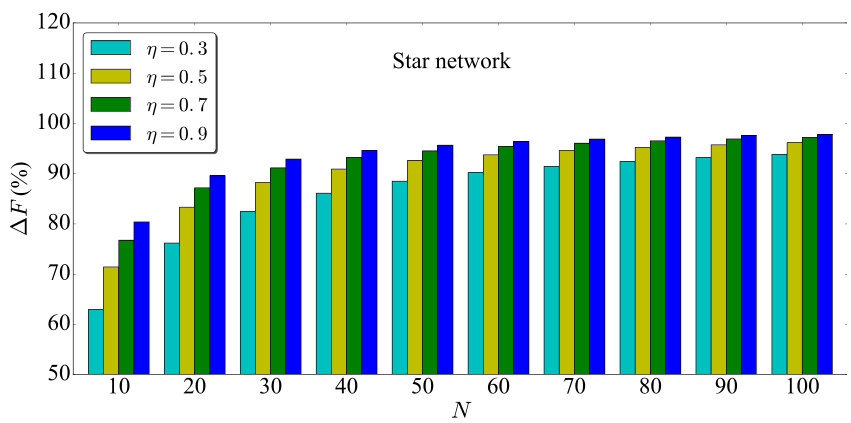 Figure 4: The simulated values of IFA. Notice how 'After Training' (b) consistently outperforms 'Before Training' (a), proving the network "learned" to filter.
The Takeaway: How to Build a Smarter Society?
The research provides a clear roadmap for social platform design:
- Hub-Oriented Filtering: To maximize a network's "intelligence," the most highly connected nodes (hubs) must be prioritized for "smart" status (e.g., verification, fact-checking capabilities).
- Dynamic Trust: Systems that allow users to dynamically adjust trust weights based on historical accuracy (self-learning) naturally evolve to suppress misinformation without requiring global censorship.
Limitations & Future Work
The model assumes "Smart Nodes" are 100% accurate, which is an idealization. Future work looks toward malicious nodes—those that intentionally spread false messages—and testing these dynamics against massive, messy real-world datasets rather than just motifs.
Conclusion
Social networks are not static graphs; they are living, breathing systems of trust. By realizing that information diffusion is the engine of network evolution, we can design smarter digital ecosystems that naturally gravitate toward the truth.