
Criminal Swarms: How Social Learning Transforms Urban Crime Simulation
Self-organized and Social Models of Criminal Activity in Urban Environments
This paper presents a Geosimulation framework using Multi-Agent Systems (MAS) to model criminal activity and police allocation in urban environments. It introduces "Social-Swarm" learning, an approach inspired by Swarm Intelligence and Social Network analysis, demonstrating that criminal agents significantly improve decision-making by sharing information through social hubs.
TL;DR
This research explores the intersection of Geosimulation and Multi-Agent Systems (MAS) to model the cat-and-mouse game between police and criminals. By moving beyond simple distance-based movements to Social-Swarm learning, the authors demonstrate that criminal agents can "self-organize" to identify gaps in police patrol routes through collective information sharing.
Background Positioning
In the landscape of urban modeling, this work sits at the crossroads of Sociology and Computational Intelligence. It transitions criminal modeling from static probability maps to dynamic, adaptive agents that mirror the sociological reality of criminal networks.
Problem & Motivation: The Static Trap
Most police allocation tools are only as good as the criminal models they simulate. If a simulation assumes criminals are "Lazy" (only targeting the closest location), it fails to account for the intelligence and adaptability of offenders. The core insight of this paper is that crime is not just a spatial event but a social and experiential one. Criminals learn from their mistakes and, more importantly, from the successes of others.
Methodology: From "Lazy" to "Social-Swarm"
The authors developed a simulator on a 60x60 grid featuring three levels of agent intelligence:
- Lazy Model: Decision-making is purely distance-dependent.
- Swarm Model: Agents use their personal history with a target to decide whether to return (Reinforcement Learning).
- Social-Swarm Model: The "vanguard" of this research. Agents are grouped into communities with Social Hubs (the most efficient criminals). These hubs act as brokers, sharing information about which targets are "soft" (unpatrolled).
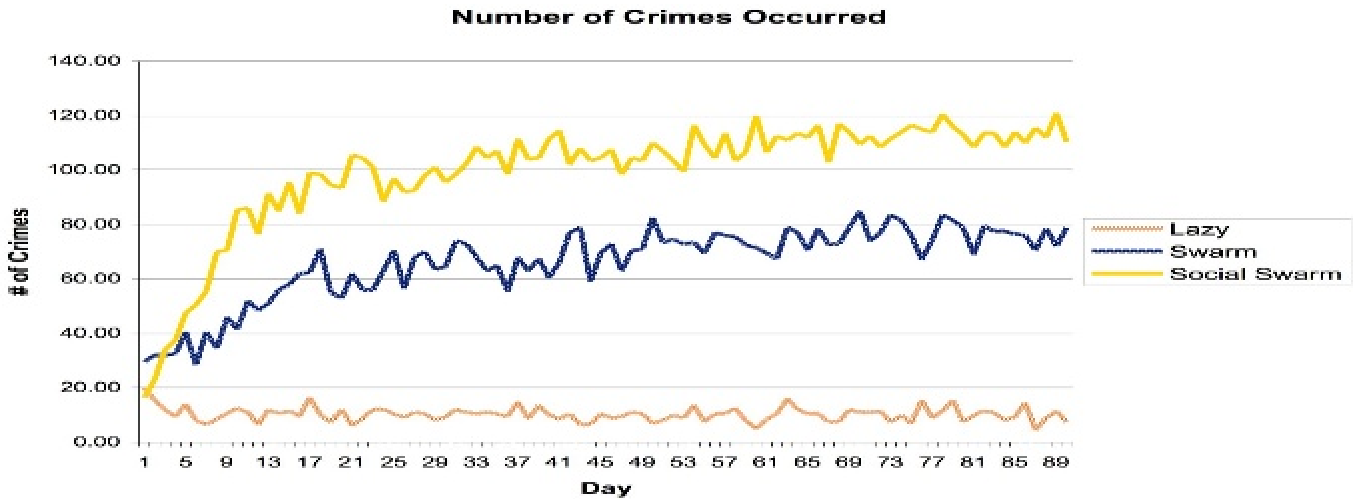 Figure 1: Comparison of learning models and the discovery of unprotected targets.
The behavior is governed by a probability equation derived from Swarm Intelligence, where the "attractiveness" of a target increases with successful crimes and decreases with police presence/failures.
Experiments & Results: The Power of the Hub
The simulation involved 41 crime targets, with 38 stationary police patrols, leaving only 3 "unprotected" zones.
- Learning is Non-Negotiable: Both Swarm-based models outperformed the Lazy model, proving that agents can spontaneously form spatial-temporal structures that avoid police.
- The Social Advantage: The Social-Swarm model showed a distinct advantage in target discovery speed. When targets are clustered, the social influence allows criminals to "bypass" the trial-and-error phase by following the advice of successful peers (hubs).
Note: In clustered environments, the Social-Swarm leads to a faster convergence on high-success-rate targets compared to individualistic learning.
Critical Analysis & Conclusion
Takeaway
The study confirms that criminal behavior is an emergent property of social networks and local intelligence. For law enforcement, this implies that breaking the "information flow" within criminal communities may be just as effective as physical patrolling.
Limitations
While innovative, the social network topology in this study is relatively static (fixed hubs). Furthermore, the police agents are stationary in the primary experiment, which doesn't fully capture the dynamic "arms race" of active patrol route changes.
Future Work
The authors suggest that the next frontier lies in investigating diverse social network topologies (e.g., Scale-free vs. Small-world) to see how different organizational structures influence the speed and resilience of criminal activity in urban hubs.