
Dynamic Resilience: Modeling Self-Organizing Social and Spatial Networks
16185_Self-organizing social and spatial networks under what-if scenarios.
This paper presents a multi-agent simulation framework for "Self-organizing social and spatial networks," utilizing the Construct theory to model how agents interact and evolve under "what-if" scenarios. The study focuses on the dynamic co-evolution of social structures and spatial distributions, specifically analyzing network resilience under external interventions or environmental changes.
TL;DR
This research explores how social networks self-organize and adapt under pressure. By using a multi-agent simulation framework, the authors demonstrate how individual-level interactions based on knowledge similarity and expertise expertise drive the emergence of global network structures. The work provides a "what-if" laboratory to test how organizations survive the loss of key personnel or changes in spatial constraints.
Context: Beyond Static Graphs
Most social network analyses are "post-mortems"—they look at a snapshot of connections and describe the topology. However, real organizations are organic. They evolve through daily interactions. The central question of this paper is: If we disrupt a network, how does its internal logic of "who talks to whom" allow it to heal or cause it to collapse?
The Engine of Interaction: Similarity and Expertise
The authors posit that interaction is not random but governed by two primary forces:
- Relative Similarity (RS): The "homophily" principle—we talk to people who are like us.
- Relative Expertise (RE): The "utility" principle—we talk to people who know things we don't.
The mathematical core of the model is expressed through the probability of interaction :
By quantifying knowledge as a vector, the simulation tracks how information flows between agents. As agents interact, they "share" knowledge bits, which in turn changes their similarity and expertise profiles for the next time step. This creates a powerful co-evolutionary feedback loop.
 Figure 1: Conceptual overview of agent-based knowledge exchange.
Spatial Constraints and "What-If" Scenarios
Unlike abstract network models, this study incorporates spatiality. Distance acts as a friction coefficient. In the "What-If" scenarios, the authors manipulate:
- Node Isolation: What happens when a "hub" (a highly knowledgeable agent) is removed?
- Spatial Reconfiguration: How does the network adapt if agents are physically relocated?
The research measures success via Knowledge Diffusion (KD), which calculates the average amount of knowledge held by the population:
Experimental Insights: Resilience and Damage
The results reveal a fascinating "Self-healing" property of certain network configurations. In scenarios where a high-degree node was removed, the "Damage Rate" of the overall knowledge pool was initially high but mitigated over time as the remaining agents redistributed the specialized knowledge.
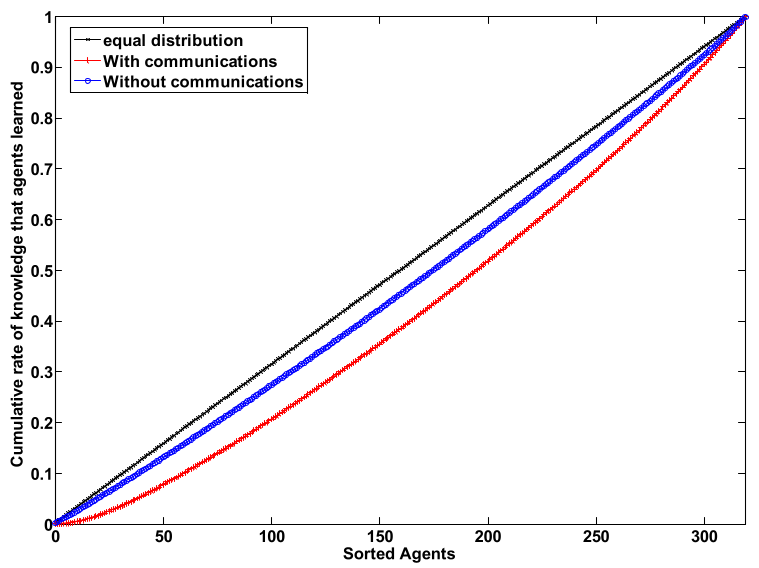 Figure 2: Performance metrics under different intervention scenarios.
Key findings include:
- Redundancy is Safety: Groups with high initial knowledge overlap are far more resilient to the loss of individuals.
- Bottleneck Risks: Highly specialized organizations (low overlap) are fragile; the removal of a single "expert" can permanently stall knowledge diffusion.
Critical Analysis & Future Outlook
While the Construct model is groundbreaking in its dynamic approach, its primary limitation lies in its assumption of rational, knowledge-seeking behavior. Real-world human networks often involve emotional, political, or power-based incentives that the model does not currently capture.
However, for Organizational Design and Cyber-Security, this work provides a vital blueprint. It moves us away from viewing "security" as defending a static perimeter and toward viewing it as maintaining "functional flow" in a self-organizing system.
Takeaway
The true strength of an organization isn't just in who is connected, but in how the rules of interaction allow the system to re-wire itself when disaster strikes.