
Boosting Few-Shot Learning with Self-Paced Multimodal Hallucination
Self Paced Adversarial Training for Multimodal Few-shot Learning
This paper introduces a multimodal few-shot learning framework that leverages text-conditioned Generative Adversarial Networks (tcGANs) to "hallucinate" training data. By combining a class-discriminative StackGAN with a self-paced learning (SPL) strategy, the method achieves SOTA performance on fine-grained datasets, significantly outperforming single-modal baselines in 1-shot and 5-shot scenarios.
TL;DR
This research addresses the "data hunger" of deep learning by using text descriptions to generate synthetic images (hallucination) for categories with very few real examples. By introducing a Self-Paced learning strategy to a text-conditioned GAN, the authors ensure that only the most realistic and class-distinctive synthetic samples are used to train the final classifier, leading to massive gains in fine-grained bird and flower recognition.
Context: The Gap in Few-Shot Learning
Current SOTA models excel when data is abundant but falter in the "Few-Shot" regime. While humans can identify a new bird species after seeing just one photo and reading a description, models typically require thousands of images. Prior works attempted to "hallucinate" features to fill this gap, but these hallucinations often lacked the fine-grained discriminative details needed for complex tasks.
The authors argue that multimodality is the key. Even if we have only one image of a "Yellow-bellied Flycatcher," we might have dozens of textual descriptions. Can we use those descriptions to "dream up" the missing visual data?
Methodology: High-Quality Hallucination via SPL
The researchers built their solution on three pillars:
- Text-Conditioned Generation: Utilizing a StackGAN architecture to turn text embeddings into high-resolution images.
- AC-GAN Integration: Adding an auxiliary classifier to the GAN so the generator () isn't just making "pretty" pictures, but pictures that clearly belong to a specific bird or flower class.
- Self-Paced Learning (SPL): This is the "secret sauce." Instead of throwing all generated images into the training set, the model ranks them. It starts by training on the "easiest" samples (those the discriminator is most confident about) and gradually includes more complex ones as the model matures.
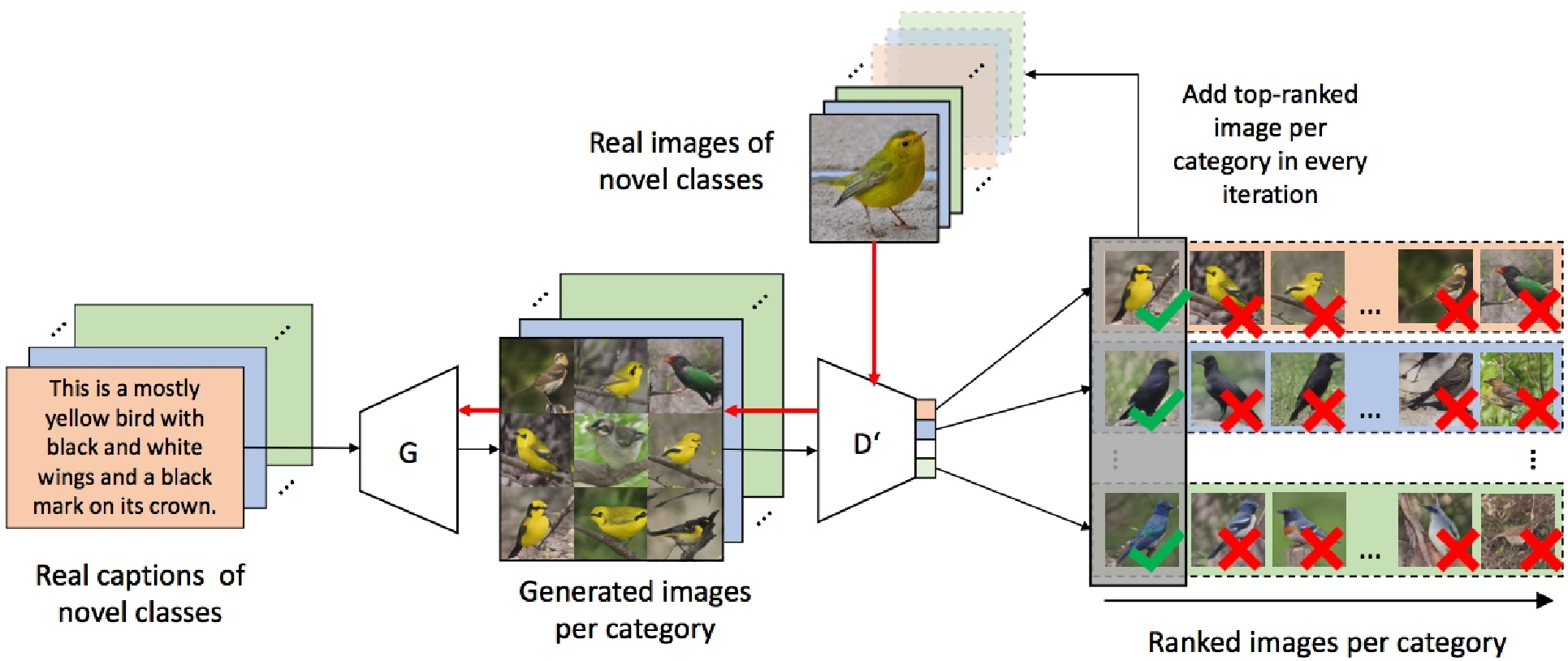 Figure 1: The Iterative Self-Paced Finetuning Process.
The algorithm follows a "curriculum":
- Initialize the classifier on the few real images available.
- Generate a pool of candidate images from text.
- Rank candidates by class-discriminatory power.
- Update both the Generator and the Classifier using the top-K "best" images.
Experimental Results
The approach was tested on two benchmarks: CUB-200 (Birds) and Oxford-102 (Flowers).
Performance Boost
In the most challenging 1-shot scenario (CUB), the model achieved 57.67% Top-5 accuracy, a staggering improvement over the standard fine-tuning baseline of 40.79%.
Ablation Insights
The study highlights that updating the Generator () during the self-paced phase is crucial. As the classifier becomes better at recognizing the class, it provides better feedback to the generator, which in turn produces higher-quality images—a virtuous cycle of learning.
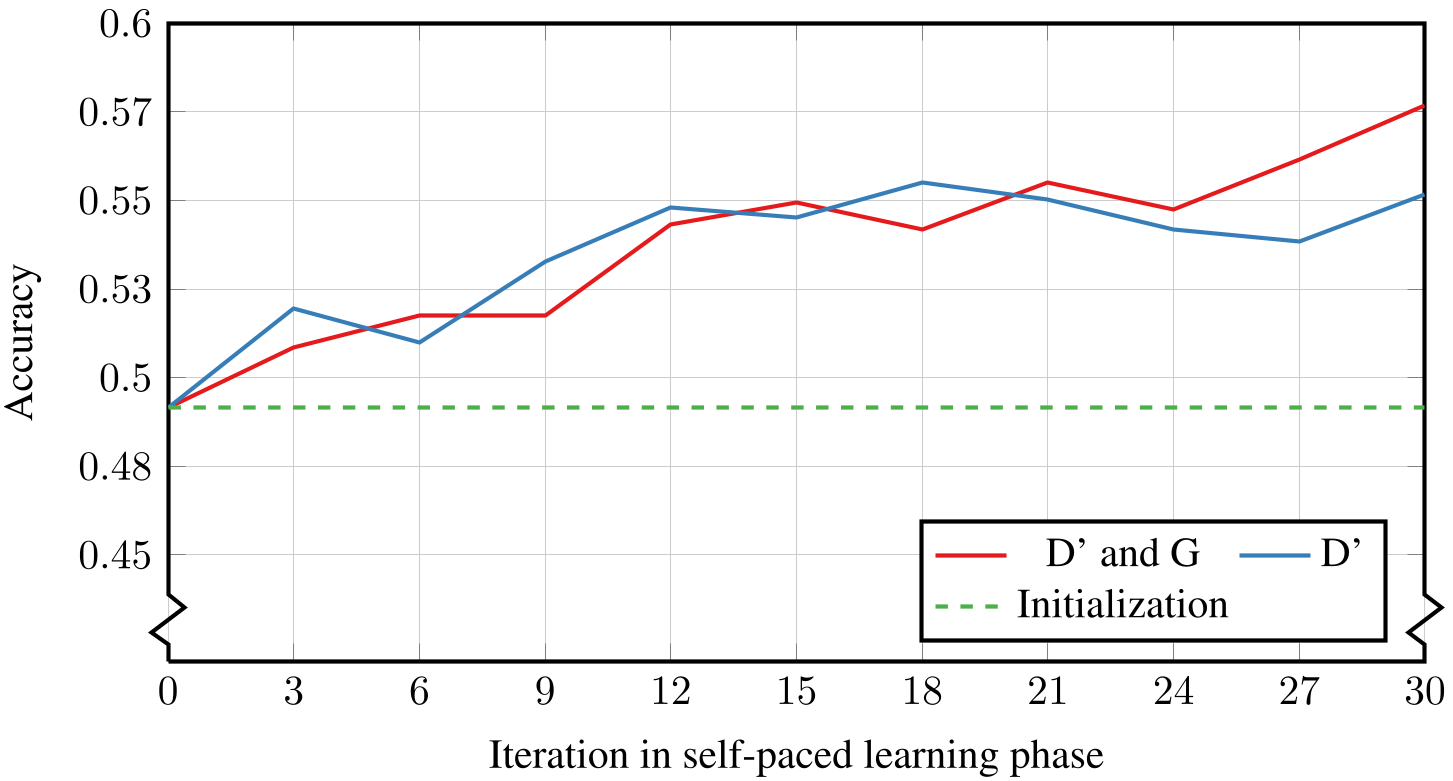 Figure 2: Top-5 Accuracy evolution across SPL iterations.
Critical Insights: Why It Works
The "Self-Paced" aspect solves the primary problem of GANs in supervised tasks: Unreliability. By using the Discriminator as a "quality gatekeeper," the model avoids the "garbage in, garbage out" trap.
The authors also proved that their ranking mechanism prioritizes class-discriminativeness without sacrificing image quality (measured via Inception Score). Essentially, the model learns to pick images that emphasize the unique features described in the text (e.g., a specific beak shape or petal color).
Conclusion & Future Outlook
This work demonstrates that for few-shot tasks, a picture may be worth a thousand words, but a few words can help "create" a thousand useful pictures.
Future Directions:
- Beyond GANs: Moving towards Diffusion-based hallucination for even higher fidelity.
- Generalized Few-Shot: Testing the model on a mix of base and novel classes simultaneously.
- Domain Expansion: Applying this to medical fields where textual reports are abundant but labeled imagery is scarce.
As we move towards more robust AI, bridging the gap between semantic knowledge (text) and visual perception (images) remains one of the most promising frontiers.