
XING Profiles: More Than Just Window Dressing — The Science of Professional Self-Presentation
Self-presentation in professional networks: More than just window dressing
This study investigates the validity of self-presentation on professional online networks like XING, comparing authentic versus idealized self-descriptions. Utilizing a zero-acquaintance paradigm with independent observers, the researchers demonstrate that professional profiles reflect actual personality traits rather than mere "window dressing" or strategic idealization, establishing professional networks as credible tools for recruitment.
TL;DR
Is your LinkedIn or XING profile a mirror of who you are, or a mask of who you want to be? This study reveals that despite the pressure of the "war for talent," users on professional networks present themselves remarkably authentically. By comparing self-reported "ideal" versions of users with independent observer ratings, the research proves that professional profiles are valid indicators of real personality, particularly for traits like Extraversion, Openness, and Flexibility.
Background: The Tension Between Authenticity and Idealization
In the digital professional landscape, your profile is your first impression. According to Goffman's Impression Management Theory, individuals strategically manage their behavior to present a favorable version of themselves. In a professional context, where jobs and reputations are at stake, one might expect this Idealization to reach its peak.
Prior studies on social networks like Facebook showed high authenticity, but many researchers hypothesized that professional networks would be different—more standardized, more formal, and potentially more deceptive.
Methodology: Testing the "Mask"
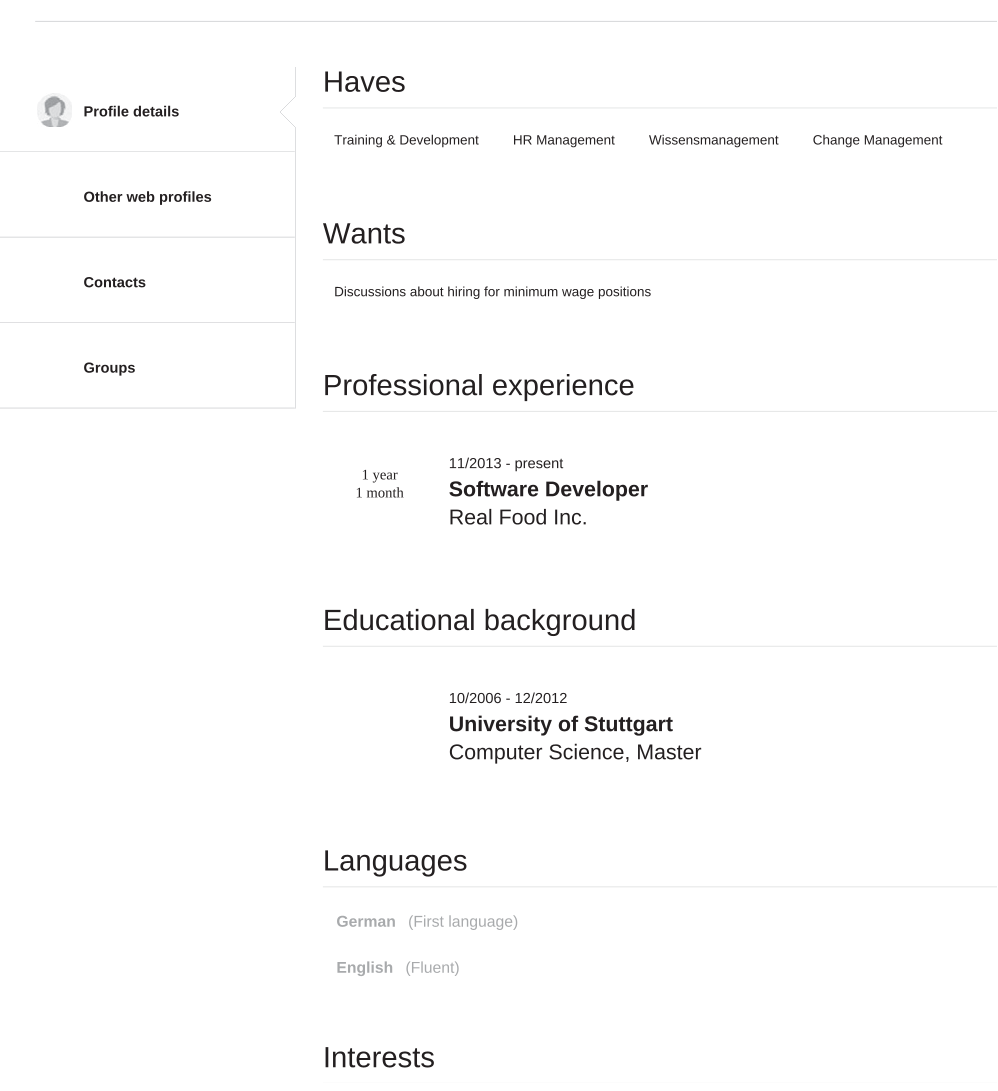
The researchers recruited 63 active users on XING (the leading professional network in Germany) and asked them to perform a unique task:
- Authentic Description: "Describe yourself as you really are."
- Idealized Description: "Describe yourself as you ideally should be to get your dream job."
They measured these using the Big Five Inventory (BFI-10) and the Bochum Inventory of Professional Personality (BIP). Then, they brought in five unacquainted observers to rate the users based only on their XING profiles.
Core Findings: Truth Trumps Tactics
The results were striking. While users did describe an idealized version of themselves that was more "perfect" than their real self (showing higher resilience and achievement motivation), the observers were not fooled.
1. The Authenticity Correlation
Observer ratings correlated significantly with the authentic self-descriptions in key areas:
- Extraversion: r = .353
- Openness: r = .360
- Flexibility: r = .310
2. The Idealization Deficit
When researchers used partial correlations to isolate the effect of "idealization" (i.e., the parts of the idealized self that differ from the real self), the correlation with observer ratings dropped to near zero.
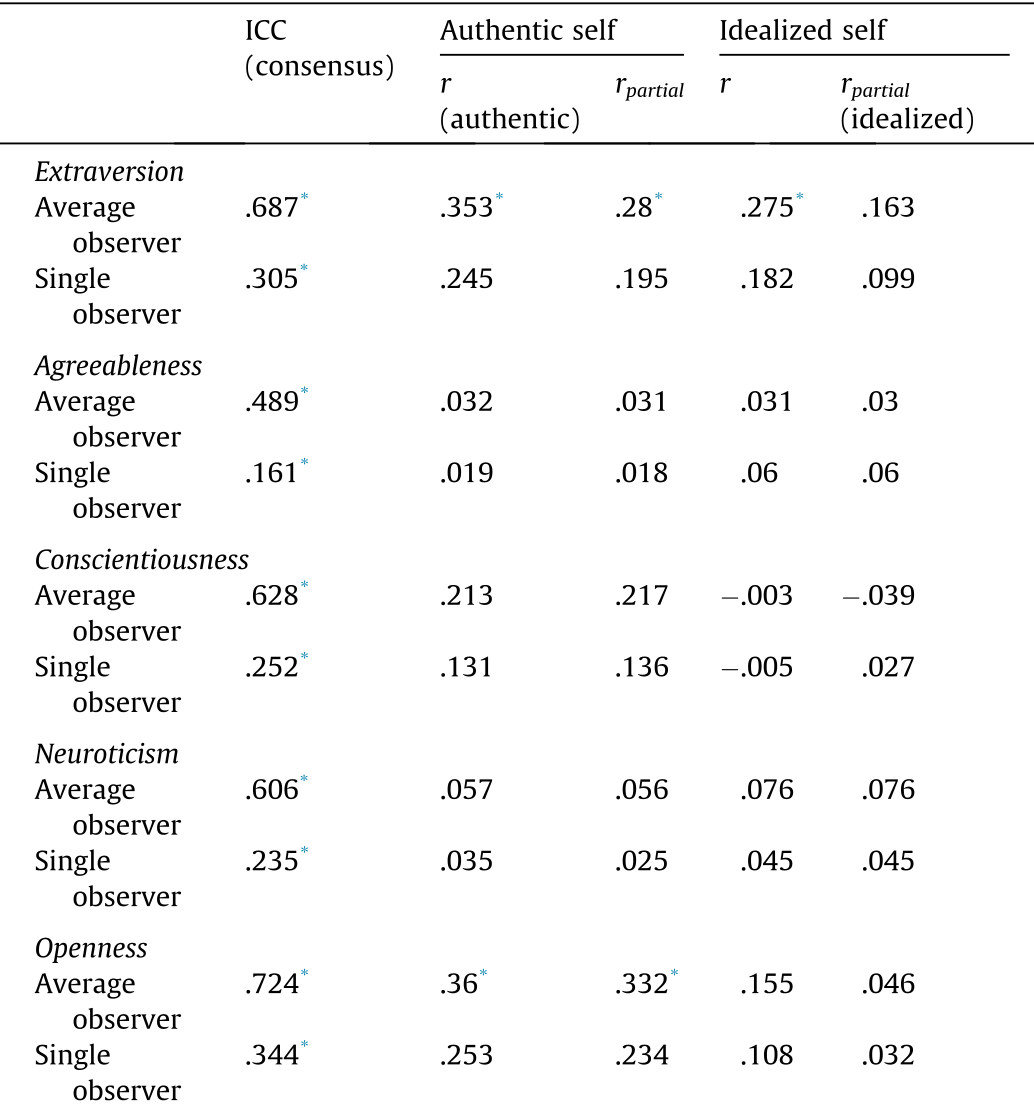 Table: Comparison of correlations between observer ratings and authentic vs. idealized self-descriptions.
Why Can't We Successfully Fake It?
The study suggests that while we might try to polish our profiles, several factors keep us honest:
- The "CV" Constraint: The standardized format of professional networks (education, past jobs, skills) makes it harder to fabricate a personality compared to the open-ended nature of a blog or a private social feed.
- Long-term Strategy: Users likely realize that if they get a job based on a fake persona, the resulting "performance pressure" when they start the role would be unsustainable.
- Observer Sharpness: Even with limited "thin slices" of information (one photo, a list of groups, and job history), human observers are remarkably consistent (High ICC values) at detecting personality cues.
Results for Job-Relevant Characteristics
The researchers didn't just look at general personality; they focused on traits recruiters care about.
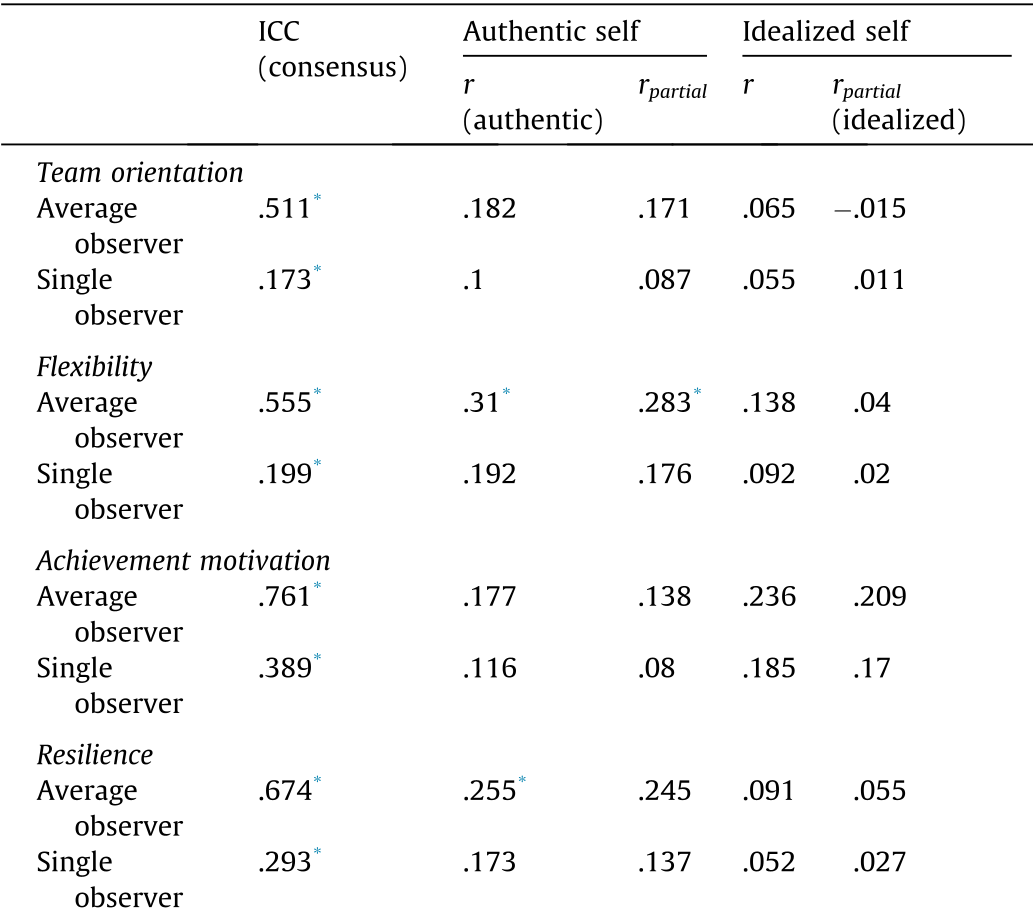 Key Takeaway: Flexibility and Resilience are detectable, while "Team Orientation" is harder for observers to judge without seeing the user in a social interaction.
Critical Insights for Recruiters and Job Seekers
- For Recruiters: You can likely trust the "vibe" you get from a candidate's profile. They are providing a valid signal of their Extraversion and Openness. However, be cautious with traits like Conscientiousness or Neuroticism, which are harder to detect through a digital profile.
- For Job Seekers: Authenticity is your best strategy. Observers tend to discount your attempts at idealization, but they are surprisingly good at picking up on your genuine professional traits.
Conclusion and Future Outlook
This study debunks the myth that professional networks are merely platforms for "window dressing." They function as valid social signaling environments. Future research should explore if recruitment experience makes observers even better at this, or if the rise of AI-generated profiles might finally break the authenticity bridge that humans have maintained.
Takeaway: Your XING or LinkedIn profile is a more honest reflection of you than you might realize.