
ASTERIS: Piercing the Dark Ages of the Universe via Spatiotemporal Self-Supervised Learning
Deeper detection limits in astronomical imaging using self-supervised spatiotemporal denoising
The authors present ASTERIS, a self-supervised 3D Transformer-based denoising algorithm designed for astronomical imaging. It bridges multiple dithered exposures to exploit spatiotemporal correlations, improving detection limits by ~1.0 magnitude while maintaining SOTA levels of photometric and PSF accuracy.
TL;DR
Astronomical discovery is fundamentally limited by the "noise floor" of our instruments. Traditional methods of averaging images provide diminishing returns, requiring exponential increases in exposure time to see further. ASTERIS changes this equation by using a self-supervised 3D Transformer to learn the complex, correlated noise patterns in telescope data. It improves detection limits by 1.0 magnitude, effectively tripling the number of identified early-universe galaxies from the same JWST raw data.
The Bottleneck: Why "Just Stacking Images" Isn't Enough
For decades, the gold standard in astronomy has been co-addition: align multiple exposures and average them. Mathematically, if noise is independent, the Signal-to-Noise Ratio (SNR) improves by for exposures.
However, in reality, noise is not independent. It is correlated by the telescope's optics (the Point Spread Function or PSF), atmospheric turbulence, and complex sky backgrounds. We have reached a point where simply building bigger mirrors or exposing for longer months provides marginal gains. To find galaxies (the first stars to ignite after the Big Bang), we need to extract signals currently buried beneath these non-i.i.d. noise fluctuations.
Methodology: Deep Learning with Spatiotemporal Intuition
The core insight of ASTERIS is that a stack of dithered exposures contains redundant signal but varying noise realizations.
1. The 3D Transformer Architecture
Unlike standard CNNs that look at single frames, ASTERIS treats a stack of 8–16 exposures as a 3D voxel. It utilizes:
- 3D-MDTA (Multi-Deconvolved-Head-Transposed-Attention): This allows the model to look across spatial pixels (x, y) and temporal exposures (t) simultaneously.
- Selective Denoising: To avoid distorting bright stars or galaxies, the team implemented a 3 clipping threshold. Pixels above this are considered high-SNR and are processed via traditional medians, while the "faint part" is fed to the neural network.
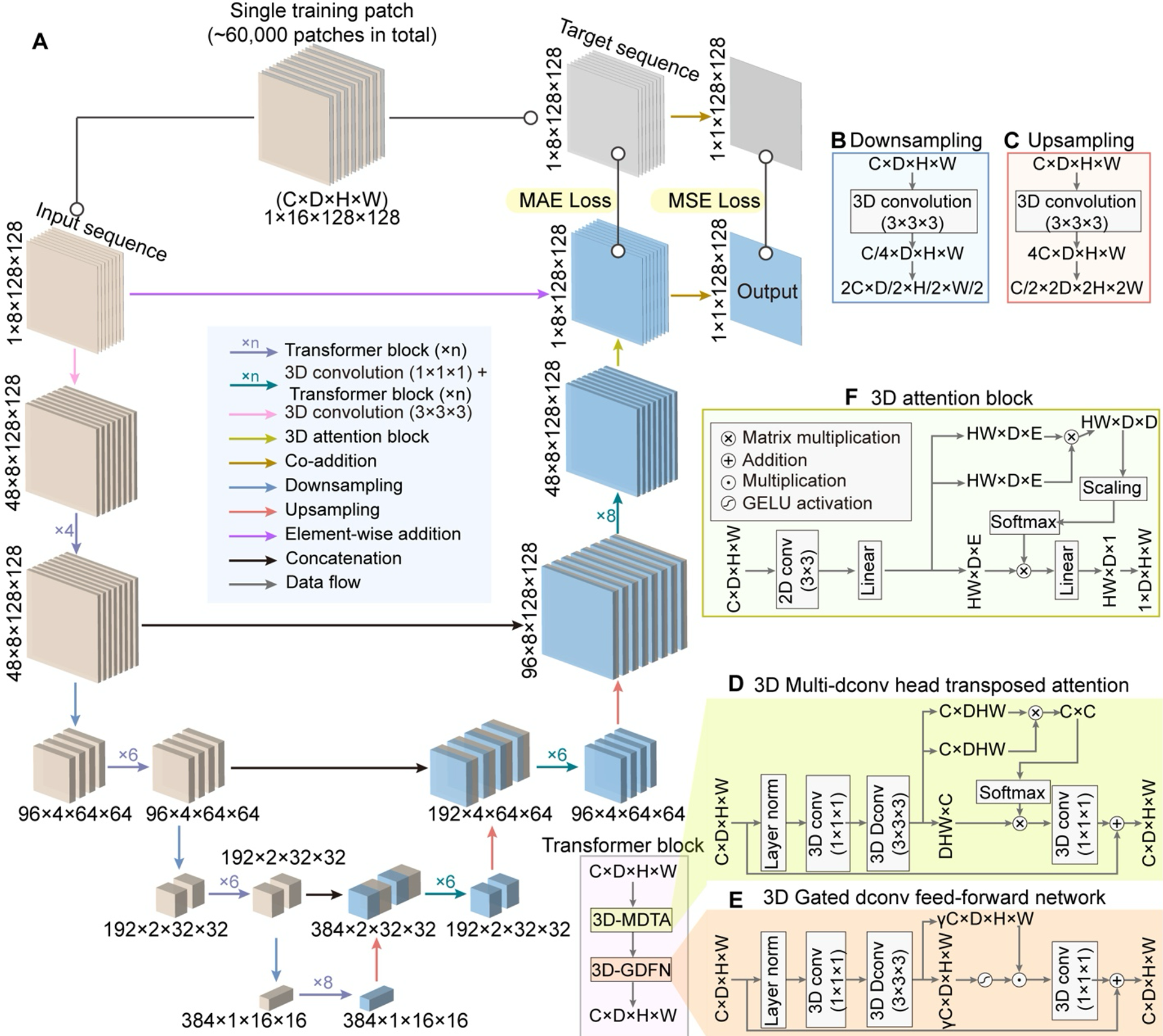 Figure 1: The ASTERIS 3D U-Net pipeline, showing the separation of bright and faint signals to preserve dynamic range.
2. Self-Supervised Training (The "Free Lunch")
The model is trained using a Noise2Noise strategy. By taking two independent sets of exposures of the same field, the network learns to map one noisy realization to another. Since the underlying "true sky" is the only thing common to both sets, the network naturally learns to filter out the stochastic noise.
Experimental Breakthroughs: Finding the First Galaxies
The authors validated ASTERIS on data from the James Webb Space Telescope (JWST) and the Subaru Telescope.
Quantitative Performance
In mock testing, the results were staggering:
- Completeness: At 90% completeness, ASTERIS reaches 1.0 magnitude deeper than standard co-addition.
- PSF Preservation: Unlike previous denoisers that "blur" images to remove noise, a Kolmogorov-Smirnov test confirmed ASTERIS does not significantly alter the PSF, which is vital for astronomical measurement.
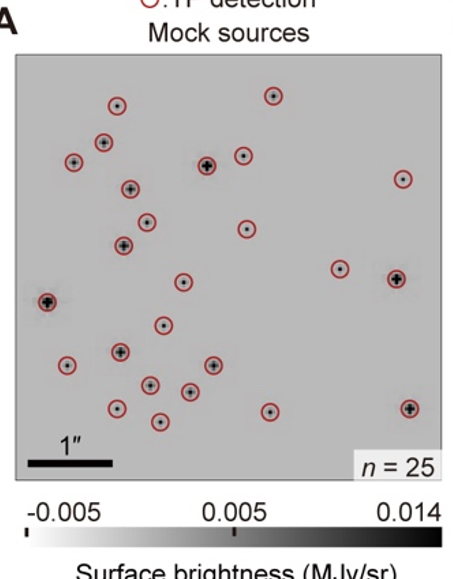 Figure 2: Performance metrics showing ASTERIS (red) outperforming N2N and Co-addition in SNR and F-score.
The Science Impact: Expanding the JOF Catalog
When applied to the JWST Advanced Deep Extragalactic Survey (JADES), ASTERIS identified 3x more galaxy candidates at .
- Ambiguity Resolution: By effectively lowering the noise floor in "dropout" bands, the model helps confirm whether a faint smudge is a high-redshift galaxy or just a low-redshift fluke.
- New Horizons: They discovered candidates at , pushing our window into the "Cosmic Dawn" further back in time than previously possible.
Critical Insight: A New Paradigm for Big Glass
The true value of ASTERIS isn't just "cleaner pictures"; it's observational efficiency. To achieve the same 1.0 magnitude improvement using hardware alone, a telescope would need to observe for 10 times longer.
Limitations & Future Work:
- Permutation Stability: While the paper shows robustness, the current architecture requires an even number of input exposures.
- Instrument Specificity: Models trained on JWST don't generalize perfectly to ground-based telescopes (like Subaru) due to atmospheric "seeing." Specific training remains necessary for different hardware.
Conclusion
ASTERIS represents a fundamental shift in astronomical data pipelines. By moving from pixel-wise averaging to spatiotemporal learning, we are no longer limited by the physics of the detector alone, but by our ability to model the structure of noise itself.