
Bridging the Gap: Integrating SemanticLIFE and SocialLIFE via Semantic-Aware Mashups
Semantic-Aware Mashups for Personal Resources in SemanticLIFE and SocialLIFE
The paper introduces a semantic-based mashup framework and the Personal Resources Mashup Language (PRML) to integrate local personal data (SemanticLIFE) with social network resources (SocialLIFE). It leverages Linked Data principles and Linked Data Services (LIDS) to achieve SOTA-level interoperability between heterogeneous data silos.
TL;DR
This paper addresses the "isolated repository" problem of Semantic Desktops. By introducing the concept of SocialLIFE (lifetime data in social networks) and the PRML (Personal Resources Mashup Language), the authors provide a framework to merge local files, emails, and financial records with social interests and connections into a unified, machine-processable "Web of Data."
Background: Beyond the Local Desktop
The Semantic Desktop (SemanticLIFE) was envisioned as a way to manage personal life items using a semantic layer. However, the rise of Web 2.0 shifted personal assets (photos on Flickr, professional ties on LinkedIn) to the cloud. The authors argue that a "holistic collaborative environment" requires bridging internal PIM data with external Social Networking Sites (SNSs).
The Core Challenge: Semantic Heterogeneity
Why is this hard? Data on the web is locked in silos. Accessing a bank statement (local) alongside a social event (cloud) requires:
- Lifting: Turning raw APIs (JSON/XML) into RDF.
- Mapping: Ensuring "Location" in a calendar matches "Place" in an ontology.
- Composition: Allowing non-experts to connect these data points without writing code.
Methodology: The Semantic Mashup Architecture
The proposed framework consists of four distinct layers designed to handle the lifecycle of personal data.
1. The Four-Layer Stack
- Mashable Semantic Data Layer: Converts local and social resources into RDF.
- Context & Security Layer: Manages privacy policies and self-monitoring.
- Mashup Layer: The engine where PRML defines the logic.
- Data Visualization Layer: Renders the final UI (Maps, Calendars).
2. PRML and Widget Design
The Personal Resources Mashup Language (PRML) is the "glue." It defines Widgets as functional units with input/output ports.
- Rule of Feasible Connection: Two widgets can only connect if their data formats or ontology types (e.g.,
ofx:ACCTIDtordf:type) are compatible.
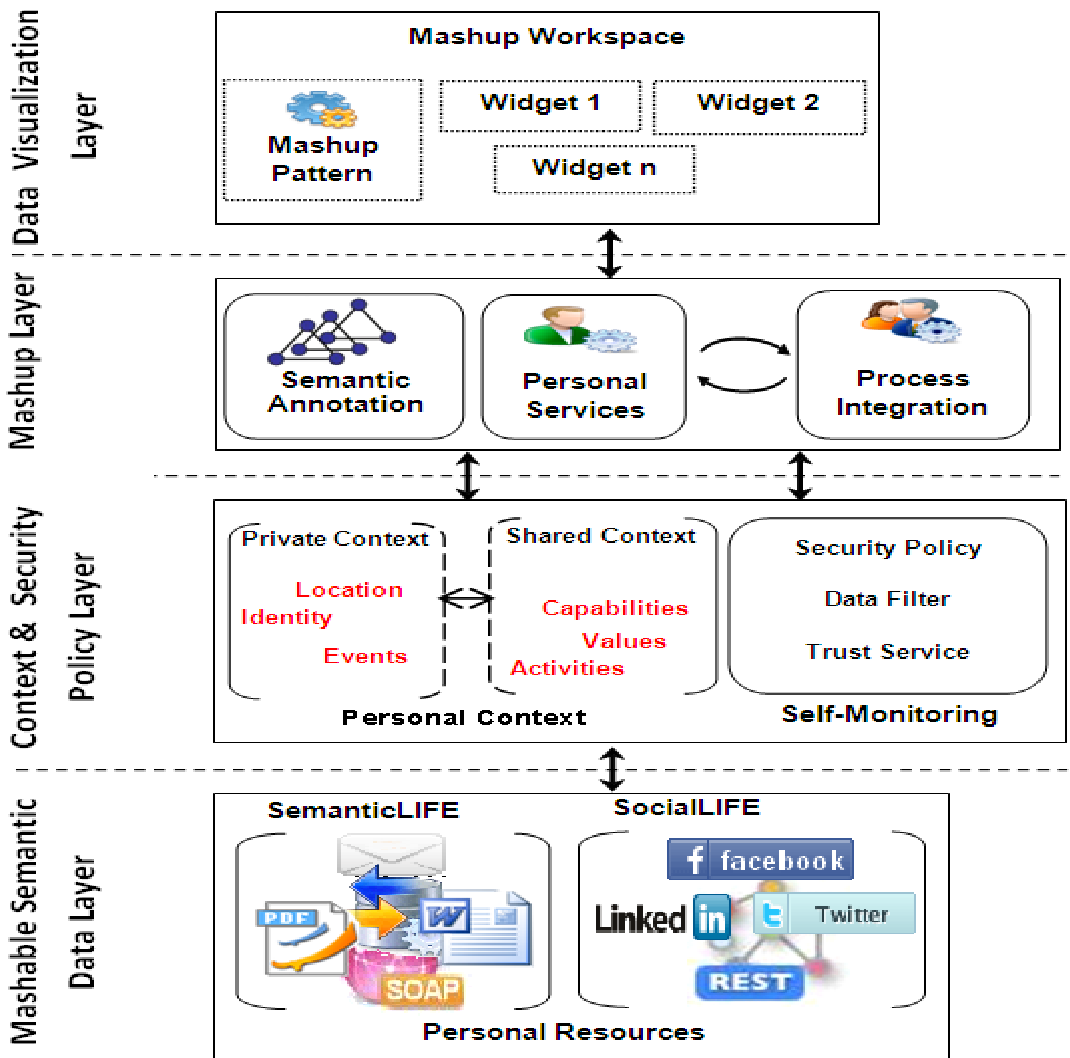 Fig 1: The 4-layer architecture of the proposed semantic-based mashup framework.
3. Execution Algorithm
To prevent logic errors, the system treats a mashup as an Acyclic Directed Graph. It uses a Depth First Search (DFS) based algorithm to traverse widgets, ensuring all dependencies (preceding widget outputs) are resolved before a widget executes its internal process (SPARQL query or API call).
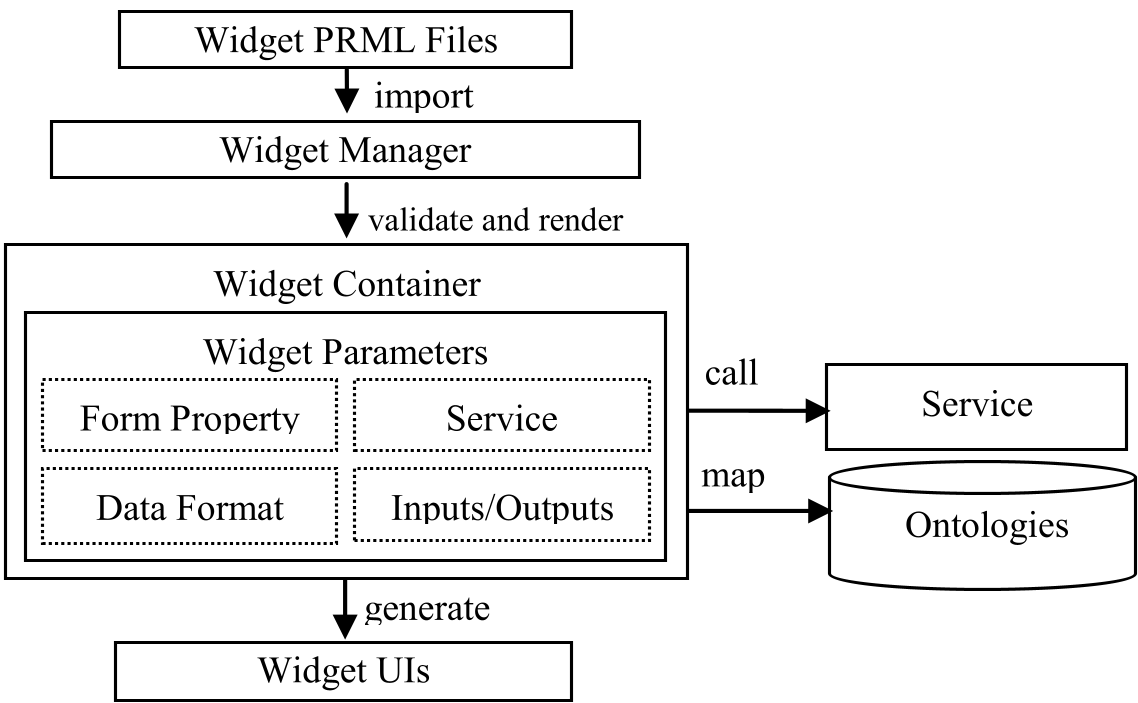 Fig 2: Mechanism for generating UI elements from PRML descriptions and domain ontologies.
Experiments: Real-World Use Cases
The authors validated the framework through two key scenarios:
- Personal Finance: Integrating bank statements (OFX format) into a semantic calendar. This allows users to see where they spent money relative to what they were doing at the time.
- Enriched Travel Mashup: Connecting a user's calendar event to DBpedia (to find tourist attractions), Flickr (for photos), and Google Maps (for navigation).
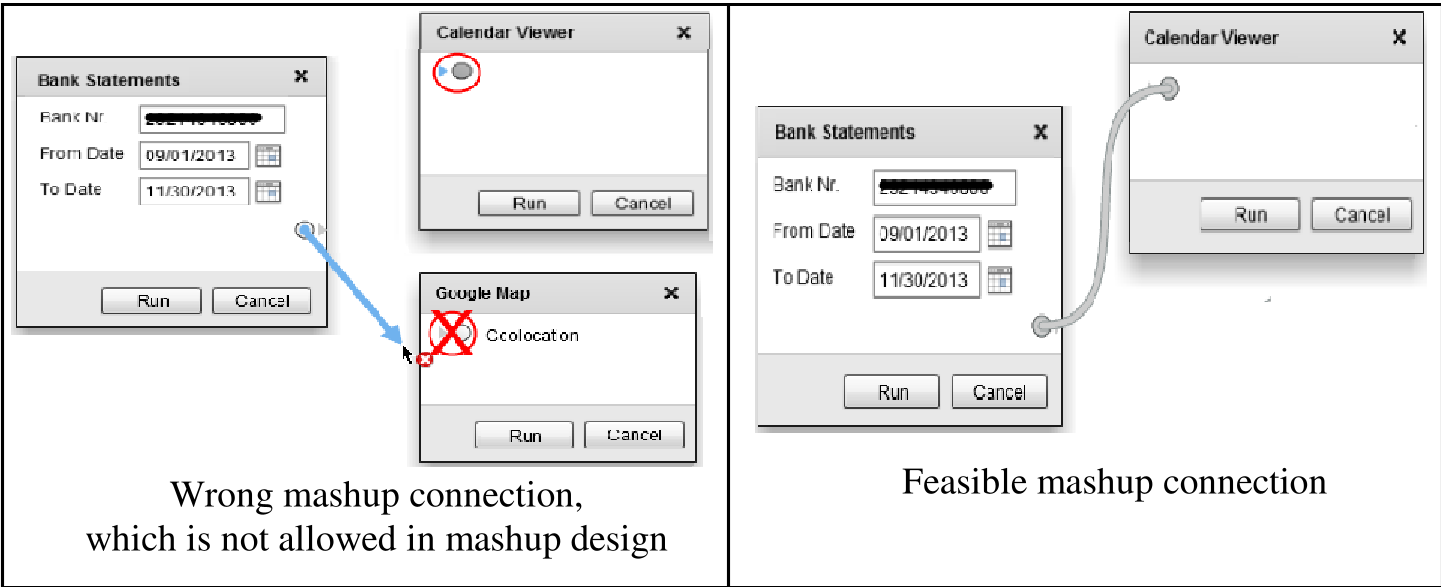 Fig 3: Visualization of the semantic-aware dataflow between input and output ports.
Critical Insight & Conclusion
The true value of this work lies in Ontology Mapping for the Masses. By shielding the user from complex SPARQL syntax and raw RDF, and instead providing "Feasible Connections" based on underlying semantics, the authors take a significant step toward the "Web of Data" envisioned by Tim Berners-Lee.
Limitations:
- The semi-automatic lifting of APIs via LIDS still requires some initial semantic modeling.
- Real-time synchronization between local storage and high-frequency social feeds (like Twitter/X) remains a performance challenge.
Future Outlook: Integrating this with modern AI (like LLMs) could allow for Natural Language Mashup Generation, where a user simply says, "Show my bank transactions on a map where I took photos yesterday," and the PRML logic is generated automatically.